Historic Buddhist Amulets Showcased from Temples Across Thailand
The user wants a short summary (1-2 sentences, 120-220 characters, max 240) of the article about historic Buddhist amulets from temples across Thailand. The article describes several specific amulets: Phra Luang Pho Prom Sum Rang from Wat C
"Whoever can be a refuge, the sure refuge is our own heart" — a teaching from Luang Pho Cha Suphattho of Wat Nong Pa Phong, Ubon Ratchathani.
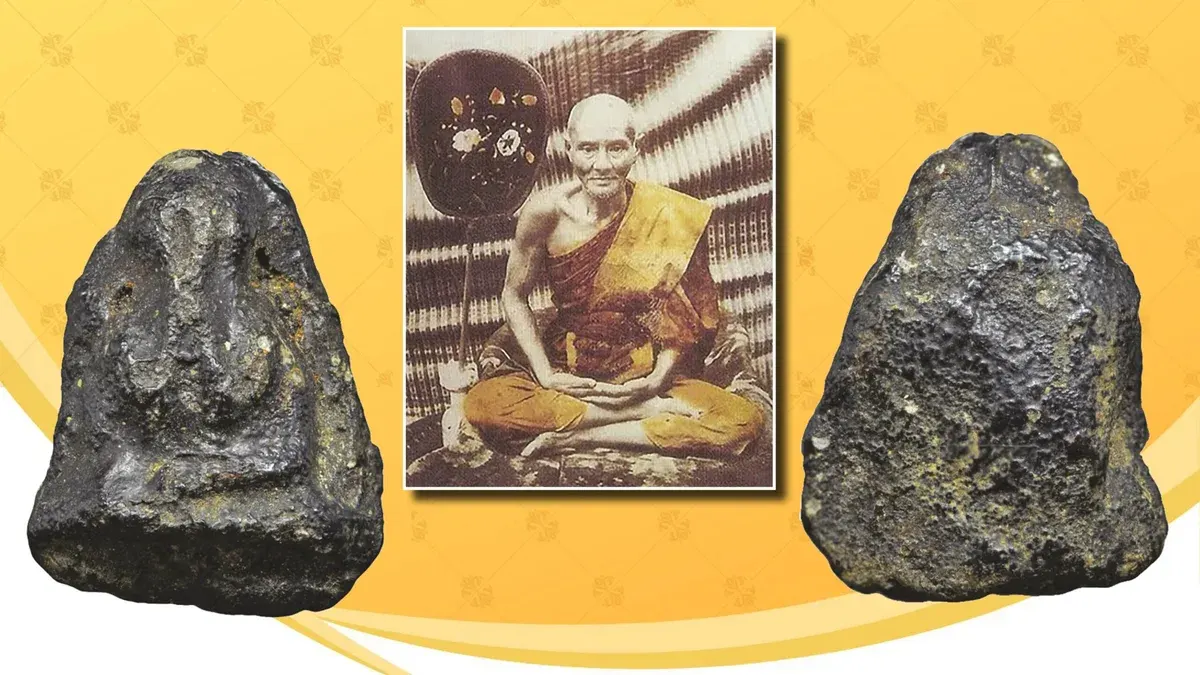
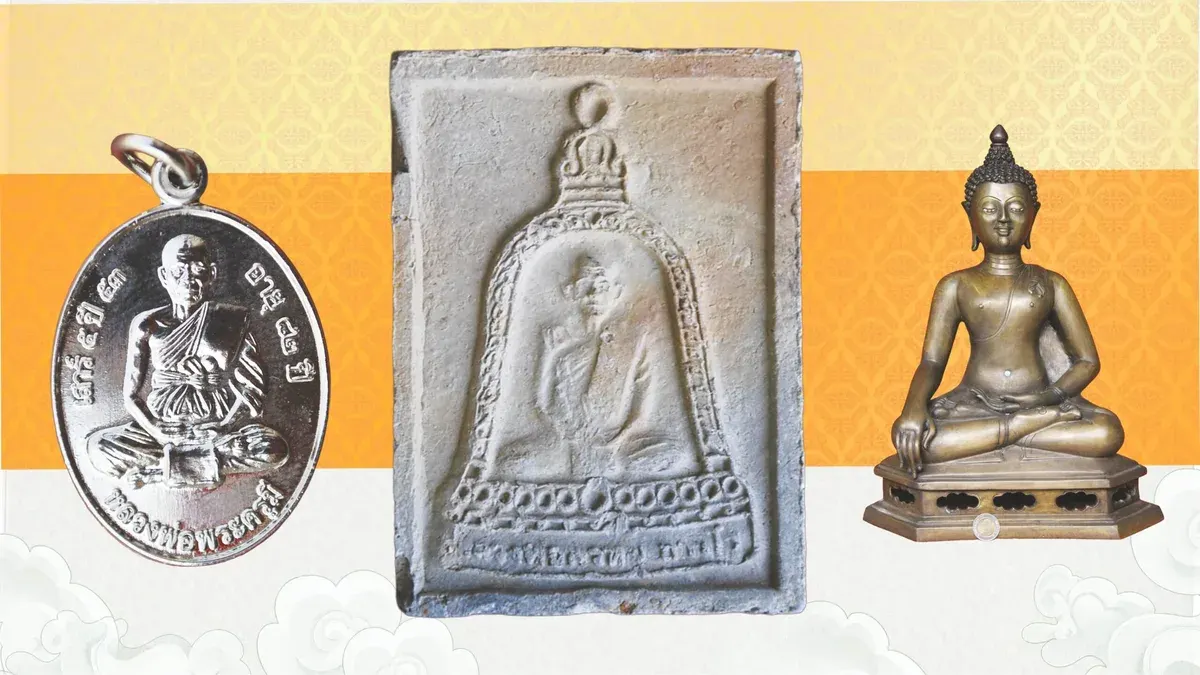
In 2012, Wat Chong Kae in Takhli District, Nakhon Sawan, renovated its ubosot roof and replaced the tiles. The current abbot, Phra Khru Niwit Panyakit, used the old ubosot roof tiles to create the "Phra Luang Pho Prom Sum Rang" amulet. Phra Ajarn Chinon from the Rasmi Promphothiko Meditation Center in Laplae District, Uttaradit (the last disciple of Luang Pho Prom), assisted in designing the mold, inscribing Khom script and yantra, and presiding over the ceremony. The amulet is rectangular, made from the ubosot roof tiles, with a raised border on the front. The center features a raised image of Luang Pho Prom in full meditation posture, covered by a bell-shaped arch. At the bottom of the arch is Thai script reading "Luang Pho Prom Thawaro." The reverse has no border, with deeply engraved Khom script in a Yant Sip pattern, and Thai script at the bottom reading "Tambon Prom Nimit, Amphoe Takhli, Changwat Nakhon Sawan." It is considered a desirable collectible.
"Luang Pho Thian Pubpho Thammo," former abbot of Wat Bot in Mueang District, Pathum Thani, has a particularly sought-after amulet: the "Pum Coin with Portrait, Year 2490 (1947)." Created as souvenirs for devotees attending the boundary stone ceremony at Wat Bo Ngoen in Lad Lum Kaeo District, Pathum Thani. The rectangular bronze coin measures 2 cm wide by 3.5 cm high with an integrated bail. The front has a raised border with a half-length portrait in the center. Below is Thai script: "Phra Khru Baworn Thammakit 2490." The reverse has a smooth border with a replica Buddha image in meditation posture atop a seven-tiered throne, inside a glass-covered arch. Curved Thai script along the top of the arch reads "Commemorative for the Boundary Stone Ceremony," and below: "Wat Bo Ngoen." It is acclaimed as one of Pathum Thani's most popular coins.
"Luang Pu Bunmi Attrakho," or Phra Khru Niphat Pariyatikij, a renowned meditation master and abbot of Wat Wapi Rattanaram in Nong Pho Subdistrict, Takhli District, Nakhon Sawan. On March 20, 2010, disciples and the temple committee produced 10,000 "Sao Ha Luang Pu Bunmi" coins to raise funds for the temple's Pali studies building. The oval-shaped, nickel-plated bronze coins feature an integrated bail on the front border. The center shows a raised image of Luang Pu Bunmi meditating. To the right: "Sao 5 Year 53." To the left: "Age 82 Years." Below: "Luang Pho Phra Khru Mi." The reverse center displays a Yant Ha in Khom script, surmounted by three Unalome spires. Below the top border is Thai Pali script: "Buddho Buddho Mahalabhang Saranang Kacchami." Below the yantra: "Wat Wapi Rattanaram." Classified as another popular Nakhon Sawan coin.
"Wat Sri Don Chai" in Wiang Nua Subdistrict, Pai District, Mae Hong Son, the first temple of Pai town, built in 1855. It houses Phra Buddha Sihing, locally called Phra Sing Pai, an ancient Buddha image and town icon. Phra Sing Pai is a Chiang Saen Singha-style Buddha from the early period, with a serene, prosperous face and a plump, rounded body. It has been the spiritual center of Pai people since ancient times. Annually, a procession carries it through village communities for bathing rites.
In 2011, Wat Sri Don Chai produced its first edition of Phra Buddha Sihing (Phra Sing Pai) amulets, replicating the 9-inch-wide original in sacred alloy metal, numbering 156 pieces (serialized). These were consecrated on Sunday, November 7, 2010, for the construction of a Lanna-style vihara. The amulets contain sacred materials from many renowned northern temples for the casting of the Phra Buddha Sihing image.