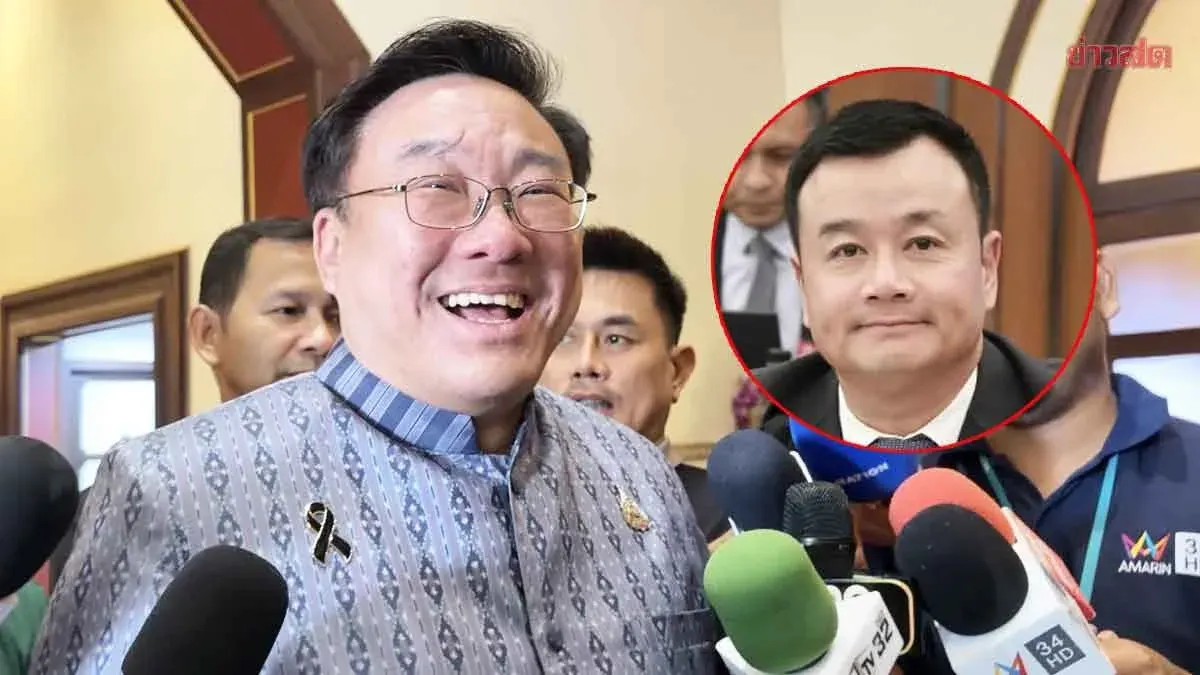
Former Justice Minister Warns Cannabis Is Gateway to Heroin
Former Justice Minister Pol. Lt. Col. Thawi Sodsong warned at a Bangkok policy forum that cannabis acts as a gateway to heroin for Thai youth. He promoted the Chart Pattana Party's draft Cannabis and Hemp Act, which would re-criminalize non-medical use, impose harsh penalties on traffickers, and apply money-laundering laws to seize drug-network assets. Thawi argued that with over 200,000 people already jailed for drug offenses — mostly young adults — liberalization would jeopardize the nation's future.

Pol. Lt. Col. Thawi Sodsong warned that cannabis is a gateway to heroin among youth and insisted on strict possession controls to stop the problem at its root. He also advocated using asset-seizure and money-laundering laws to cut off major drug financiers.
On 27 November 2026, reporters gathered at the Venus Room of the Miracle Grand Convention Hotel in Bangkok for a 10:30 AM policy forum titled "Which Cannabis Act Version Solves the Problem?" organized by the Center for Addiction Studies (CAS), the Youth Network Against New Drinkers (YNAC), and the Thai Society of Addiction Medicine (TSAP). Dr. Banjit Sripaisal, YNAC advisor, moderated the discussion, which included representatives from politics, academia, and public health.
Thawi — former justice minister, Chart Pattana Party leader, and MP — spoke as the sponsor of the party's draft Cannabis and Hemp Act (submitted in July 2026). He emphasized that good law must create justice and protect society, aligning with the 1961 Single Convention on Narcotic Drugs, which limits cannabis to medical and scientific purposes only.
The draft act rests on three pillars: (1) Lock cannabis's status as a controlled substance: any non-medical, non-research use, sale, or advertising for recreation would immediately classify it as a Category 5 narcotic under the Narcotics Code. (2) Impose severe penalties to catch kingpins: production, import, export, distribution, or possession outside medical and research frameworks would be a grave offense, targeting transnational syndicates that harm community health and the economy. (3) Deploy money-laundering and asset-forfeiture laws to crush the black market: Thawi noted the huge price gap — about 3,000 baht per kilogram in Thailand versus over 1 million baht abroad — which lures investors. The bill makes offenses under pillar (2) predicate offenses under anti-money-laundering law, empowering officials to seize assets and sever traffickers' financial circuits.
Thawi highlighted Thailand's social crisis: an aging society with a low birth rate, yet roughly 300,000 people are incarcerated (over 200,000 for drugs) and more than 400,000 are on probation (over 300,000 for drugs), mostly youth and working-age adults. He added that the international community rejects recreational cannabis, so liberalization would destroy Thailand's future.
"The principle of this bill is: medical access must be available, recreational use must be controlled, and illegal business must face asset seizure," Thawi concluded.
He further stressed the need for...