Thai Deputy PM Advances EFTA Trade Pact With Swiss Companies
Deputy Prime Minister and Commerce Minister Supachai Sutthapan met with a Swiss business delegation to advance the Thailand–EFTA free trade agreement, aiming to link Thai SMEs to global supply chains and generate over $14 billion in annual trade. The talks, held on 16 October 2026, focused on preparing for the FTA’s entry into force on 1 January 2027, technology transfer, and creating a business‑friendly environment. Bilateral trade between Thailand and Switzerland reached $14.2 billion in 2023 and continues to grow.
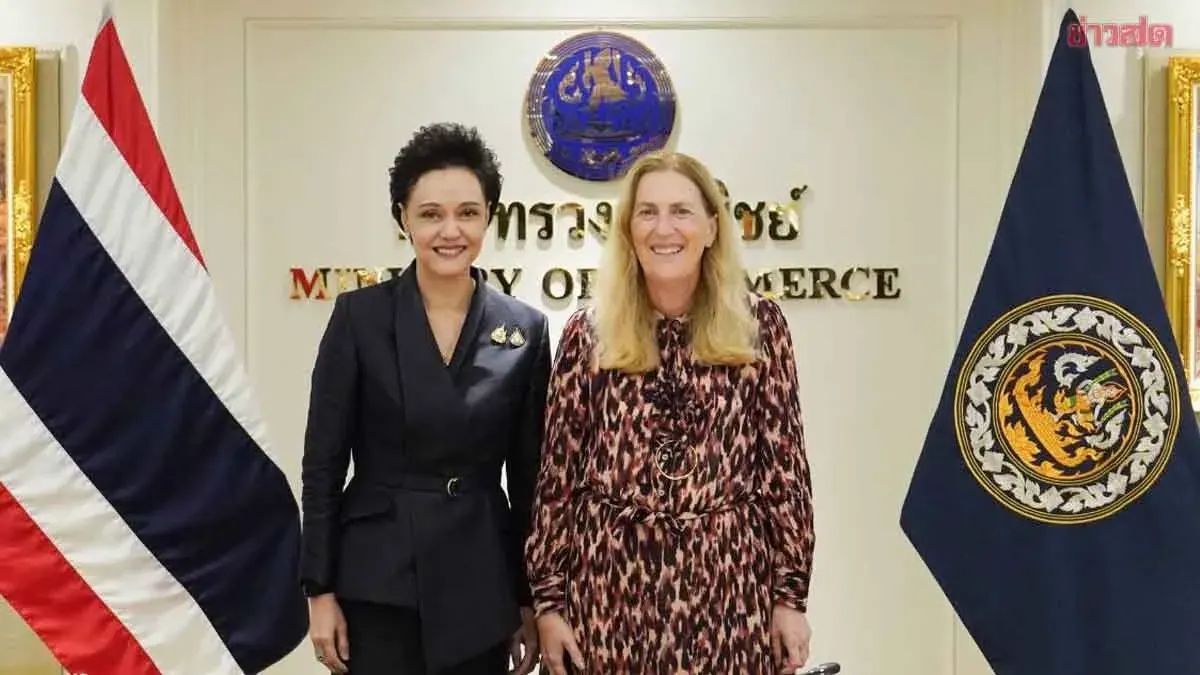
Deputy Prime Minister and Commerce Minister Supachai Sutthapan opened the Ministry of Commerce to welcome a Swiss business delegation and push for the Thailand–EFTA Free Trade Agreement, aiming to connect SMEs to global supply chains and create over $14 billion in annual trade opportunities. Supachai Sutthapan, Deputy Prime Minister and Minister of Commerce, welcomed and held discussions with Helene Budliger Artieda, State Secretary of the Swiss State Secretariat for Economic Affairs (SECO), together with senior executives from leading Swiss companies and key business organizations, on 16 October 2026 at the Ministry of Commerce.
The talks aimed to expand trade and investment cooperation and to leverage the Thailand–EFTA Free Trade Agreement, which both sides intend to bring into force on 1 January 2027. The goal is to create business opportunities, transfer technology, and link Thai entrepreneurs—especially SMEs—into the supply chains of multinational corporations.
Participating Swiss firms included Nestlé, which plans continued investment in Thailand, including a new coffee plant and pet food business; Kühne+Nagel, a global logistics provider seeing potential in Thailand for cloud and data‑center supply chains, with plans for warehousing and air freight; Novartis and Roche, active in pharmaceuticals and medical technology, looking to expand research and innovation collaboration; and Oerlikon, an advanced materials technology firm interested in expanding investment to support Thailand’s aviation and semiconductor industries.
Also present were representatives from Swiss economic organizations such as economiesuisse, Swissmem, Swissrail, SIFEM, SERV, Switzerland Global Enterprise (S-GE), and DKSH, reflecting opportunities to broaden cooperation across industry, technology, transport, finance, and trade promotion.
Supachai said the true success of an FTA lies not only in concluding negotiations but in ensuring businesses can actually use the agreement. The Ministry of Commerce is therefore preparing Thai entrepreneurs, particularly SMEs, to meet international standards and connect with leading global firms, to increase their participation in value chains and add domestic value, while attracting investment in high‑technology, innovation, and renewable energy sectors. Emphasis is placed on knowledge transfer, skills development, and creating business opportunities for both sides, pursuing mutual benefit in trade and investment, enhancing Thailand’s competitiveness, expanding business prospects for Swiss companies, and achieving sustainable economic growth together.
The two sides also discussed ways to create a business‑friendly environment, including intellectual‑property protection, reducing customs barriers, using digital tools to facilitate trade, and establishing clear communication channels to make it easier to exchange information and resolve operational issues.
In 2023, bilateral trade between Thailand and Switzerland totaled $14.236 billion, up 31.12 percent from the previous year. In the first eight months of 2026, trade reached $9.557 billion, up 26 percent year‑on‑year, indicating strong potential to expand economic cooperation. Both sides are currently completing domestic procedures to ensure the Thailand–EFTA FTA takes effect as planned on 1 January 2027.