Fujifilm Thailand Launches Liver Cancer Screening in Kalasin
Fujifilm Thailand launched a liver cancer screening program in Kalasin province targeting 200 at-risk residents using the GALAD Score biomarker test to detect the disease early. Liver cancer is Thailand's leading cancer killer, with over 19
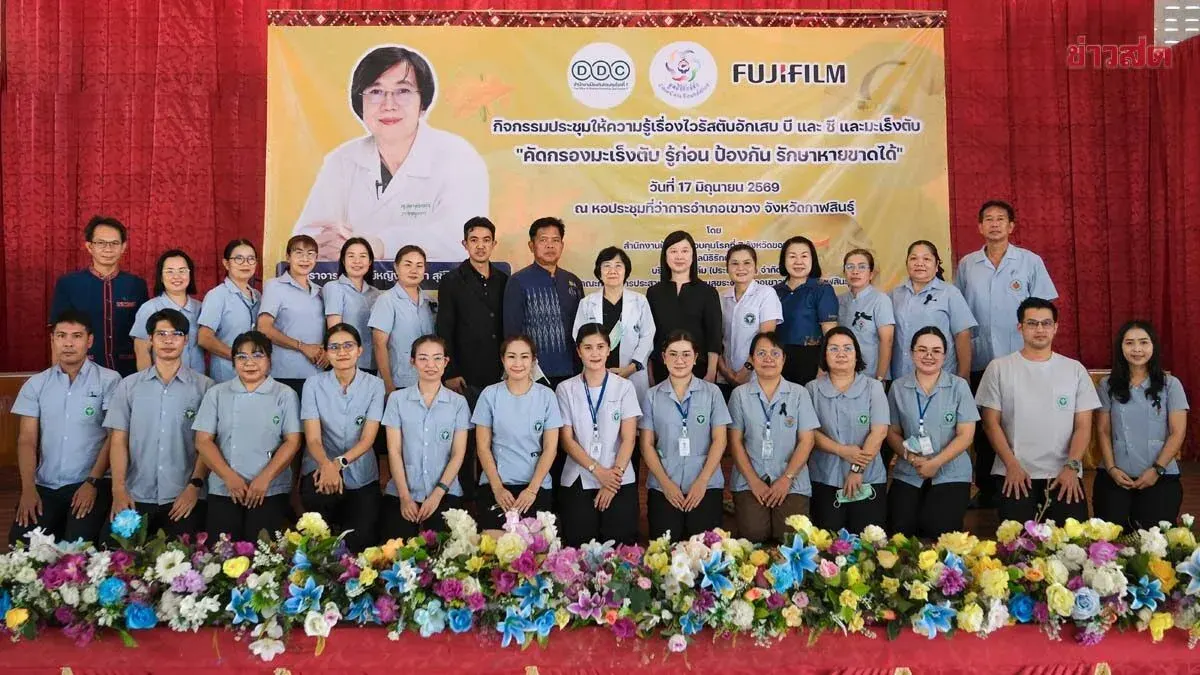
On July 1, 2025, Fujifilm (Thailand) partnered with the Liver Foundation, the Disease Control Office Region 7 in Khon Kaen, and three hospitals in Kalasin province—Khao Wong Hospital, Huai Phueng Hospital, and Na Ku Hospital—to conduct aggressive liver cancer screening for 200 at-risk residents at Khao Wong District Office in Kalasin.
The program aims to detect liver cancer in its early stages using the GALAD Score, which combines three liver cancer biomarkers (AFP, PIVKA-II, and AFP-L3) with patient age and gender data to improve detection accuracy and ensure timely treatment access.
Liver cancer remains a critical public health priority in Thailand. According to the National Cancer Institute, liver and bile duct cancer is the leading cancer killer, with 19,491 new cases annually (53 per day) and 14,971 deaths per year (41 per day). A major concern is that liver cancer often shows no early symptoms, causing many patients to seek treatment only at advanced stages when treatment options and survival rates are significantly reduced.
Prof. Wattana Sukeepisalchaiyong, a gastroenterologist and hepatologist at Srinakharinwirot Hospital, Khon Kaen University, and chair of the Liver Foundation, noted that liver cancer incidence continues to rise, particularly in the Northeast, where hepatitis B and C infections are prevalent. Many patients remain unaware of their infection status and lack proper monitoring and care.
The Liver Foundation's mission is to raise awareness, prevent, and reduce hepatitis in the Northeast. In collaboration with Fujifilm, they are introducing the GALAD Score biomarker panel alongside ultrasound screening to enhance early detection accuracy before symptoms appear—a critical window for effective treatment intervention.
Kalasin province is an important area for liver disease surveillance. Epidemiological research from Khon Kaen University found that liver and bile duct cancer incidence averaged 16.32 cases per 100,000 population annually from 2019 to 2023, with significantly higher rates in males. Cases are clustered in multiple areas, highlighting the need for expanded screening access at the district level.
Dr. Jira Saksisathit, Deputy Director of the Disease Control Office Region 7 in Khon Kaen, noted that Khao Wong District has relatively high rates of hepatitis B and C infection, with some patients also having cirrhosis—major risk factors for liver cancer. Public awareness and aggressive community screening are critical mechanisms for early detection, timely patient referral, and long-term reduction of liver cancer mortality.
The Kalasin screening program builds on the success of a pilot liver cancer screening initiative in the Northeast region.