Thailand Positions Itself as Global Halal Economy Hub
Thailand is hosting Grand Halal Bangkok 2026 to position itself as a global halal economy hub, leveraging its trusted certification standards to boost exports that now rank 6th worldwide at 300 billion baht annually.
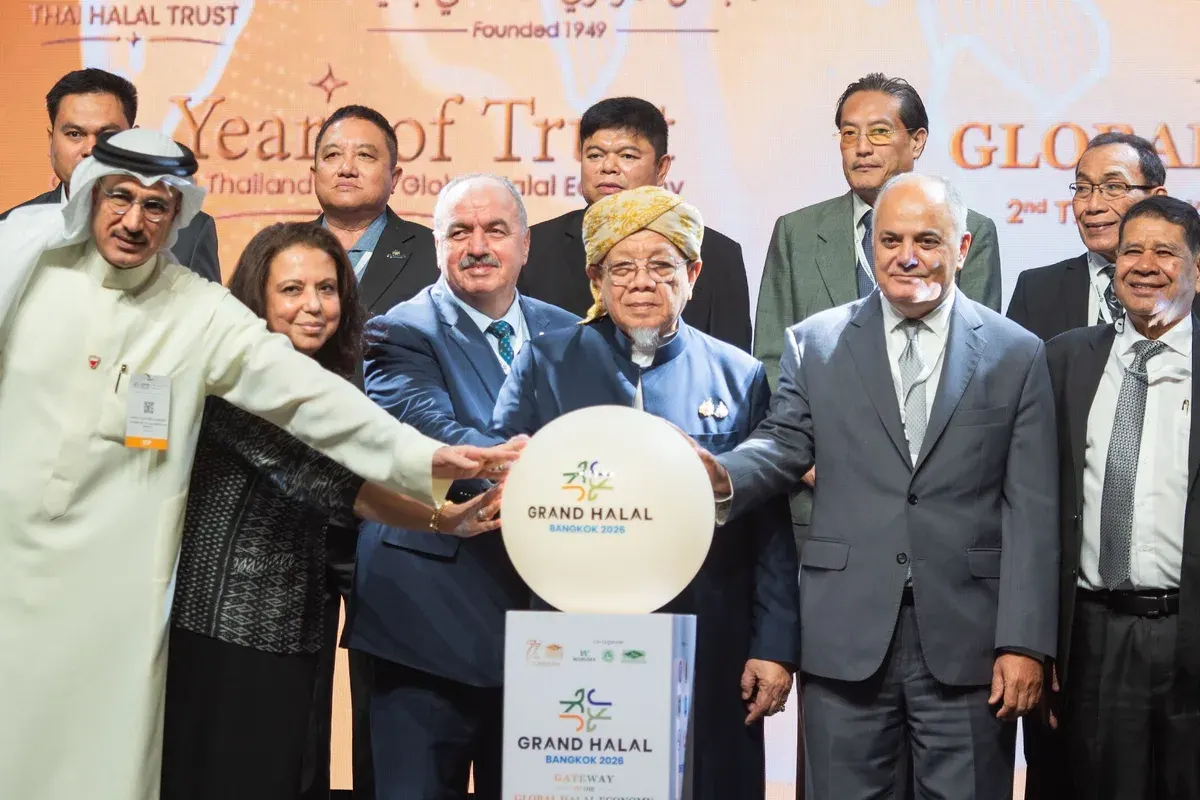
Grand Halal Bangkok 2026, under the theme "Gateway to the Global Halal Economy," will run July 15–17, 2026, with endorsement from Thailand's Central Islamic Committee (CICOT). Royal advisor Arun Bunchom stated that the event is an international business platform connecting operators, buyers, and investors worldwide under standards of correctness, transparency, and international credibility, framed around a pure lifestyle concept promoting authenticity and sustainability. These factors position Thailand as a global economic center, leveraging its 77-year-old halal certification standards trusted by SMEs, foreign buyers, and consumers. Halal standards are not limited to Muslims but gain international credibility through Thailand's certified religious organizations, including provincial Islamic committees and CICOT, whose halal certification is recognized globally.
Halal standards have expanded far beyond food into aviation, technology, digital economy, and other sectors, with scholars and Islamic jurisprudence councils emphasizing the application of Islamic law to contemporary issues while maintaining core principles of facilitation and relief. Lieutenant General Surin Palare, CICOT Secretary-General, reported that Thailand's halal exports ranked 13th globally six years ago and now rank 6th, valued at 300 billion baht in 2025. CICOT, with royal support, aims to elevate Thailand to the world's number-one halal exporter. Ihsan Ouwet, Secretary-General of the Islamic Standards and Metrology Institute (SMIIC) under the Organization of Islamic Cooperation (OIC), emphasized that a reliable global halal ecosystem requires quality infrastructure comprising transparency, comprehensive technical verification, and international recognition. SMIIC provides technical infrastructure for halal quality to support international organizations in the halal ecosystem, facilitating commerce and industry while building confidence among stakeholders and Muslims—ensuring standards do not become trade barriers. Inconsistent halal standards across regions, despite good intentions, create complexity, increased costs, reduced efficiency, and international trade obstacles, necessitating standardized coordination.