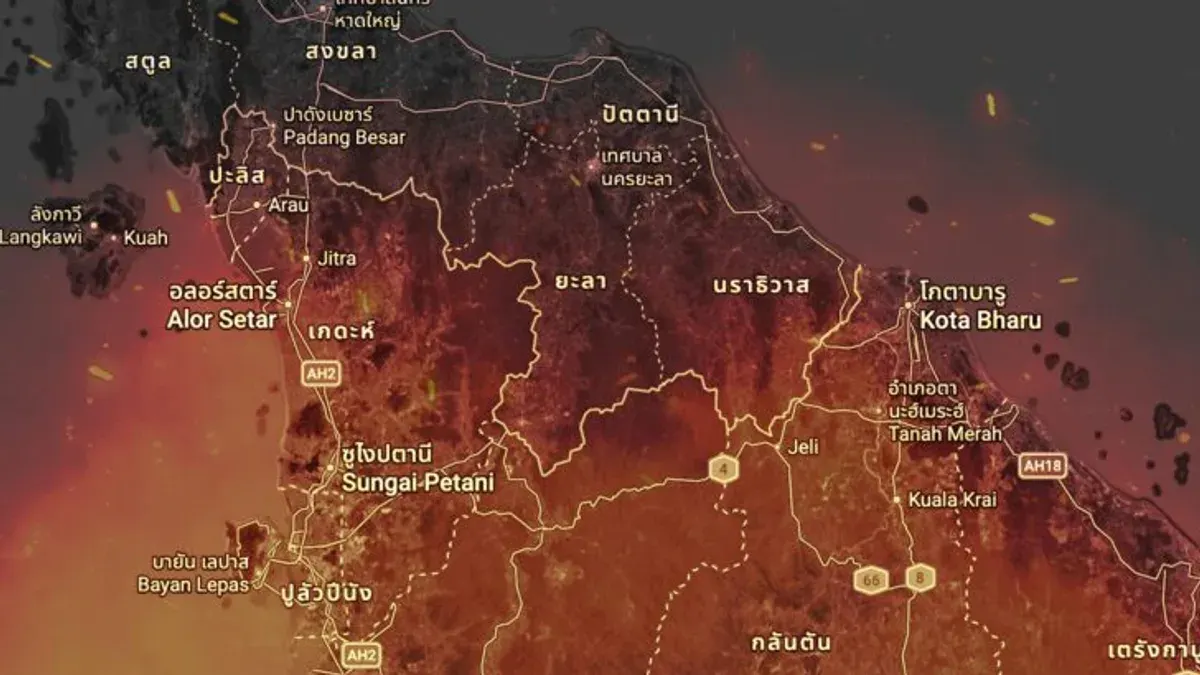
Nine people were killed in recent violence in Thailand's deep south, where Thai-Malay Muslim separatists seek an independent Patani state amid decades of unresolved conflict rooted in identity, governance, and economic marginalization.
Seven security officers and two suspected insurgents have been killed recently in the deep south of Thailand. There are at least two ways for Thais to react to this violence.
First, one can see the loss and violence as merely a continuation of protracted, long-running unrest by a small group of armed insurgents and retaliation by security personnel. You can simply condemn the so-called 'southern insurgents' and move on to the next news story, repeating the same reflexive response when another major attack occurs.
The second reaction, or alternative, is to pause for a moment and face the uncomfortable reality of what Thailand is actually confronting.
Let us start with some basic facts. There are Thai-Malay Muslims who do not consider themselves Thai and yearn for an independent Patani homeland, and view the use of force to fight for independence as legitimate. These separatists or 'freedom fighters' seek to establish an independent Patani state, whether Islamic in character or not.
The term 'southern insurgents' only obscures the true nature of the conflict. Thai media should stop referring to the majority population in the deep south simply as 'Thai Muslims' and instead recognize their Malay identity by calling them Thai-Malay Muslims.
No one truly knows how large the separatist movement is or how popular it is among the Thai-Malay population. Official surveys are impossible under the Thai constitution, which declares the kingdom indivisible and makes any secession movement illegal.
One telling anecdote comes from two decades ago, following the Tak Bai massacre in October 2004, when 85 Thai-Malay Muslim male protesters died—seven shot at the site and 78 suffocated after being thrown into army trucks, stacked atop one another with their hands tied. After witnessing mass burials, the author asked a Patani police chief whether locally elected governors would help Thai-Malay Muslims feel more in control of their destiny. The officer immediately replied that locally elected governors in the deep south would mark the beginning of secession.
This deep distrust makes meaningful decentralization or devolution nearly impossible in the region. With Malay as the mother tongue of Thai-Malay Muslims rather than Thai, it is unsurprising they may feel alienated in their homeland, especially when governors appointed from Bangkok are mostly non-Thai-Malay Muslims. The deep south remains one of Thailand's poorest regions, compounding these tensions.