J&T Express Deploys Automated Sorting to Handle 11.11 Parcel Surge
J&T Express has introduced automated sorting systems across its Thai network to handle the massive parcel surge from the 11.11 shopping festival, boosting processing speed 15-fold. Branches like Klong Toei now manage over 20,000 parcels daily, with couriers starting earlier and running more delivery rounds. Customers report significantly faster delivery times, with many orders arriving next-day or even same-day compared to week-long waits in previous years.
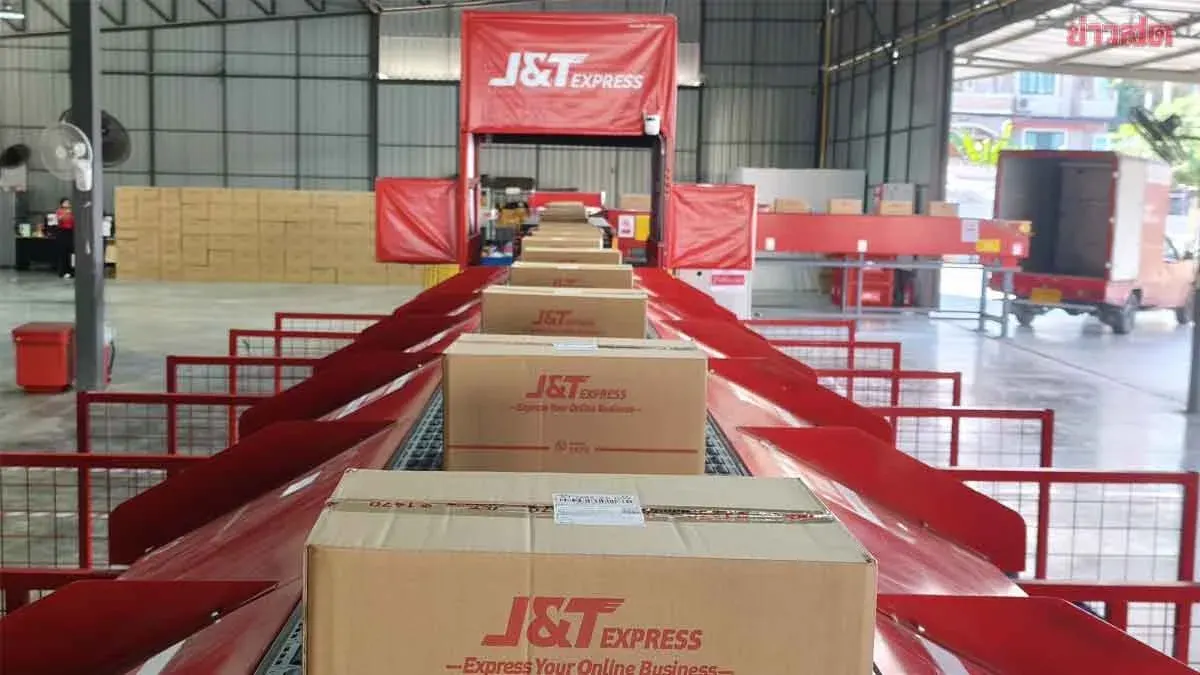
J&T Express is tackling the 11.11 parcel surge by deploying automated sorting systems that increase processing speed 15 times. The parcel delivery business is rushing to raise capacity for year-end online orders after the 11.11 campaign pushed volumes sharply higher. J&T Express has overhauled operations at both branch and distribution-center levels, bringing in automated sorting technology to cut handling time and accelerate delivery.
Khun Naen, an online shopper, described her experience: in the past, peak-season orders took several days to arrive and tracking statuses often stalled, but during this year's 11.11 campaign many items arrived the next day or within one to two days. "Normally online orders take about two to four days, and during the year-end festival we'd wait a week. Now carriers deliver much faster — some parcels arrive the same day — which is a big improvement," she said.
The speed gains come from end-to-end process management, particularly scheduling delivery rounds to match volume spikes. Panchai, a J&T Express courier at the Klong Toei branch, said his massage-shop district isn't usually busy, but shopping festivals drive a visible jump in parcels. For this year-end 11.11 campaign the branch had to handle over 20,000 parcels a day, requiring revised work methods. "When volume is high we plan better. I now start at 7 a.m. and run three to four delivery rounds daily to meet deadlines while maintaining quality," he said.
Beyond round management, automated sorting at branches has increased speed and accuracy, reduced manual sorting labor, and freed couriers for more delivery time. At Klong Toei, despite many couriers each handling hundreds of parcels daily, previous sorting bottlenecks left backlogs that took weeks to clear during campaigns. Now outbound efficiency has jumped visibly and per-person sorting capacity has doubled.
Similarly, Nattawut, a courier at the Wang Thonglang branch, said before automation staff spent hours sorting manually, often not ready to depart until nearly 10 a.m., worse during campaigns. With machines, sorting time dropped sharply, allowing earlier and more accurate dispatch — especially when warehouse volumes jumped overnight from 10,000 to 15,000–19,000 parcels. "Manual sorting was time-consuming; we'd barely be ready by 10 a.m. Now I can focus entirely on delivery, start earlier, carry more per trip, and still have time to help colleagues," he said.
Branch-level efficiency gains are also feeding into broader network improvements.