Minister Orders Survey of Dinosaur Footprints Found in Udon Thani
Thailand’s Minister of Natural Resources and Environment has ordered an urgent survey of dinosaur‑like footprints discovered at Phu Hin Chom Thao–Phu Phra Bat National Park in Udon Thani after a tourist’s photos went viral. Initial checks show four clear prints about 32 cm long and spaced 80 cm apart, indicating a large prehistoric animal. Experts from the Parks and Mineral Resources departments will conduct a formal verification on 20 October to determine the species and consider developing the site for education and tourism.
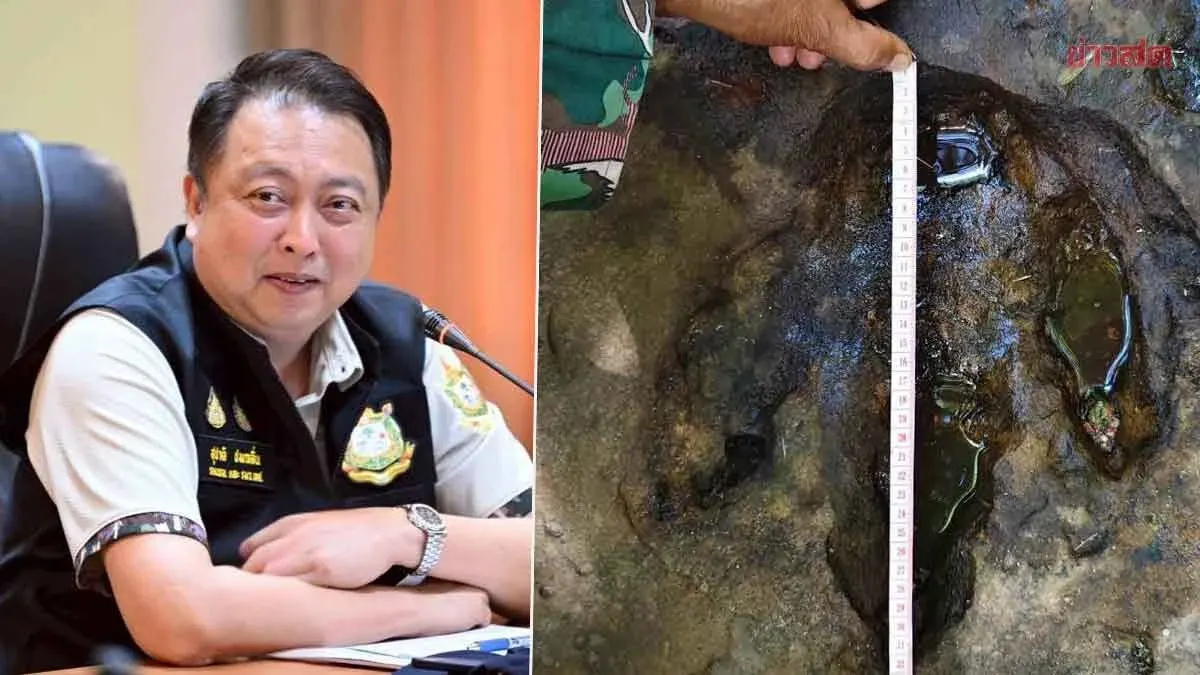
Suchat Chomklin said that after receiving reports of possible dinosaur footprints in the park, he immediately directed the Parks Department to work with the Mineral Resources Department, sending a team of academics and experts to survey and protect the area, noting Ban Pho district's historical, geological and archaeological significance. He added that the discovery is valuable natural evidence that the ministry hopes to develop into an academic learning site and a conservation‑focused tourism attraction for local communities. Yunyut Nakawirojan, director‑general of the Parks Department, said he received a report from Park Chief Winai Thongpan that the footprints were found along a nature study trail; the SMART Patrol unit had previously observed the spot but could not confirm it until the photos were shared and attracted attention. Officers then conducted a detailed surrounding survey and found four similar marks. The geological setting is believed to be sandstone from the Khorat Group, tens of millions of years old. The park has set up a barrier, recorded GPS coordinates and collected preliminary data to submit to the Parks Department to prevent damage from natural causes or human disturbance. Next, the Mineral Resources Department’s Fossil Protection Division and Region 2 Office will dispatch geologists and palaeontology experts to join park officials for an official academic verification on 20 October, aiming to classify the taxonomy and identify the species. Preliminary assessment suggests the prints may belong to a carnivorous dinosaur, with estimates of body size and age to be made. If the findings are confirmed, the agencies will plan to upgrade the site into a learning centre.