Finance Ministry Sets Three-Year Timeline for EV Local Content Rules
Thailand's Finance Ministry is developing new Made in Thailand criteria to calculate local content requirements for EV manufacturers, aiming to transform the country from an EV importer to a production and export hub. The Excise Department will finalize the rules with industry groups this week, with enforcement expected within three years. A three-tier tax structure will reward companies that meet local content targets with a 10% rate, while those falling short or importing complete EVs face higher rates of 15–20% and 35% respectively.
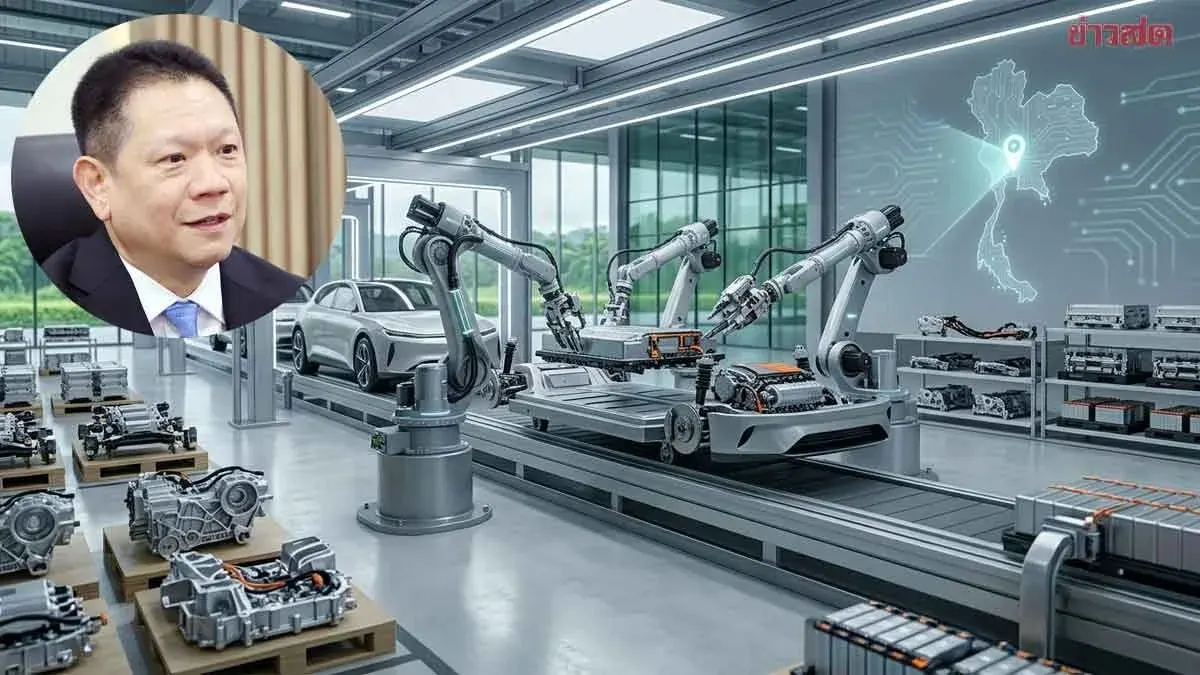
Finance Ministry Permanent Secretary Lawan Saengsanit revealed that within this week, the Excise Department will hold talks with the Federation of Thai Industries (FTI) to consider new Made in Thailand (MIT) criteria. These will be the new standards for calculating the proportion of domestically produced parts (Local Content) for the automotive industry, especially electric vehicles (EVs), to drive Thailand's transition from simply importing EVs to becoming a true production and export base. A conclusion is expected soon, and the criteria are projected to take effect within three years, or by 2030.
The three-year lead time before enforcement gives factories and operators time to adjust. Meanwhile, the Excise Department must determine the minimum Local Content percentage required and what new tax rate would be appropriate and fair for those who cannot meet the threshold.
The Excise Department's new Local Content criteria will differ from Customs Department standards. Customs follows WTO rules requiring 40% Local Content, which can include accounting costs, financial costs, or profit — typically about 15% — plus utilities around 5%, meaning genuine Local Content falls short of the 40% target. The Excise Department will therefore adopt a new calculation method excluding accounting and utility costs, requiring clear disclosure of actual Local Content such as seats, doors, glass, and tires.
Lawan said future EV tax assessment will have three tiers: 1) factories established with required Local Content, 2) factories established but below the Local Content threshold, and 3) no factory, importing complete EVs. Operators with established Thai factories get a 10% tax rate, but if they fail to meet the new Local Content rules they may face a mid-tier rate of 15–20%, still under consideration. Those meeting the Local Content criteria keep the 10% rate. Operators without Thai factories importing complete EVs will pay the 35% import duty approved by Cabinet to support Thailand's EV hub ambitions.
Lawan emphasized the EV excise tax adjustment does not target Japanese automakers specifically and is not driven by external pressure, but follows a planned energy transition roadmap. Recently, AES Auto Service Co., Ltd. and Mitsui & Co. met with the Finance Ministry and Excise Department to discuss industrial investment. Previously, the 10% EV tax rate attracted about eight manufacturers to set up factories for tax benefits, but the new measures aim to prevent stagnation and create genuine industrial development.