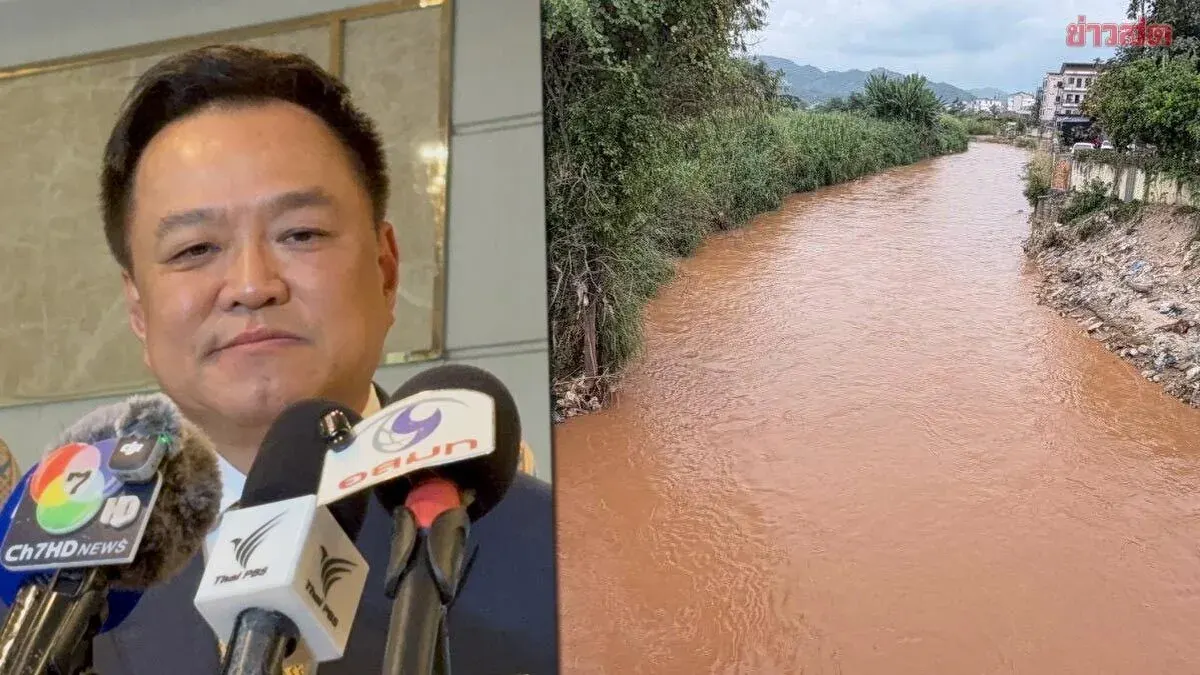
Myanmar Mining Pollution Poisons Thai Rivers for Nearly Two Years
Toxic runoff from unregulated gold and rare-earth mines in Myanmar's Shan State has contaminated the Kok, Sai, and Mekong rivers for nearly two years, exposing seven northern Thai provinces to arsenic, lead, and cadmium. While the Thai government pursues diplomatic talks with Myanmar and China, critics demand immediate suspension of high-risk mineral imports and emergency domestic measures — including clean water supply, health monitoring, and compensation for affected farmers and fishers — rather than waiting years for cross-border negotiations to yield results.
The crisis of toxic contamination in the Kok River, Sai River, and the Mekong basin has persisted since late 2024 — nearly two years — yet the root cause remains unresolved. Arsenic, lead, and cadmium continue to threaten public health, livelihoods, and the well-being of local residents.
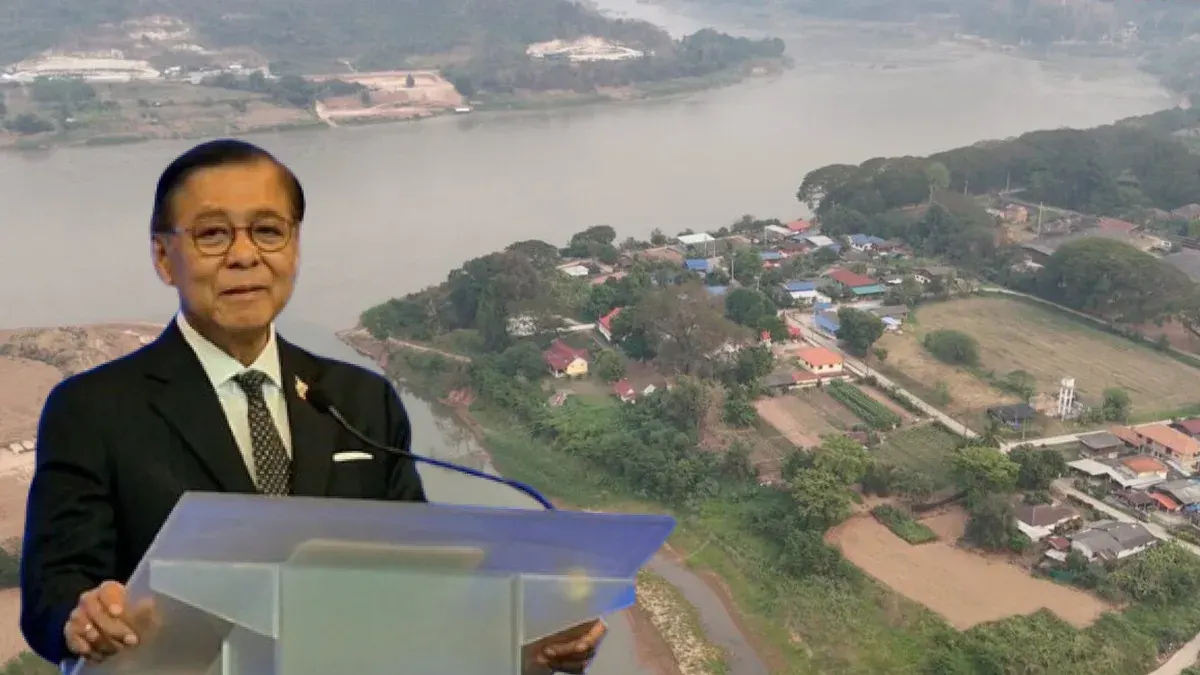
Most recently, Deputy Prime Minister and Foreign Minister Sihasak Phuangketkeow visited Myanmar to meet with Senior General Min Aung Hlaing and relevant ministers to accelerate a solution to the cross-border pollution. Both sides agreed to hold a joint working-group meeting on November 25-26 and to dispatch the Minister of Natural Resources and Environment for an on-site inspection.
Prime Minister Anutin Charnvirakul is preparing agency-head-level talks between the two countries and has sought cooperation from the Chinese premier on both academic coordination and engagement with Shan State — the source of the mining operations. The primary origin of the toxins is gold and rare-earth mines in Shan State, where local capital groups and armed factions are involved. Mining without wastewater treatment allows heavy metals to flow across the border into Thai rivers, while the Myanmar government has limited control over these areas.
Civil society and academics are urging Thailand to temporarily suspend imports of high-risk minerals, verify their origins, and disclose the names of involved companies, arguing Thailand should not serve as a transit route for ore that creates pollution. However, the government has yet to announce a clear import ban, prioritizing negotiation instead.
Impacts now extend to seven provinces — Chiang Rai, Chiang Mai, Mae Hong Son, Loei, Nong Khai, Bueng Kan, and Nakhon Phanom — affecting water sources, agriculture, fisheries, and public health.
Although Thailand and Myanmar have established a three-year cooperation framework, controlling mines in areas influenced by local armed groups and restoring the rivers will take much longer. Negotiation is a long-term path and cannot resolve the immediate emergency.
Therefore, the government must urgently act on two fronts: establish a forward command center integrating all ministries, secure clean water supplies, conduct comprehensive testing for toxins in water, food, and public health, compensate farmers and fishers who have lost income, and enforce strict import controls on contaminated minerals.
Every measure must have a dedicated budget, clear accountability, and a firm timeline, because citizens should not have to fight toxic exposure alone while the government merely awaits negotiation results. The government must not allow residents of seven provinces to suffer for at least another three years.
Talks with Myanmar and China must proceed in parallel with concrete domestic action: clean water, healthcare, livelihood compensation, and genuine, strict control of contaminated mineral imports.