Deputy Minister Finds 20 Myanmar Mines, Plans China Talks Nov 16-18
Deputy Interior Minister Chaithat Thaithet inspected gold, manganese, and lead mines along the Myanmar border in Chiang Rai, finding 20 licensed companies with room to expand. Officials fear increased toxic runoff into the Mae Sai River, which supplies water to Thai communities. The Thai government will raise the issue with China on November 16-18, seeking cooperation to address the cross-border pollution chain.
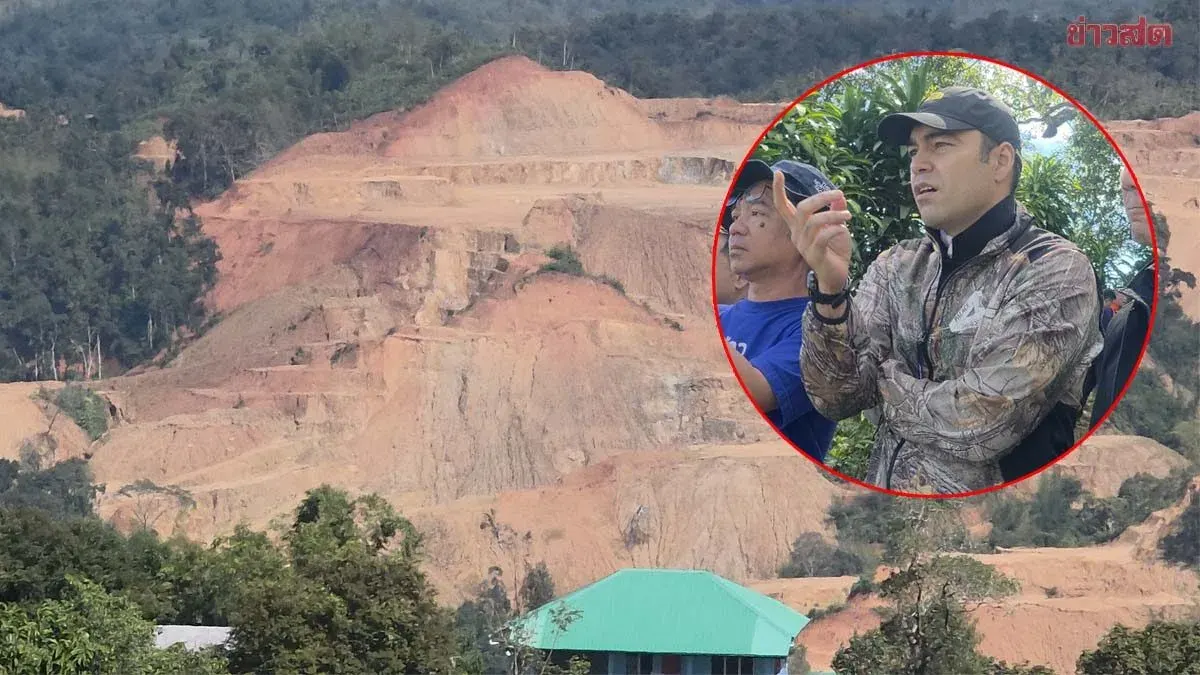
Deputy Interior Minister Chaithat Thaithet inspected Myanmar border mines in Chiang Rai, discovering 20 licensed mining operations. Concerns mount over potential expansion and toxic contamination flowing into the Mae Sai River. The issue will be raised with China on November 16-18.
At 11:40 a.m. on November 14, 2026, Mr. Chaithat Thaithet, Deputy Minister of the Interior, was assigned by the Prime Minister to inspect mining conditions along the Myanmar border in Ban Phaya Phrai, Thoet Thai Subdistrict, Mae Fa Luang District, Chiang Rai Province. He was accompanied by Pol. Maj. Gen. Singhanat Losuya, Deputy Commander of the Chiang Rai Internal Security Operations Command, and received briefings from academics.
Information was presented linking three mining areas — Doi Kaowan, Muang Kan, and Mae Jok — situated in valley headwaters with tributaries flowing into the Mae Sai River. Many mines still have ample room to expand, with ongoing construction of buildings, infrastructure, and continuous deployment of machinery and personnel. Officials worry that if operations continue unchecked, the volume of toxins entering water sources could rise further.
Civil society networks report 20 companies currently licensed by the Myanmar government in the area: 12 gold mines, six manganese mines, and two lead mines, along with illicit mining of tungsten and tin. This correlates with import statistics through the Chiang Saen and Mae Sai customs checkpoints, which show imports of manganese, lead, tungsten, and tin. Export data via Chiang Saen also indicates ore shipments along the Mekong River to China, while gold and some rare earths do not enter Thailand but appear linked to Chinese markets and buyers.
Mr. Chaithat revealed the Prime Minister ordered a comprehensive data gathering on smelters, mining companies, import-export firms, chemicals used in production, and whether any Thai individuals or companies are involved in the supply chain, to inform legal measures and next steps.
He acknowledged the Myanmar-side mines have significant expansion potential, and on-site inspections revealed more infrastructure preparation than previously reported, suggesting continuous expansion. The Prime Minister has already discussed the issue with Chinese leaders, and from November 16-18 he will travel with a delegation to present the data and coordinate with relevant parties. Thailand plans to involve other affected countries along the watershed to engage China, given its pivotal role in the regional mineral trade chain.
The government will pursue diplomacy, cooperation requests, and pressure tactics simultaneously. However, direct control over mining inside Myanmar faces limitations due to sovereignty, internal conflict, and environmental standards requiring high-level expertise and technology. Coordination is underway with the Third Army Region and security agencies.
To address immediate public concerns, the government will accelerate management of drinking water and agricultural water, especially in Mae Sai, where tap water production was previously halted temporarily due to turbidity and contamination.
Mr. Chaithat added that previously water had been sourced from island areas...