Bangkok Noi Temples Renowned for Sacred Cowrie Shell Amulets
Two historic temples in Bangkok's Bangkok Noi district — Wat Nai Rong and Wat Bang Bamru — are celebrated for their 'bia kae' amulets made from rare 32-toothed cowrie shells. These talismans, rooted in ancient Thai monastic wisdom, are believed to heal illnesses, repel evil spirits, neutralize poisons, and protect against weapons and animal attacks. The temples represent a distinct lineage of this amulet tradition alongside other famous schools from Ang Thong and Bang Kaew.
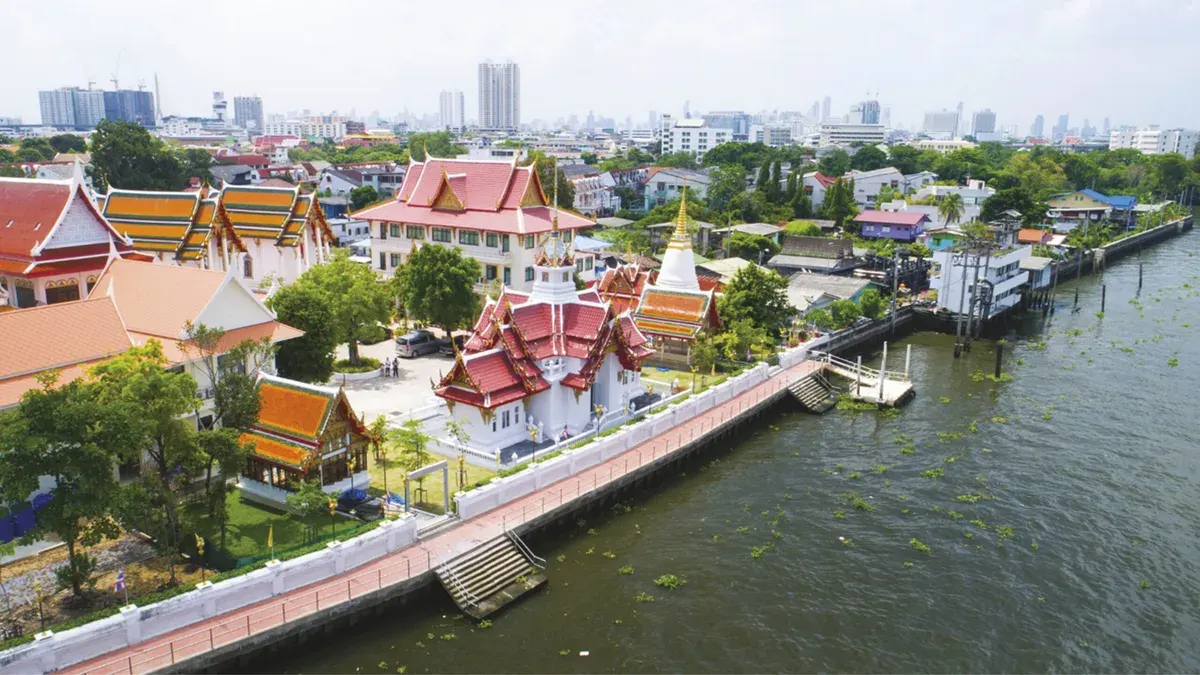
Bangkok Noi district in Bangkok is another area on the Thonburi side with many beautiful temples, though none are widely famous or grand, yet they remain highly interesting. Bangkok Noi has two temples famous for 'bia kae' amulets: Wat Nai Rong and Wat Bang Bamru.
Bia kae are considered amulets of Thai guru monks' wisdom, made from cowrie shells with 32 teeth, created since ancient times. They are believed to cure or prevent various ailments, ward off ghosts and spirits, prevent jungle fever, neutralize poisons and curses, protect against sharp objects, and counteract insect and animal venom.
Today, popular bia kae are divided into three main lineages: the Ang Thong city lineage (including Luang Pho Phat of Wat Bot, Luang Pho Num of Wat Nang Nai, Luang Pho Kham of Wat Pho Plam, Luang Pho Prong of Wat Tha Chang in Ang Thong); the Wat Klang Bang Kaew lineage (including Luang Pu Bun Kanthachoti, Luang Pu Poem Punyawasano, Ajarn Bai, and Luang Pu Chuea Piyasilao); and the Wat Nai Rong lineage in Bangkok Noi (including Luang Pu Rod of Wat Nai Rong and Luang Pu Khaek of Wat Bang Bamru).
Wat Nai Rong is a royal temple located on the east bank of Khlong Bangkok Noi in Arun Amarin Subdistrict, Bangkok Noi District, Bangkok. Its history lacks clear evidence; oral tradition says a theater troupe owner named 'Krap' built it during King Rama IV's reign around 1860. It was formerly called Wat Chao Krap, Wat Lakhon Chao Krap, commonly Wat Nok (paired with Wat Nai, meaning Wat Bang Bamru), or Wat Pak Klong due to its location at the mouth of Khlong Bang Bamru. The name Wat Nai Rong appears in the Rattanakosin Chronicles, Fourth Reign, by Chao Phraya Thiphakorawong (Kham Bunnag), 1963 edition, page 764. King Rama IV renamed Wat Nai Krap Lakhon to Wat Sammachaphal, but locals kept calling it Wat Nok; officially it is now Wat Nai Rong.
The temple fronts Khlong Bangkok Noi to the west, borders a private property canal and Wat Nai Rong School to the east, private land to the north, and Khlong Bang Bamru to the south. Access is by boat along Khlong Bangkok Noi or by car via Soi Charansanitwong 45 (Soi Wat Pathum Butr Isararam), Charansanitwong Road. Originally about 12 rai, 6 rai were given to the Ministry of Education for a secondary school in 1955, leaving 6 rai. The temple now operates a Buddhist radio station on FM 94.75 broadcasting Dhamma, knowledge, and Buddhist news.
Wat Bang Bamru is at 41 Charansanitwong Soi 45, Bangkok Noi District, Bangkok. Originally a Chao Mae Thaptim shrine from the Thonburi period, it later became a temple named Wat Suay Hru. The ubosot construction date is unknown. It was renamed Wat Bang Tam Hru, then Wat Bang Bamru. Though a small community temple, it gained fame through Luang Pu Khaek of Wat Bang Bamru, a renowned guru monk of bia kae amulets and a fellow monk of Luang Pu Bun.