Nongnooch Pattaya Harvests Rare Twin-Seeded Coco de Mer
Nongnooch World Pattaya's botanical team has successfully hand-pollinated rare Coco de Mer palms from the Seychelles, yielding a second annual harvest of 13 fruits, five of which contain two seeds each. Each fruit is valued at approximately 100,000 baht, and a public cracking and tasting event is scheduled for November 11. The garden now houses 104 of these endangered palms, part of its global plant conservation mission.
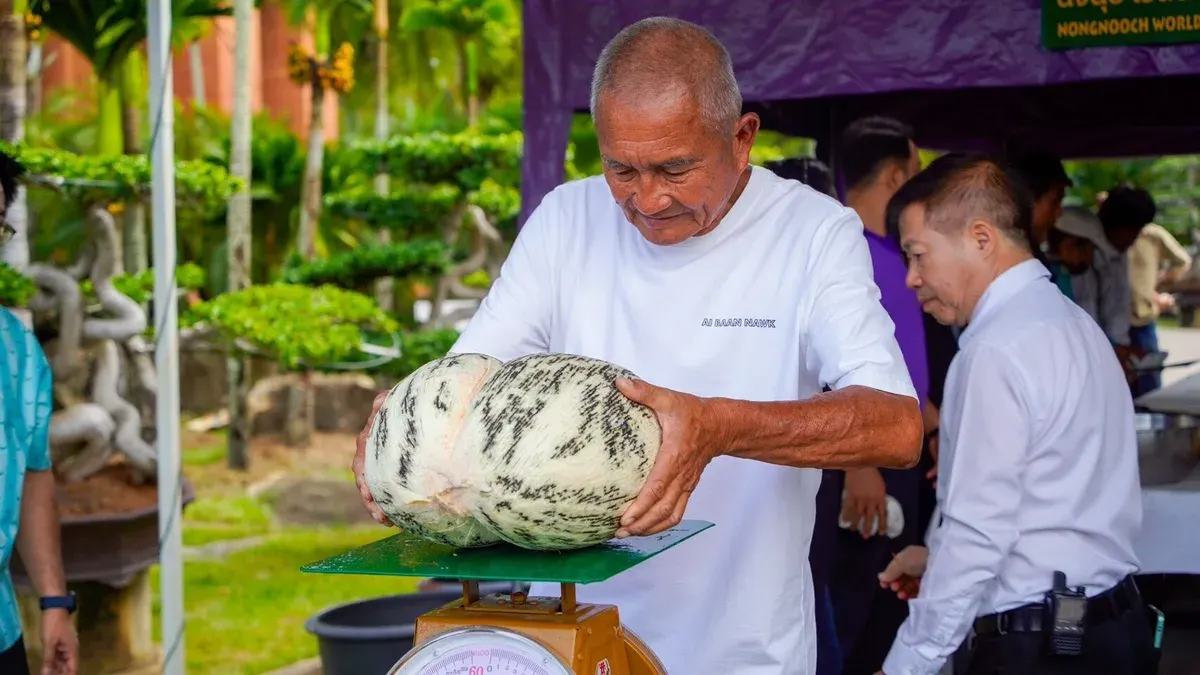
Expert botanists at Nongnooch World Pattaya have hand-pollinated rare Coco de Mer palms from the Seychelles, achieving continuous fruiting. They are preparing to crack open the second harvest of the year — 13 fruits, five of which contain two seeds each, totaling 18 seeds.
Nongnooch World Pattaya President Kampon Tansacha will lead the team in cracking the second batch of Coco de Mer on Wednesday, November 11, 2026, at 9:00 AM at Nongnooch World Pattaya in Chonburi province. Each fruit carries an estimated value of 100,000 baht. After cracking, staff will split the fruits to showcase the inner flesh up close and invite attendees to taste the Coco de Mer.
Coco de Mer palms have separate male and female trees; females only set fruit after receiving pollen from males. Nongnooch's botany team maintains both sexes in the same area, allowing them to collect pollen from male flowers and hand-pollinate females at the precise receptive window. Once fruit sets, it requires another 6–7 years of care to reach maturity, and seeds sown from them may take an additional two years to germinate.
The Coco de Mer, also known as the double coconut, is native to the Seychelles islands in the Indian Ocean and is recognized by Guinness World Records as the plant with the largest seed in the world. Nongnooch World Pattaya currently holds 104 Coco de Mer specimens: 59 planted in the ground (7 male, 11 female, 41 of undetermined sex) and 45 seedlings.
The garden now conserves more than 18,000 plant species. Coco de Mer stewardship is part of its policy to gather plants from every corner of the globe to develop the garden into a world-class botanical learning center. The continuous fruiting reflects the botany team's achievements, from pollen collection and hand-pollination through to fruit maturation care.