Parliament Backs Budget Study; Opposition Urges Procurement Reform, Windfall Tax Review
Parliament approved a motion to study the fiscal 2028 budget, with opposition leader Natthaphong Ruengpanyawut demanding transparent budgeting, procurement reform, and a review of windfall and consolidated land taxes. He highlighted oil companies' massive profits from the Middle East conflict and urged that such gains be redirected to help ordinary citizens through tax reform.
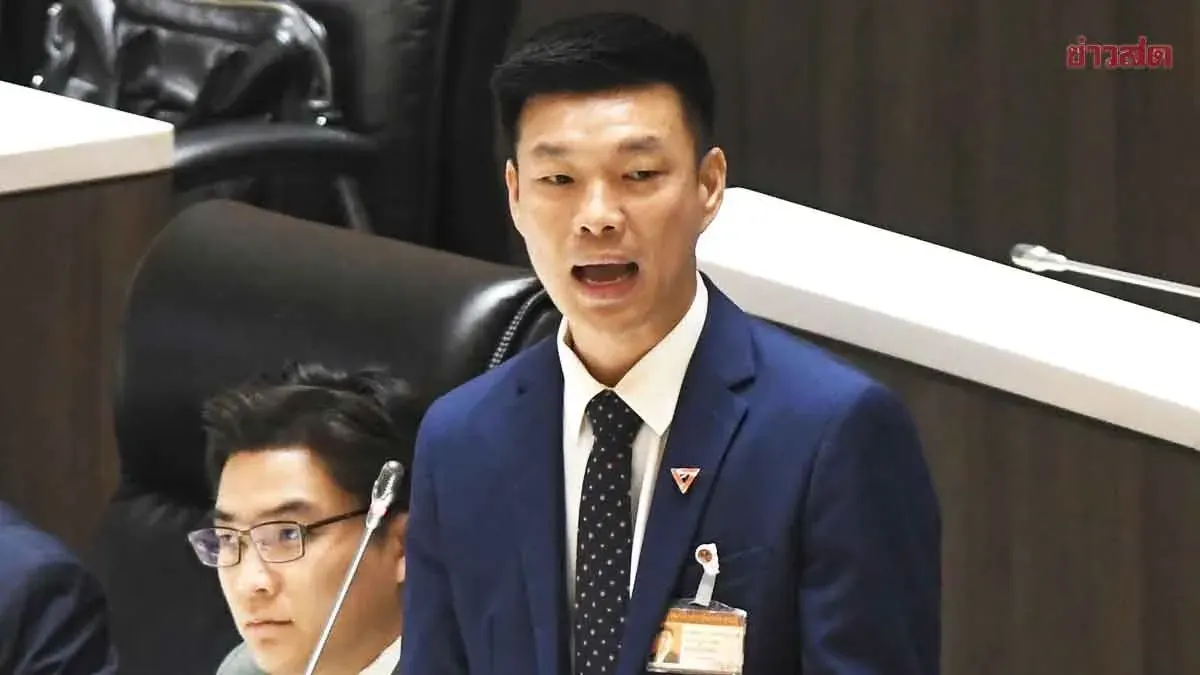
Parliament approved a motion on preparing the fiscal 2028 budget. Opposition leader Natthaphong Ruengpanyawut urged the government to make budgeting transparent, reform the procurement system, disclose all budget details, and review the windfall tax and consolidated land tax to assist citizens.
At 10:00 AM on November 20, 2026, at Parliament, a special House of Representatives session chaired by First Deputy Speaker Mallika Chirapattana considered a motion to study and provide input before drafting the FY 2028 budget for the Cabinet. The motion was submitted by Natthaphong Ruengpanyawut, party-list MP, People's Party leader and Opposition Leader, along with a similar motion by Suthin Klangsang, party-list MP from Pheu Thai Party. The meeting considered and voted on both simultaneously.
Natthaphong stated he wants a clear direction for the FY 2028 budget from the government, including solving targeted problems, worthwhile investments, and legitimate revenue generation. The Budget Bureau explained that agencies would submit requests within a 10% budget framework, not zero-based budgeting as Deputy Prime Minister and Interior Minister Anutin Charnvirakul had pledged to Parliament.
Natthaphong wants the FY 2028 budget to include performance reports on public hearings for the draft budget act, separated by agreed and disagreed projects, to prove the government listens to Parliament rather than treating it as ceremony.
He also demanded the government present all off-budget funds in a consolidated summary — including the Social Security Fund, DE Fund, and the Universal Basic Service Fund (U-So) — and disclose budget reserve data to prevent opaque allocation. Procurement systems in state agencies and local governments must be reformed to control both off-budget and on-budget spending. Analysts estimate total off-budget funds reach 10 trillion baht.
"Which government agency is the country's purchasing unit? Not the Comptroller General's Department, which only regulates. Each agency does its own purchasing. Other countries have central agencies overseeing all procurement to save money and buy strategically," Natthaphong said.
On fair revenue, he said the government should review tax incentives for investors like data centers attracting hundreds of billions or trillions of baht, where the state loses tax revenue. He also cited the draft windfall tax law: in the past six months, Thailand's six major oil companies earned profits nearing hundreds of billions in the first half, compared to 300 billion baht for all of last year. Due to Middle East conflict, oil capital gained roughly 700 billion baht extra. He urged reforming windfall tax collection so oil sector gains from the conflict help ordinary citizens.
The People's Party leader also asked for consideration of consolidated land tax, noting that today 5% of Thais hold...