Pattaya Hospital Explains Timeline After Teen Dies During Room Drilling
Pattaya Patamakun Hospital disclosed the treatment timeline of a 17-year-old girl who died after her family questioned contractors drilling walls in her ward to install a monitoring system. Hospital officials acknowledged the work appeared improper and showed insufficient caution, but a retrospective risk assessment found no harm to other patients. The teen had a suspected cervical spinal tumor and was later transferred to Rajavithi Hospital in Bangkok.
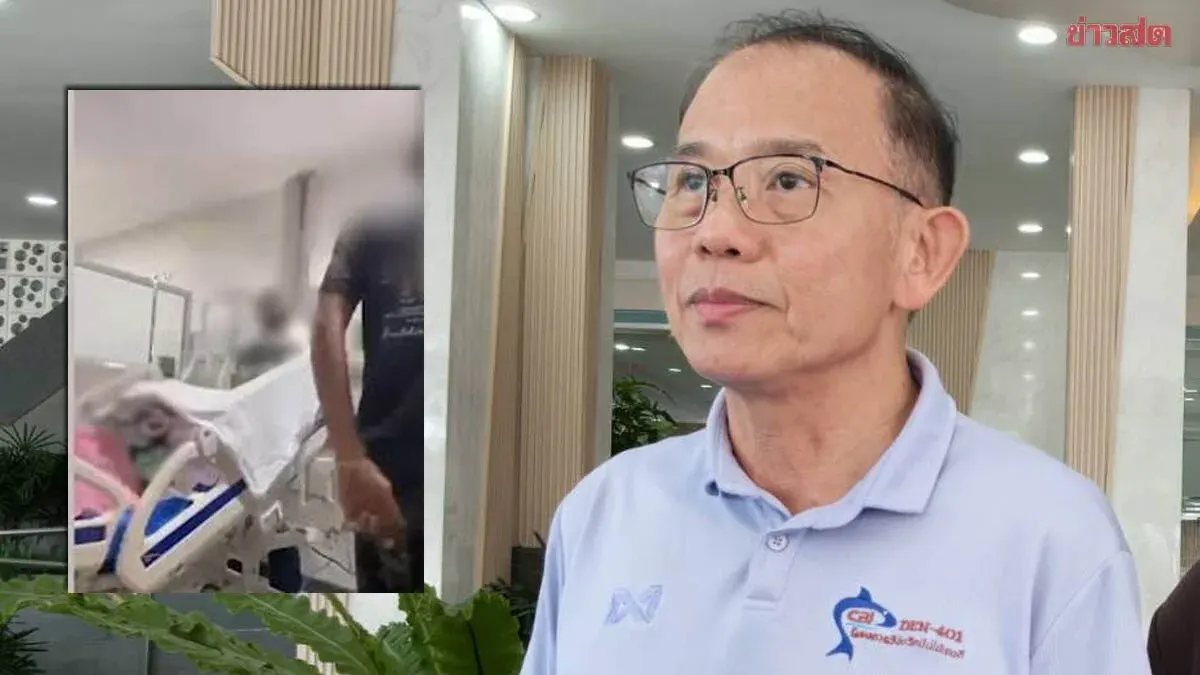
At 9:00 a.m. on November 14, 2026, Pattaya Patamakun Hospital Director Dr. Wichai Thanasophon and attending physician Dr. Thanakorn Jaturasuwan (Dr. Benz) addressed the media regarding the death of Ms. Natthida Uysakul, 17, a Grade 11 student at Sattahip Witthayakhom School. The family had raised concerns about contractors drilling and renovating the patient room while she was undergoing treatment, shortly before her condition deteriorated fatally.
Hospital administrators gave reporters a tour of the special semi-critical care ward on the third floor of Building 5, an 11-bed unit with close nursing supervision and a central monitoring system for tracking vital signs — funded by local donations in Bang Lamung district. The drilling points for mounting equipment and running monitor cables were shown; these were the focus of the family's complaint.
Dr. Wichai explained the ward was designed for patients needing more support than a general private room but not full ICU care, or those without relatives able to provide constant bedside attendance. To improve nursing efficiency, the hospital contracted outside technicians to install a central monitoring system similar to ICU setups, allowing nurses to observe multiple patients from one station.
Dr. Wichai acknowledged the footage of the contractors at work looked unsuitable and reflected inadequate precautions, vowing to improve operational protocols. He stated the work involved only limited drilling at specific points to anchor devices and run cables, using dust extraction, with each hole taking little time. Patient relocation was difficult due to high occupancy and the need for continuous close monitoring.
Dr. Wichai admitted he was not present during the contractor work, but based on information received and a retrospective assessment, the hospital found no evidence the activity harmed other patients in the room. Dr. Thanakorn detailed the medical timeline: the patient was first admitted on August 28, 2026, with neck pain, rapidly progressing to severe limb weakness and respiratory failure requiring intubation. Imaging and MRI revealed a suspected cervical spinal tumor compressing the nervous system, causing paralysis and breathing inability. She was then transferred to Rajavithi Hospital in Bangkok for further treatment.