PM Anutin Convenes Emergency Meeting on River Toxins, China Pledges Cooperation
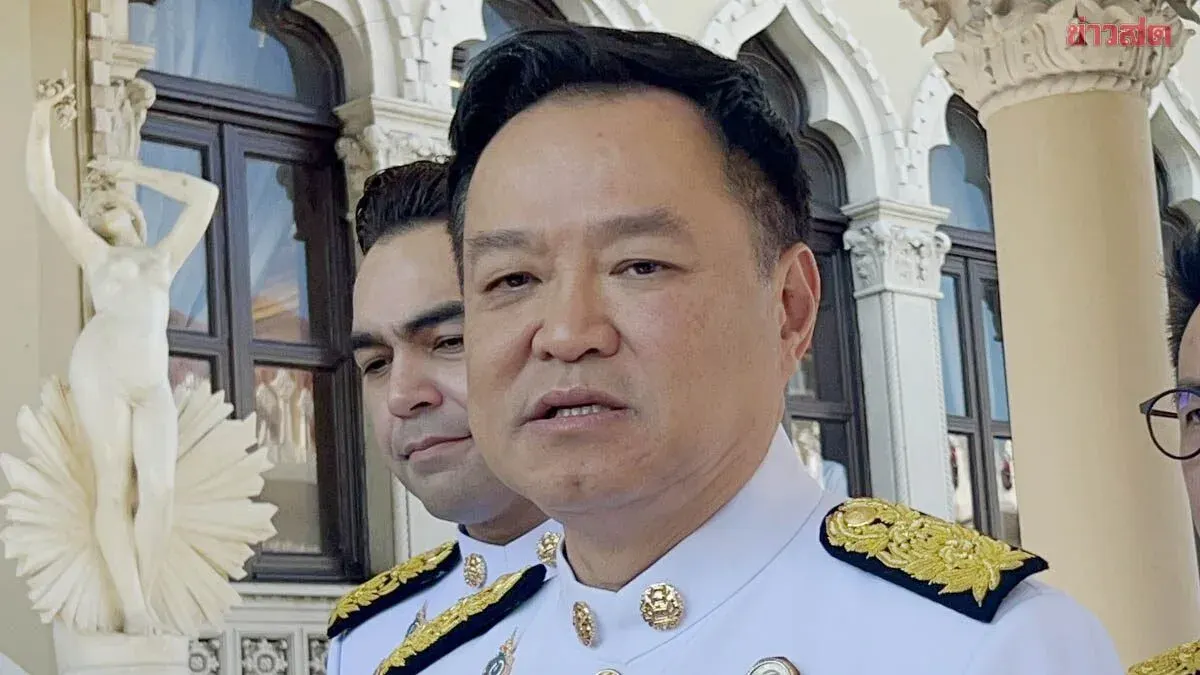
Prime Minister Anutin Charnvirakul convened an emergency national command meeting to address heavy-metal contamination in the Kok, Sai, and Ruak rivers in northern Thailand. He disclosed that Chinese President Xi Jinping pledged Beijing does not support environmentally destructive activities and will cooperate on water-quality monitoring and technical solutions. The issue will be taken up at upcoming ACMECS and Mekong-Lancang Cooperation summits involving China, Myanmar, and other regional partners.
Prime Minister Anutin Charnvirakul, in his capacity as Minister of Interior, chaired an emergency meeting of the National Disaster Prevention and Mitigation Command (NDPMC) at Government House at 11:05 a.m. on November 21 to follow up on the contamination of water sources. Attending were Deputy Prime Minister Yoschanan Wongsawat (Minister of Higher Education, Science, Research and Innovation), Deputy Prime Minister and Finance Minister Ekaniti Nitithanprapas, Natural Resources and Environment Minister Sutat Chumkhlin, Public Health Minister Phatana Phromphat, Interior Ministry Permanent Secretary Chayathorn Thayathorn, and relevant agencies.
Anutin explained that the Saturday meeting was called because of the serious pollution situation in the Kok, Sai, and Ruak rivers in the North. The government is closely monitoring the detection of heavy metals and has directed the Department of Disaster Prevention and Mitigation to deploy teams on the ground, emphasizing inter-agency cooperation to relieve public distress and safeguard health.
Anutin added that on November 20, following the APEC leaders' meeting in China, he, Deputy Prime Minister Yoschanan, Deputy Prime Minister and Foreign Minister Sihasak Phuangketkeow, and Public Health Minister Phatana discussed cross-border water pollution with President Xi Jinping. Thailand had previously shared data and requested Chinese cooperation because some toxic substances from mining and mineral processing in Myanmar — where Chinese and Myanmar entities operate jointly — flow across the border into Thai rivers. After the Chinese Premier's recent visit to Thailand, internal communications appear to have taken place.
"China confirmed it has never supported activities that destroy the environment, especially those affecting people's quality of life, and stands ready to cooperate with Thailand on river toxin issues and technical support to establish systematic water-quality monitoring," Anutin said.
These matters will be raised at the ACMECS (Ayeyawady-Chao Phraya-Mekong Economic Cooperation Strategy) summit on November 28 and at the Mekong-Lancang Cooperation (MLC) leaders' meeting in late December, which will include China, Myanmar, Thailand, and two or three other countries, to sustain cooperation because the problem affects citizens across the region.
Anutin stressed that the deputy prime minister's field visit represents the whole government, not just a single ministry, to solve and prevent pollution in Thai rivers whether the source is domestic or foreign, ensuring it does not recur.
He also noted that today's meeting would discuss electronic waste, citing the recent floods in Prachin Buri province where floodwaters triggered contamination incidents.