PM Anutin Pushes Evidence-Based Anti-Corruption Fight
PM Anutin chairs anti-corruption meeting, emphasizing evidence-based enforcement and institutional oversight rather than perception-based rankings to rebuild Thailand's international reputation.
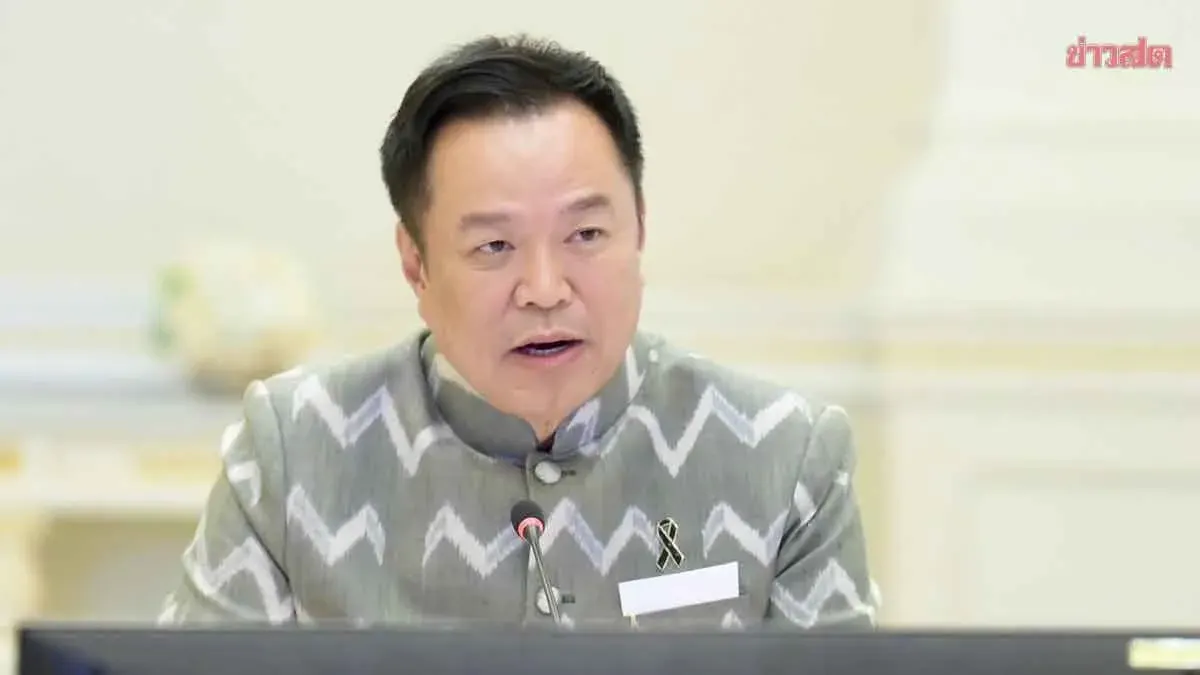
Prime Minister Anutin Charnvirakul chaired the Anti-Corruption Coordination Committee meeting on July 23, 2025, at Government House's Phakdi Bodindorn Building, with Deputy Interior Minister Paradon Pariyannantakul, Deputy Minister for Digital Economy and Society Nann Bunyathida Somchai, and committee members in attendance.
Anutin opened the meeting by saying Thailand has gained international trust and confidence, and that reform goes beyond preventing corruption to embracing the rule of law, transparency, accountability, and verifiability. He acknowledged that while the system has gaps, these represent a starting point for reform rather than failure. The government's goal is not merely to improve rankings based on public perception but to rely on solid evidence and documentation. He noted that asking opponents claims the government is corrupt while supporters claim it is not yields no substance, so Thailand must base anti-corruption efforts on verifiable references and evidence.
Anutin added that public sentiment both domestically and internationally about corruption has declined, damaging the nation's reputation. The government must strengthen prevention and prosecution efforts strictly. Thailand has declared war on all forms of corruption, drug trafficking, scams, human trafficking, and money laundering, with authorities seizing 40 billion baht in assets from law violators under this administration.
The Anti-Money Laundering Committee reported significant asset seizures, with the National Anti-Corruption Commission, State Audit Commission, Ombudsman, and Public Sector Anti-Corruption Committee all conducting investigations. Anutin explained that various agencies—including the NACC, AMLC, and police—are already investigating local civil service exam fraud, contrary to claims that internal investigations would be like having the defendant judge themselves. Deputy PM Pakorn Nilpraband leads an appointed committee coordinating agencies to maximize enforcement efficiency, with multiple agencies now effectively competing to tackle corruption.
Anutin expressed confidence that no one can escape accountability given the parallel institutional oversight demonstrating clear government intent to build credible systems. The AACC seeks cooperation as a linking mechanism between government, private sector, civil society, and academia to work on unified data and goals, while pushing legal reforms, technology application to reduce discretion, and transparency.