Thai Central Bank Acts to Curb Online Fraud Draining Billions
Thailand's central bank governor warned that online fraud drained over 43 billion baht in 2024, though losses have since declined. He said the scams move money into cash, gold, foreign currency and digital assets like USDT, requiring system‑wide tracking. The Bank of Thailand is tightening controls on large cash withdrawals, gold trades and foreign‑exchange transactions, and cooperating with regulators to combat illicit fund flows.

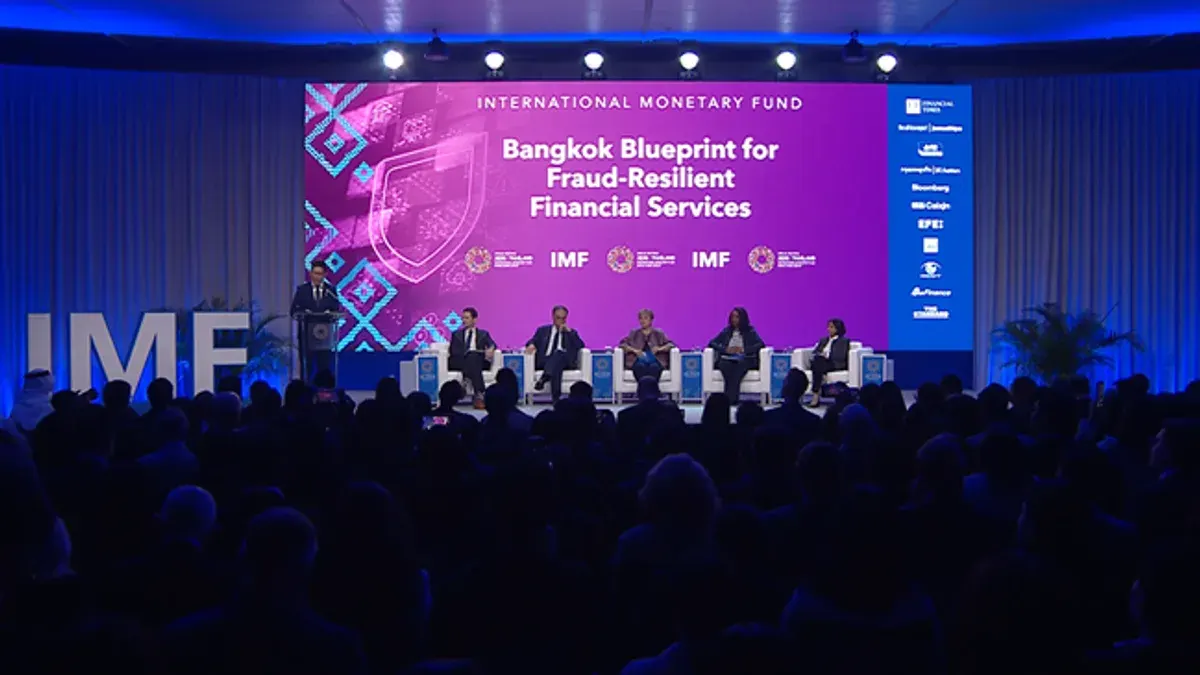
Shock! Online fraud drains Thai money 43 billion baht. Vithai rushes to cut cycle of mule accounts–gold to restore confidence. Vithai Rattanagorn, Governor of the Bank of Thailand (BOT), said that financial fraud and cybercrime are not just problems causing damage to the public but also a risk to confidence in the financial system and could undermine the economic benefits expected from the shift to a digital economy, such as lowering costs, increasing speed, and expanding access to financial services. Data on financial fraud losses in Thailand show that although the situation is improving, the amount of money lost remains high. In 2024, losses exceeded 43 billion baht, before falling to 32 billion baht in 2025, and in the first half of 2026 they stood at about 9 billion baht. These figures show progress from joint measures, but it is still necessary to close loopholes to prevent losses from rising again. The key problem is that money obtained from scams does not stop at victims' accounts or mule accounts; it can be moved on to cash, gold, foreign currency, and digital assets, especially USDT, a stablecoin pegged to the US dollar. This means solving the issue cannot be limited to preventing money transfers or supervising individual banks; it requires tracking and blocking money trails throughout the system. So far, the BOT has tightened reporting of cash withdrawals over 5 million baht, including high-value gold transactions, stepped up oversight of foreign-exchange transactions, and coordinated with the Securities and Exchange Commission to strengthen supervision of digital-asset transactions, especially those involving USDT, while working with financial institutions to prevent the financial system from being used to support illegal activities. Another important approach is to create cooperation mechanisms between agencies to enable information exchange, suspension of suspicious transactions, and swift handling of related accounts. Thailand has issued an emergency decree on the prevention and suppression of technology-related crime to provide legal authority for account suspension and to determine responsibility of relevant sectors. Vithai said financial threats include unauthorized transactions and scams that trick victims into transferring money themselves, which require preventive, detective, responsive, and remedial measures linked from the design of financial services to post-incident damage management. This approach aligns with the 'Bangkok Blueprint for Fraud-Resilient Financial Services' or the Bangkok blueprint to build immunity for financial services against fraud, which the BOT is pushing together with the International Monetary Fund and the World Bank Group through a five-pillar action framework: laying strategic and legal foundations, end-to-end risk prevention, using existing risk‑mitigation measures and law enforcement, expanding domestic and international cooperation, and protecting consumers while building capacity to respond to financial threats. Vithai said raising security must go hand in hand with developing innovation, because if people lack confidence in using digital financial services, the benefits of technology in lowering costs and expanding access may not be fully realized. Cooperation among all sectors and internationally is therefore essential to reduce losses and stem the flow of illicit funds.