The government is advancing 11 priority business regulation reforms through a public-private committee, including changes to transit laws and truck height limits that aim to reduce costs and streamline operations for Thai businesses.
Private sector proposals are showing results as the Joint Public-Private Committee commends the government for accelerating improvements to laws and regulations that hinder business operations, moving forward with 11 priority items ready for immediate action.
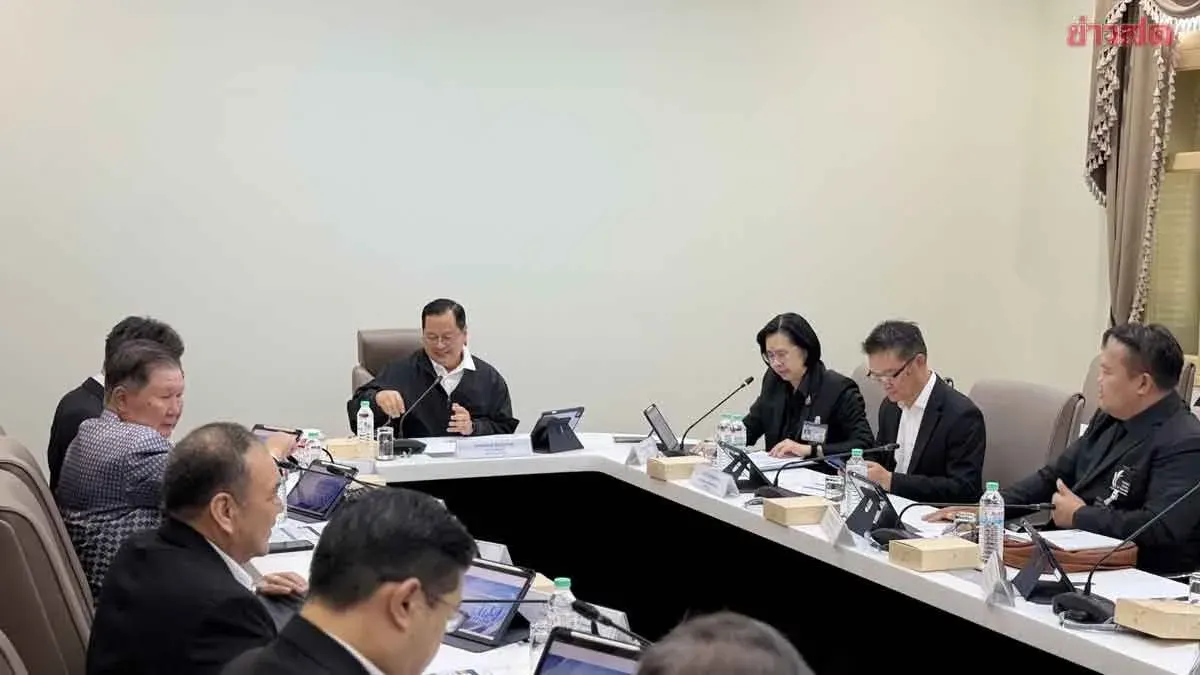
The Joint Public-Private Committee of Three Institutions praised the government for prioritizing and expediting reforms to legal and regulatory obstacles to business. After joint public-private submissions to the Public-Private Partnership Committee for Economic Problem-Solving, tangible progress is now visible through prioritized proposals and unlocking of trade and logistics regulations that the private sector has consistently advocated.
The government's approach, led by Deputy Prime Minister Pakorn Nilprarath, represents positive cooperation between public and private sectors aimed at solving actionable problems with real results, particularly reducing costs, streamlining procedures, and removing barriers affecting Thai business competitiveness.
From the latest progress, 58 legislative reform proposals have been systematically prioritized, with 11 items ready for immediate or ongoing implementation to be expedited first. Another 21 items are actionable but require coordination with relevant agencies, while 26 items require further feasibility and policy impact study.
"The heart of the matter is not merely the number of laws reviewed, but converting business sector feedback and concerns into real solutions, so that operators experience tangible results through reduced procedures, lower costs, reduced uncertainty from regulatory interpretation, and greater business flexibility," the committee stated.
One significant example is approval of principles to reform transit and transshipment laws, standardizing the definition of "transit" with customs law to cover both border crossings and transshipment. Oversight measures will align with risk levels, allowing low-risk operations to shift from a permit system to a notification system under Risk-based Regulation principles. This will reduce interpretation redundancy, eliminate unnecessary discretion, clarify law enforcement, and accelerate goods movement through Thai ports and airports, strengthening Thailand's role as a regional trade, transport, and logistics hub.
Another concrete advance is approval to raise the height limit for trucks carrying 40-foot High Cube containers from 4.2 meters to 4.6 meters from the ground, aligning with international standards. This reduces transport constraints, improves logistics efficiency, and lowers operator costs.
Both cases demonstrate that regulatory refinement, though detailed operationally, directly impacts business efficiency and costs. Extending such approaches to other regulations will foster a pro-business and investment environment while strengthening Thailand's long-term competitiveness.
The committee thanked Deputy Prime Minister Pakorn Nilprarath and relevant government agencies for welcoming private sector input and expediting implementation.