Deputy PM Supaporn, FTI Partner on Thailand Food Valley
The user wants a short summary of the article for a news website covering Ko Lanta and Southern Thailand. The summary must be in English, 1-2 sentences, 120-220 characters (max 240), factual, no filler, lead with what happened then the most
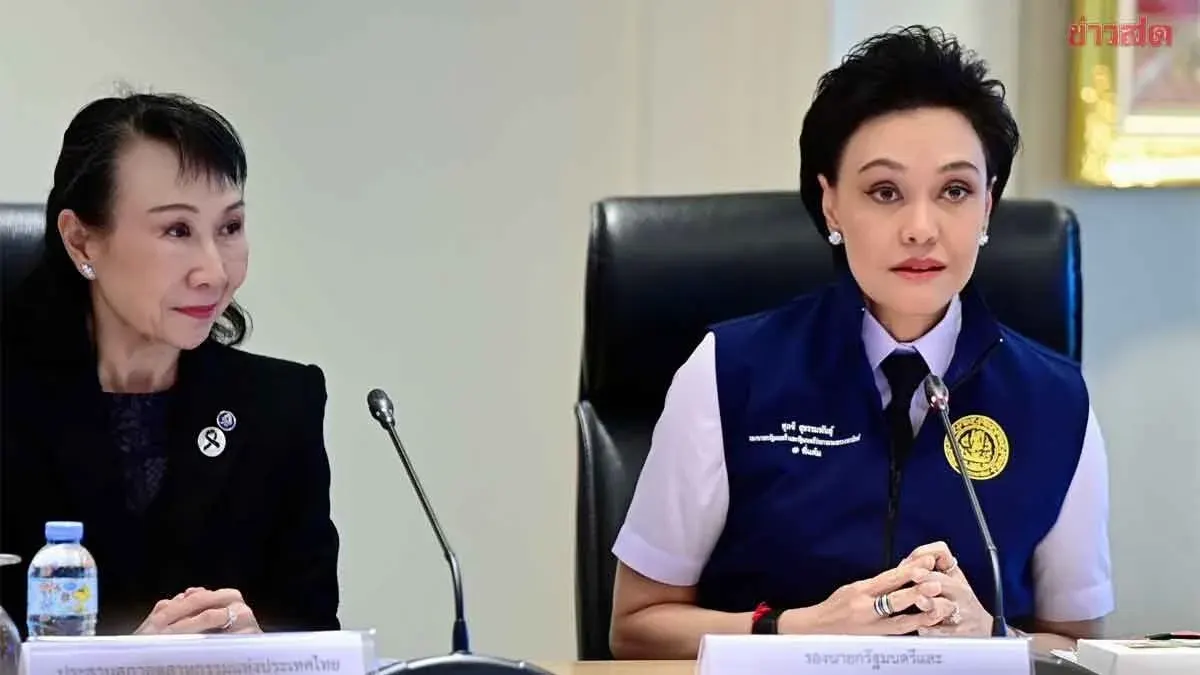
Deputy Prime Minister and Commerce Minister Supaporn Suwanthapun revealed that on October 28 she met with Federation of Thai Industries (FTI) Chairwoman Pimjai Leeissaranukul and FTI executives to set a cooperation framework for driving the Thai economy, tackling trade challenges, raising industrial competitiveness, and creating broad-based opportunities for Thai entrepreneurs.
Amid economic challenges — rising inflation, uneven growth, and trade imbalances — public-private collaboration is vital for resetting Thailand's economic direction. The Commerce Ministry aims to create trade balance across markets, products, and income, not merely by boosting export value but by adding value domestically, spreading opportunities to entrepreneurs at all levels, especially SMEs, and strengthening domestic supply chains while expanding markets and reducing risks from global volatility.
The policy drive will use four key pillars: "Rethink Partnerships" — rethinking partnerships to open new markets and diversify risk; "Redefine Value" — creating added value through innovation, intellectual property, and leveraging the potential of Thai products; "Rewire Trade" — linking trade, investment, technology, and entrepreneurs across supply chains; and "Rebuild Trust & Resilience" — building confidence and resilience so businesses can handle uncertainty and grow sustainably.
Regarding cooperation with the FTI, the Commerce Ministry is ready to promote Thai products via the Made in Thailand (MiT) certification and the Buy Thai project to increase market access for Thai goods, stimulate domestic consumption, and support greater use of locally produced raw materials and parts (Local Content), which will help fortify supply chains and add domestic economic value. This goes hand-in-hand with pushing free trade agreement (FTA) negotiations to open new markets, reduce trade barriers, and diversify risk from over-reliance on any single market.
In addition, both sides discussed upgrading high-potential industries, particularly pushing Thailand to become a global gem and jewelry hub, elevating agricultural products from commodities to value-added processed goods through the Thailand Food Valley project, and promoting and protecting intellectual property to support innovation, creativity, and knowledge in adding value to Thai products and services.
On SME promotion, both sides emphasize developing entrepreneur potential aligned with business readiness, expanding marketing channels both online and offline, and connecting entrepreneurs with funding sources and business networks to enhance competitiveness and expand trade opportunities. The goal is for SMEs to grow and link effectively into large-industry supply chains and overseas markets.
At the same time, the Commerce Ministry aims to promote cooperation with trading partners in a mutually beneficial format, shifting from a "Sell To" mindset to a "Sell With" approach through co-creation, combining Thailand's strengths with those of partner countries.