Thailand Launches Defense Innovation Plan To Reduce Foreign Reliance
Thailand is consolidating defense research funding across multiple agencies to develop dual-use technologies and reduce foreign reliance on critical systems like drones and batteries. The new "National Security Innovation Ecosystem" will sh
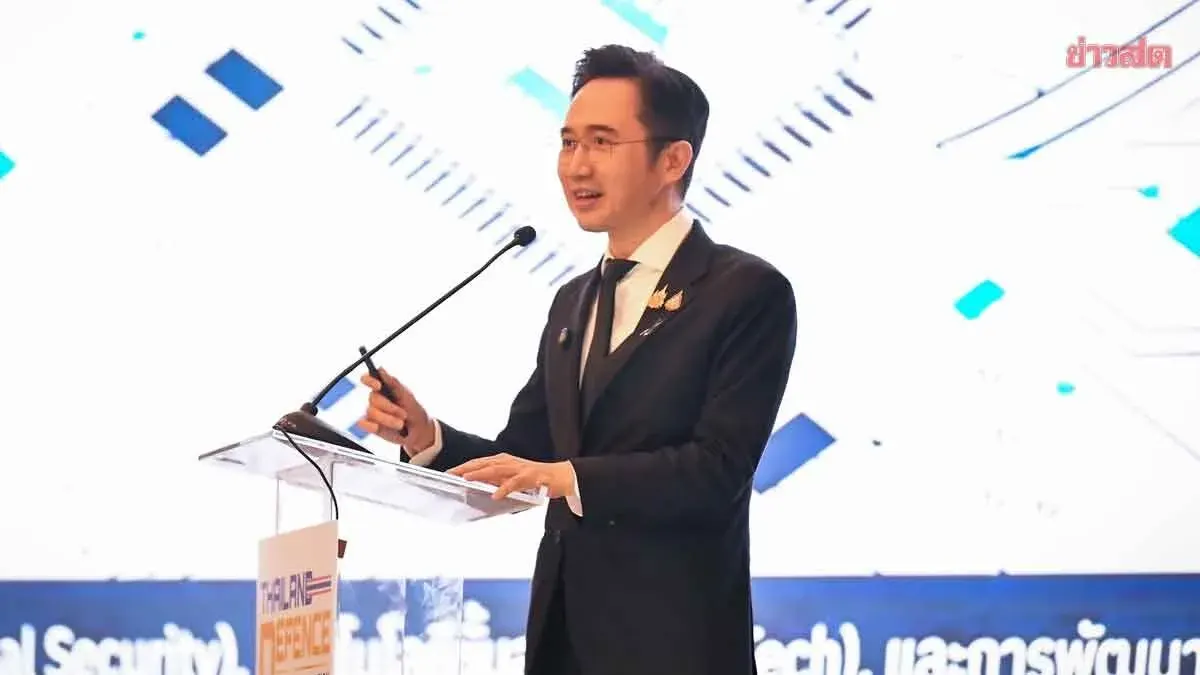
Deputy Prime Minister Yos Chanan Wongswaddi, who also serves as Minister of Higher Education, Science, Research and Innovation, announced on July 10, 2025, at the Office of the Permanent Secretary of the Ministry of Defence a memorandum of understanding (MOU) between the Ministry of Higher Education, Science, Research and Innovation and the Ministry of Defence. The agreement was unveiled during the Thai Defence Industry Exhibition (THAIDEF-EX 2026) and marks a significant shift in how security research funding is managed.
The partnership will consolidate research budgets from the National Research Council of Thailand (NRCT), National Innovation Agency (NIA), and the National Science and Technology Development Agency (NSTDA) to establish a "National Security Innovation Ecosystem" within four years. More than a thousand military officers, defence ministry officials, and defence industry entrepreneurs attended the event.
The core innovation involves transforming the funding model from a traditional granting agency approach—which often rejects unprepared projects—to a program management unit (PMU) that actively develops projects alongside researchers until they produce tangible results.
Chanan emphasized that technological self-reliance is critical during national crises. He noted that many skilled Thais are unaware they can contribute to defence ministry projects. The new system aims to harness this talent pool and create a bridge between the civilian economy and security sectors through dual-use technology concepts.
Chanan illustrated current geopolitical threats through two forms: physical warfare and technology warfare. He gave the example of drone frequency dependence: if a single chip controlling a specific frequency is compromised or jammed, the entire system fails. Similarly, if adversaries develop lighter, longer-lasting batteries, they gain superiority. Thailand must strengthen its foundational technological capabilities to avoid such vulnerabilities, which directly impact economic negotiating power and GDP growth.
To drive economic growth, the government needs new growth engines. The strategy involves scaling up startups developed over the past decade into ready-to-use companies. The dual-use approach will connect economic and security sectors.
A key structural improvement involves the Department of Science and Technology of the Ministry of Defence now coordinating integrated budgets from various agencies. The new PMU model differs fundamentally from traditional granting: rather than simply distributing funds and rejecting unready projects, the PMU actively manages and develops projects with researchers until deliverables are achieved.