Thailand, Malaysia Boost Border Infrastructure and Trade
Thailand and Malaysia will jointly open new border checkpoints and accelerate infrastructure projects including ferry services, railway integration, and bridge construction to boost trade and tourism. The two nations aim to reach $30 billio
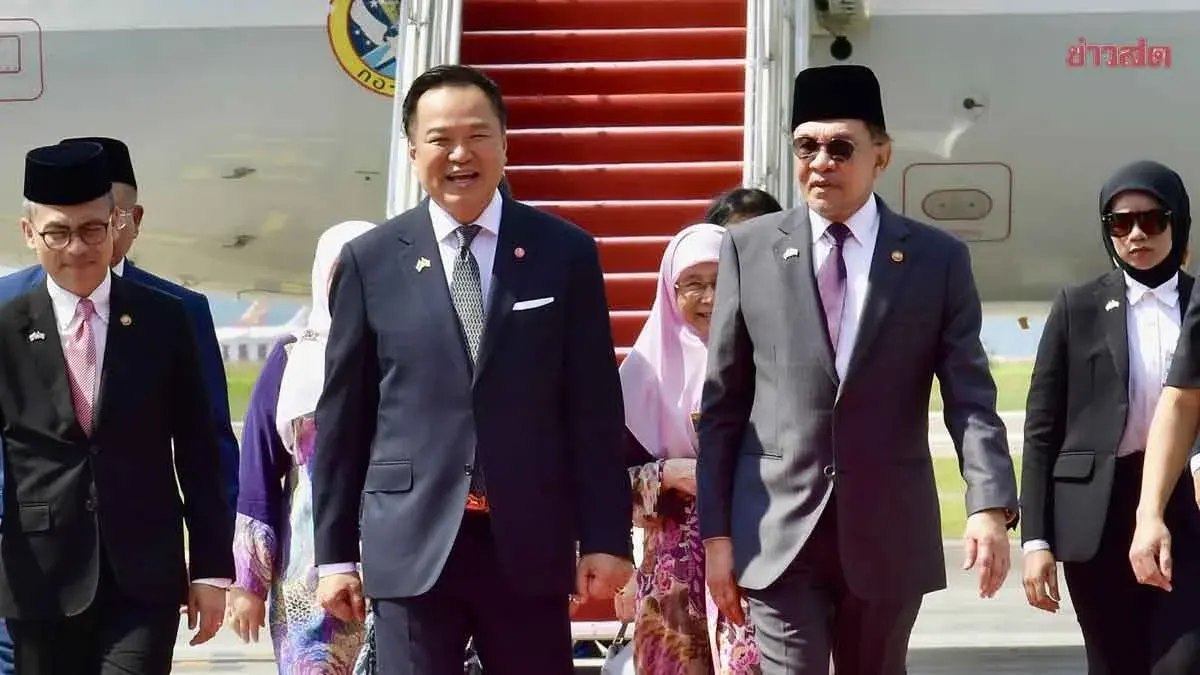
Thai Prime Minister Anutin Charnvirakul arrived at Kuala Lumpur International Airport on July 9, 2025 (local Malaysian time) for an official visit to Malaysia. Malaysian Prime Minister Anwar Ibrahim personally welcomed him with a formal reception ceremony at the airport's VIP lounge. Both leaders inspected a Guard of Honour and traveled together by car to the Malaysian Prime Minister's office (Perdana Putra Complex) in Putrajaya for official discussions.
During talks at 1:10 p.m., government spokesperson Ratchada Thanadirek revealed that both prime ministers agreed to elevate cooperation across all dimensions and create an "area of opportunity" in economics, trade, investment, tourism, and security—directly improving living standards and incomes for both nations' citizens.
A key focus was accelerating infrastructure connections between Thailand and Malaysia to ease travel, reduce shipping costs, and strengthen border trade. The two leaders will jointly open the new Sa Dao and Bukit Kayu Hitam border checkpoints tomorrow, which represent Thailand-Malaysia's highest-value trade points.
Both countries agreed to advance several major projects: reopening ferry service between Satun Province and Kuala Perlis, integrating railway ticketing systems between Bangkok, Hatyai, and Butterworth, rehabilitating the Sungai Kolok-Rantau Panjang railway line, and constructing new bridges to improve regional transportation and logistics.
Alongside infrastructure development, Thailand and Malaysia will jointly promote investment, support local entrepreneurs, create jobs, develop workforce skills, and enhance tourism to ensure border communities benefit from economic growth.
On security, both countries reaffirmed cooperation in building peace in southern border provinces, emphasizing that economic development and peacebuilding must advance together. They pledged increased cooperation against transnational crime, drug trafficking, human trafficking, and border crime, while establishing joint task forces to monitor the Kolok River and develop flood warning systems.
Economically, both nations target trade value reaching $30 billion USD in the near future and are strengthening supply chains in food security, energy, and advanced technology. Agriculture ministers were tasked with expediting market opening for agricultural and fishery products. The two leaders also witnessed the exchange of agricultural cooperation agreements covering crops and livestock.