Constitutional Court To Rule On 400 Billion Baht Emergency Decree
Thailand's Constitutional Court will rule July 9 on whether the government's 400 billion baht emergency borrowing decree is constitutional, with the opposition arguing energy transition spending doesn't meet the urgent necessity standard. T
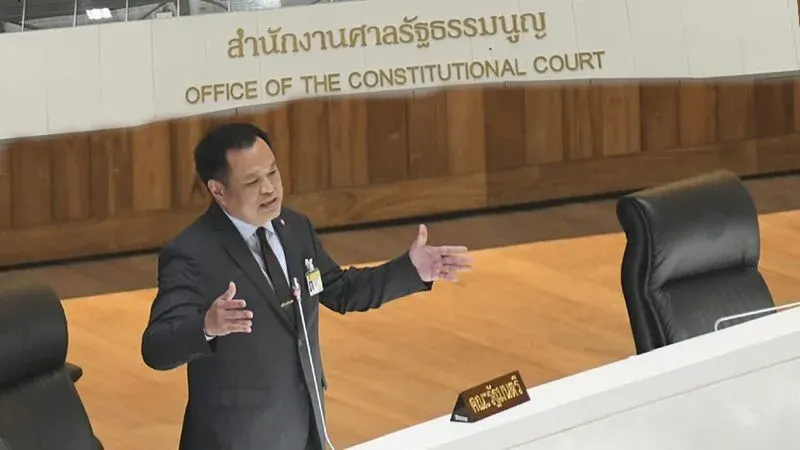
July 9 represents another fateful day for Prime Minister Anutin Charnvirakul's government, as the Constitutional Court is scheduled to rule on the 400 billion baht emergency borrowing decree challenged by the opposition for constitutional compliance. Though legally framed, the verdict carries substantial political consequences, potentially impacting government stability, economic confidence, and the future exercise of executive power. The central dispute concerns 200 billion baht designated for energy transition, which the opposition contends fails to meet the constitutional standard of "urgent necessity" under Articles 172 and 173, since it does not constitute an emergency beyond parliament's deliberation capacity. Reviewing past court rulings reveals the court considers not only the borrowing's purpose but heavily weighs the crisis conditions at the time. For instance, the 350 billion baht decree following the 2011 massive floods and the 1.5 trillion baht decree during COVID-19 were both approved as constitutional because they addressed severe national impacts requiring emergency powers. However, the 2 trillion baht infrastructure development program in 2014 was ruled unconstitutional for failing to meet urgent necessity criteria. This case ultimately presents two outcomes: if the court deems the decree constitutional, the government may proceed with borrowing and potentially adjust details based on court observations; if ruled unconstitutional, the decree becomes void from its inception. Beyond economic repercussions, the Anutin government faces political pressure. While the law does not mandate the prime minister's resignation or parliament dissolution, questions of political accountability will inevitably arise.