Thailand's First Lunar Mission Launches Nationwide STEM Initiative
Thailand's first lunar instrument launches August 24 aboard China's Chang'e-7 mission, with nationwide livestreaming aimed at inspiring 3 million students in science and technology education.
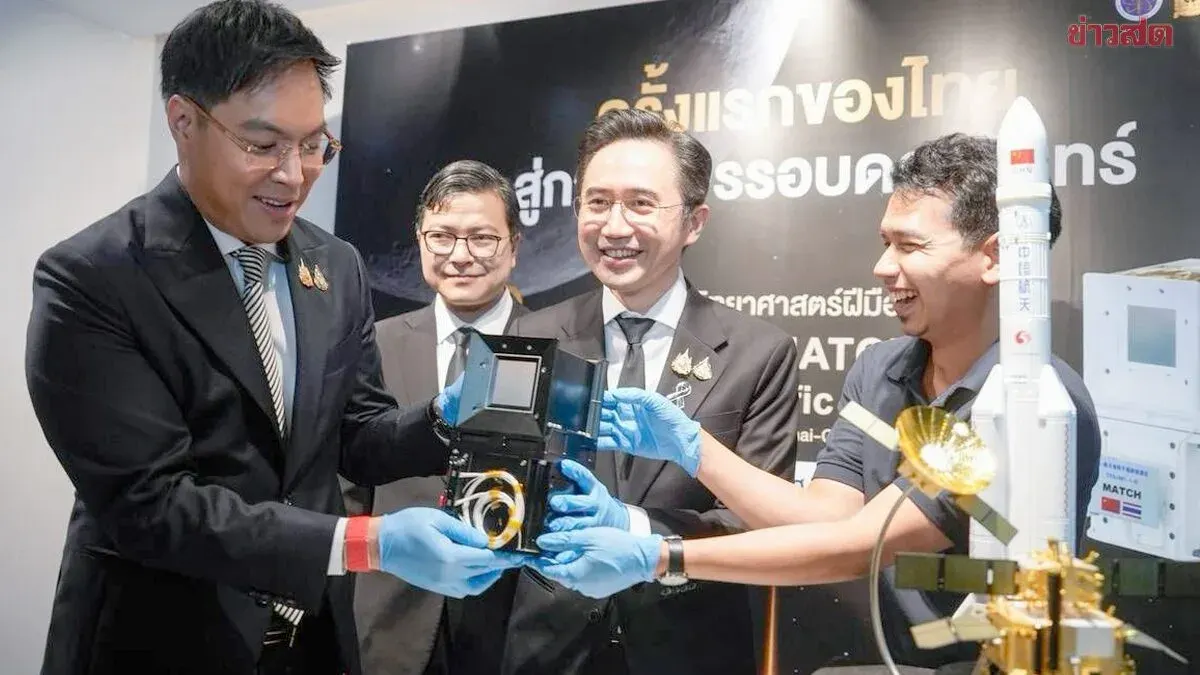
Thailand is preparing to send its first-ever scientific instrument to the moon. Deputy Prime Minister Yossanan Wongsuwan announced on August 4 that the country is ready to launch the CE-7 MATCH payload—a Thai-designed and developed scientific device—as part of the Chang'e-7 international lunar exploration mission. The National Astronomical Research Institute of Thailand (NARIT) is leading the effort in partnership with the Education Ministry, Thai PBS, and Sea (Thailand), with live coverage of the Long March 5 Y14 rocket launch scheduled for August 24.
Yossanan emphasized that this historic achievement represents more than scientific progress—it demonstrates a significant boost to human capital and the government's commitment to an innovation-driven economy. The CE-7 MATCH device will orbit 200 kilometers above the lunar surface and monitor solar storms for three years, generating cutting-edge research while training world-class Thai engineers. Leading economies with strong growth all conduct advanced space research, Yossanan noted, because space-grade research produces technological spillovers that spark new innovations and intellectual property across multiple sectors.
The heart of the Thailand Moonshot initiative, however, is human development. For the first time, the Higher Education and Education Ministries have jointly organized this effort to livestream the historic event to over 3 million young people nationwide. By partnering with global leader Sea Group and its digital platforms reaching 20 million users, Thailand aims to ensure equitable access to STEM education and support the UN Sustainable Development Goal 4 on quality education.