Thailand Must Close Loopholes Enabling Foreign Lawbreakers
Most Thais view money laundering and illegal foreign investment as serious threats to the economy, with government corruption identified as the primary factor enabling such crimes across the country.
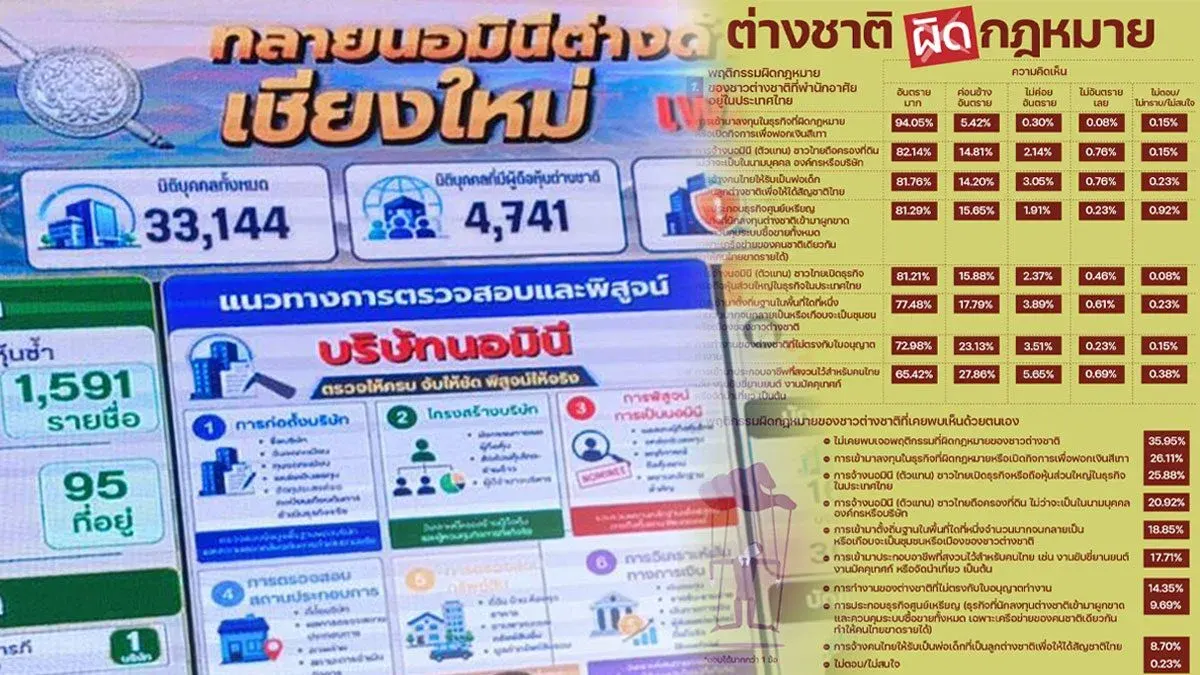
A Nida Poll survey on illegal foreign activity reveals that most Thai citizens view money laundering and illegal business investment as the most dangerous forms of foreign crime, followed by nominee land ownership, shell businesses operated for foreigners, fraudulent Thai citizenship schemes, and currency manipulation. These activities directly harm Thailand's economy by siphoning capital from the system and allowing revenue to leak abroad. Many ordinary Thais have witnessed such conduct firsthand—from money laundering to nominee schemes, large foreign settlements, and illegal occupations—showing these are real problems across the country, not merely media stories. The survey identified government corruption as the leading factor enabling foreign crimes, cited by over 67 percent of respondents, with weak penalties, legal gaps, political corruption, and official neglect also playing major roles. This reveals the problem is rooted in internal structural weaknesses, not foreigners alone. While Thailand needs foreign investment, tourists, and skilled labor to drive its economy, these must be coupled with strict and fair law enforcement. Legitimate businesses should be promoted while lawbreakers face prosecution without exception. The government must urgently plug identified loopholes by combating official corruption, modernizing laws for transnational crime, increasing penalties for nominee schemes and money laundering, creating transparent oversight, and enforcing laws fairly. Failure to act risks undermining investor confidence, damaging Thai entrepreneurs, and causing long-term economic harm. The time has come for serious government action to prevent Thailand from becoming a safe haven for criminals and to protect Thai citizens' interests and the nation's future economy.