Government Criticized Over Strict Poor Card Eligibility Rules
Over 9 million Thais were rejected for the 2025 poor card due to strict government criteria, but authorities have agreed to relax rules for old vehicles and students after widespread criticism of unfair eligibility requirements.
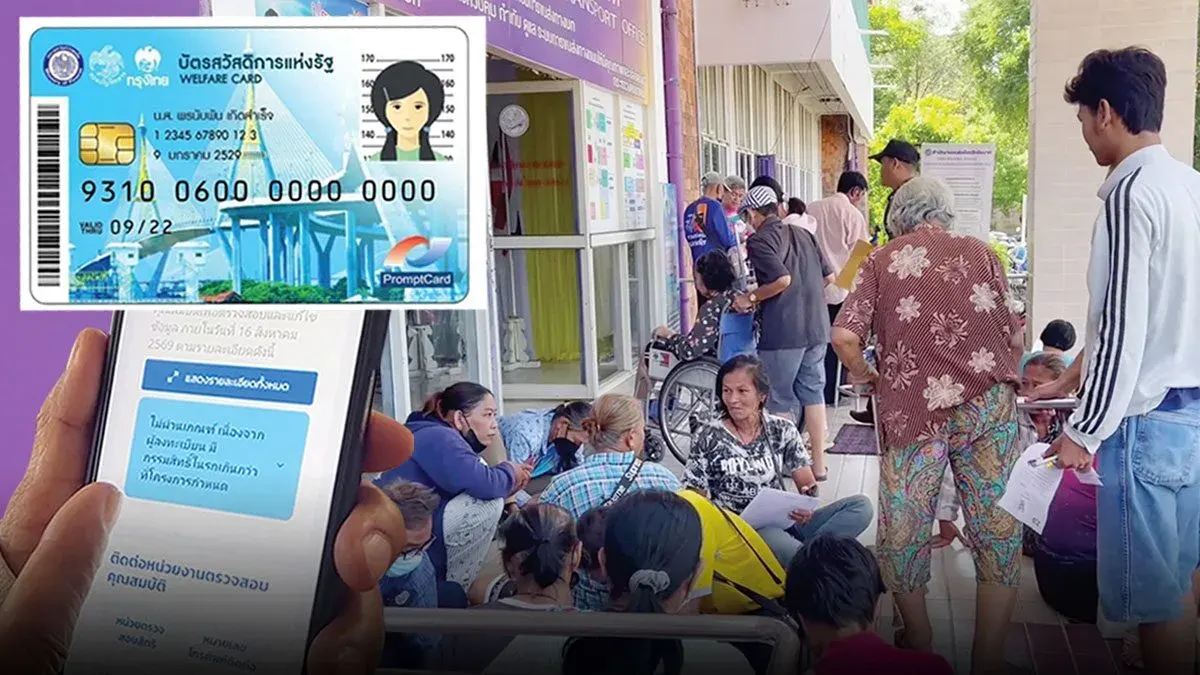
Images of poor and struggling villagers, elderly citizens, and those living hand-to-mouth have flooded appeals for the 2025 state welfare card, or poor card, in a heartbreaking display. Faces full of desperation reflect their pleas for the government to relax requirements and allow them to qualify. Applicants must submit documentation proving their poverty. The Anuthin government has introduced numerous strict criteria and complex details for this year's poor card eligibility, citing the need for thorough verification to ensure aid reaches the truly poor. However, concerns abound about limited government budgets and whether funds will be exhausted. Registration results show 18.82 million applicants, with 9.51 million passing the criteria and over 9 million rejected—effectively cutting eligibility in half. Compared to the previous 13 million poor card holders, substantial numbers have lost their status, sparking widespread criticism of overly rigid rules, such as immediately disqualifying anyone listed as owning a car or motorcycle, despite many being over 20 years old or non-functional, or affecting struggling students. The government's verification process proved insufficiently detailed, lacked consistency, and failed to coordinate across relevant agencies, resulting in flawed implementation. Many citizens were unfairly excluded. Recently, however, the government agreed to review its decision, extending the appeal deadline to September 20, 2025, and will adjust rules to exempt vehicles over 20 years old and motorcycles over 15 years old, as well as restore benefits for all students in and out of the formal system. The hope is that the government will now plug these gaps and remedy the previous poor execution.