Thailand Pitches EV Production to Seven Global Auto Giants
Deputy PM and Finance Minister Ekaniti Nitithanpraphas said Thailand's new 35% excise tax on fully imported electric vehicles has won praise from Japanese officials and businesses as a fair move that rewards genuine local investment. The policy aims to attract factory-building and supply-chain development from major global automakers across Japan, China, Europe, and South Korea, shifting Thailand's auto industry toward high-tech components like sensors and electronic control systems.
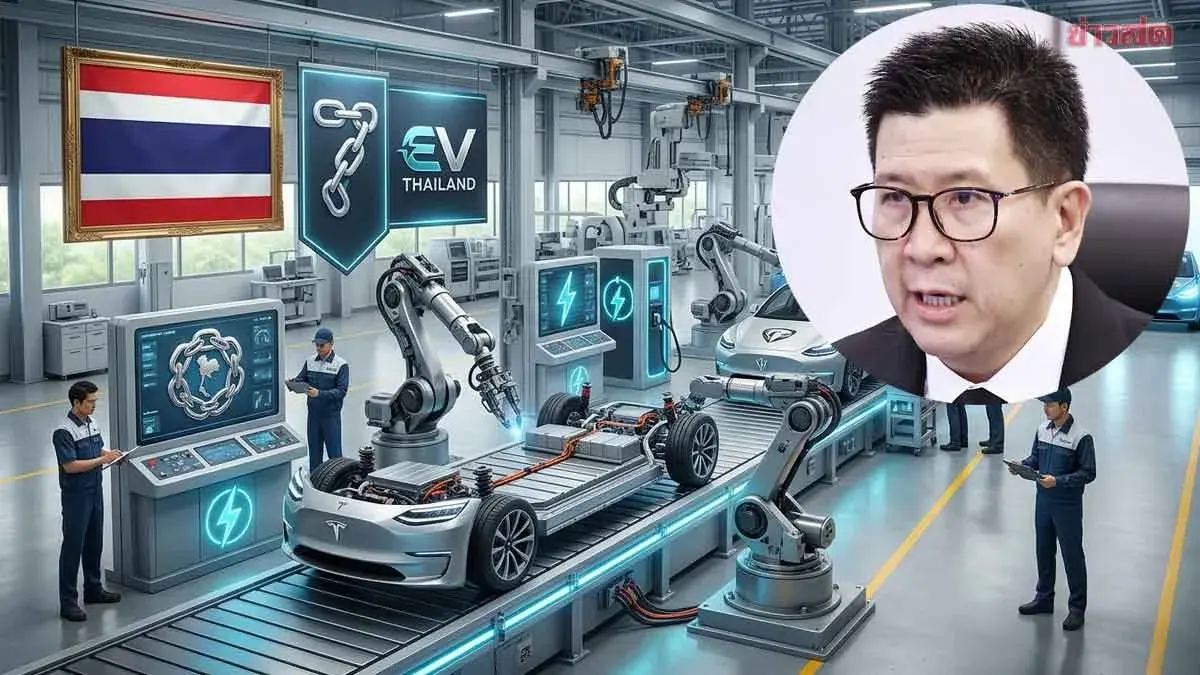
Deputy Prime Minister and Finance Minister Ekaniti Nitithanpraphas disclosed that while leading Team Thailand with the Thai business sector to Japan to meet investors and encourage investment in Thailand, the restructuring of the automotive excise tax structure — which sets a 35% tax rate for fully imported electric vehicles (BEV and REEV) or CBUs — has received positive feedback from both the Japanese public and private sectors. In talks between Thai and Japanese leaders in the Philippines, the Japanese side thanked the Thai government for the adjustment, viewing it as creating fair competition for operators investing genuinely in Thailand. The key goal of the tax adjustment is not to block vehicles from any particular country but to support operators who choose to set up factories, create jobs, and build supply chains within Thailand, both Thai and foreign investors. Ekaniti stated that operators with production bases and economic activity in Thailand will receive more favorable tax conditions, while fully imported vehicles without domestic production investment will face higher tax rates. This approach operates under World Trade Organization rules and WTO guidelines, with the government aiming to maintain a balance between market openness and protection of actual domestic investment. Ekaniti added that Thailand remains open to negotiations with automakers from all regions — Japan, China, Europe, with about 6-7 major manufacturers, plus South Korea — to bring Thai operators further into the global automotive supply chain. The government will use an Investment-Led Growth strategy, with the Board of Investment (BOI) as a key mechanism to attract new investment. Thailand is upgrading from an automotive industry focused on engines and mechanical parts to a modern automotive industry, seeking to attract production of electronic components, sensors, and vehicle brain systems to keep Thailand's automotive base competitive as the world shifts to high-tech vehicles.