Thailand Pushes to Seal Three Major Trade Deals
Thailand is pushing to finalize three major trade agreements with the U.S., EU, and UAE, with the Thai Chamber of Commerce backing efforts to secure competitive tariffs, protect agricultural products, and boost exports worth billions of bah
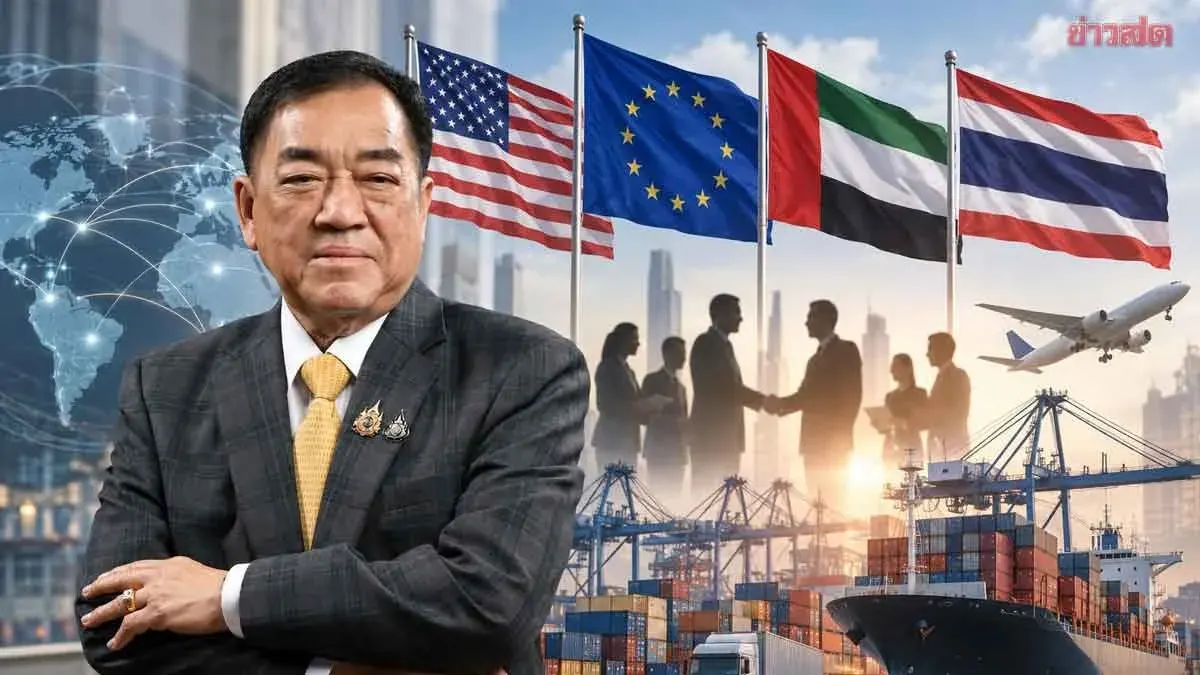
The Thai Chamber of Commerce is backing the government's push to finalize three key trade negotiations with strategic markets: the Thai-U.S. Reciprocal Trade Agreement (ART), the Thai-EU Free Trade Agreement (FTA), and the Thai-UAE Comprehensive Economic Partnership (CEPA). According to Pojai Arom Wattananon, chairman of the Thai Chamber of Commerce and Thai Chamber of Commerce Council, all three frameworks are at critical stages of negotiation.
For the U.S. negotiations, the chamber supports the ongoing mission of Prime Minister Anutin Charnvirakul and Deputy Prime Minister and Commerce Minister Suphatchi Sutthammaphan at the 81st UN General Assembly in New York. The chamber hopes this visit will build confidence in Thailand while accelerating the ART talks to reach a quick conclusion. Key priorities include securing competitive tariff rates, clarifying rules of origin, facilitating trade procedures, and providing special exemptions and protections for agricultural products, processed food, and processed seafood.
The chamber also recommends using the U.S. visit to attract leading companies to invest in Thailand's target industries, including semiconductors, advanced electronics, digital technology, AI, clean energy, healthcare, processed seafood, and premium animal feed. Such investments should be linked to technology transfer, workforce development, and inclusion of Thai entrepreneurs in supply chains.
For the Thai-EU FTA, which is entering its tenth round of negotiations in Phuket, the chamber urges both sides to quickly resolve remaining issues and move to the legal text refinement stage. The EU is a high-value market, major source of investment and technology, and sets global trade standards. Studies estimate the FTA could boost Thai GDP by approximately 1.28 percent and increase exports by 2.8 percent, worth around 350 billion baht. The chamber emphasizes the need to protect sensitive products and prepare Thai businesses for new European standards.
For the Thai-UAE CEPA, which has made over 80 percent progress, the chamber sees a significant opportunity to open markets for Thai goods and services in the Middle East, particularly food, halal products, agricultural goods, rubber, textiles, electrical appliances, vehicles, and components, as well as transport, financial, and business services. The UAE also serves as a regional hub for trade, investment, logistics, and distribution, making the CEPA completion crucial not only for direct market access but also as a gateway to the Middle East, Africa, and South Asia. This could also attract UAE capital investment into Thai infrastructure, energy, food, logistics, and future industries.
Beyond these three main frameworks, the chamber also supports accelerating the Thai-South Korea CEPA and other FTA negotiations.