Thailand's Water Reserves Lag Behind Last Year
Thailand's water reserves stand at 56 percent capacity, below last year's levels despite recent rainfall improvements, prompting officials to implement careful management strategies ahead of the monsoon season.
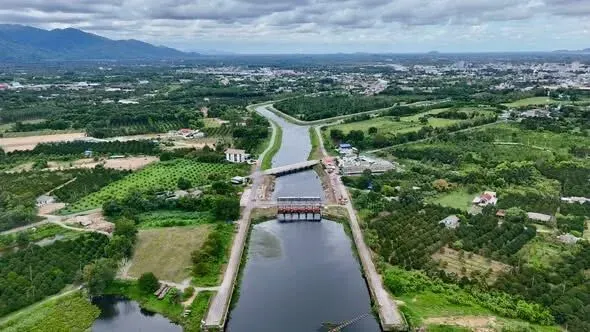
The Royal Irrigation Department reports that this year's opening water supplies remain below last year's levels, despite improving rainfall. Officials are urging careful water management and preparing for potential flooding during the full monsoon season. Agriculture Minister Suriya Jungrungreangkit emphasized that the ministry is closely monitoring water conditions and weather patterns, instructing the irrigation department to manage water resources prudently in order to ensure water security, reduce flood risks, and preserve water for the dry season.
According to data from the Smart Water Operation Center (SWOC) on July 22, 2025, large and medium-sized reservoirs nationwide held 42,563 million cubic meters of water, representing 56 percent of total capacity, with an additional storage capacity of over 34,102 million cubic meters available. However, compared to the same period last year when reserves reached 45,131 million cubic meters, this year's starting supplies are lower, despite recent increases in inflow and favorable conditions. The department is closely monitoring the remainder of the monsoon season, which will be critical for replenishing the nation's water supplies.
Rainfall from January 1 to July 19, 2025, averaged 624.6 millimeters nationwide, about 10 percent below normal, with many regions recording below-average precipitation. The western coast of southern Thailand experienced roughly 15 percent above-normal rainfall. Key reservoirs in the Chao Phraya basin—Bhumibol, Sirikit, Khwae Noi Bhumrung Dam, and Pasak Chon—currently hold 12,406 million cubic meters, or 50 percent of combined capacity, which remains manageable.
Projections indicate that water reserves should be sufficient to support consumption, ecosystem maintenance, and agriculture through the 2025-2026 dry season. In preparation for potential flooding, the Irrigation Department deployed machinery to 28 provinces between July 13-19, using 163 units including 153 pumps that moved more than 46,643 cubic meters of water. Since May 1, the department has assisted 40 provinces using 397 units of equipment to mitigate flood damage. Despite lower starting reserves, the department is managing water systematically through the Smart Water Operation Center, monitoring rainfall, reservoir levels, and river conditions around the clock.