Thailand Strengthens Health Product Innovation Through IP Protection
Thailand's FDA and Department of Intellectual Property signed an agreement July 20 to boost health product innovation through stronger IP protection, research support, and commercialization frameworks that will help entrepreneurs bring qual
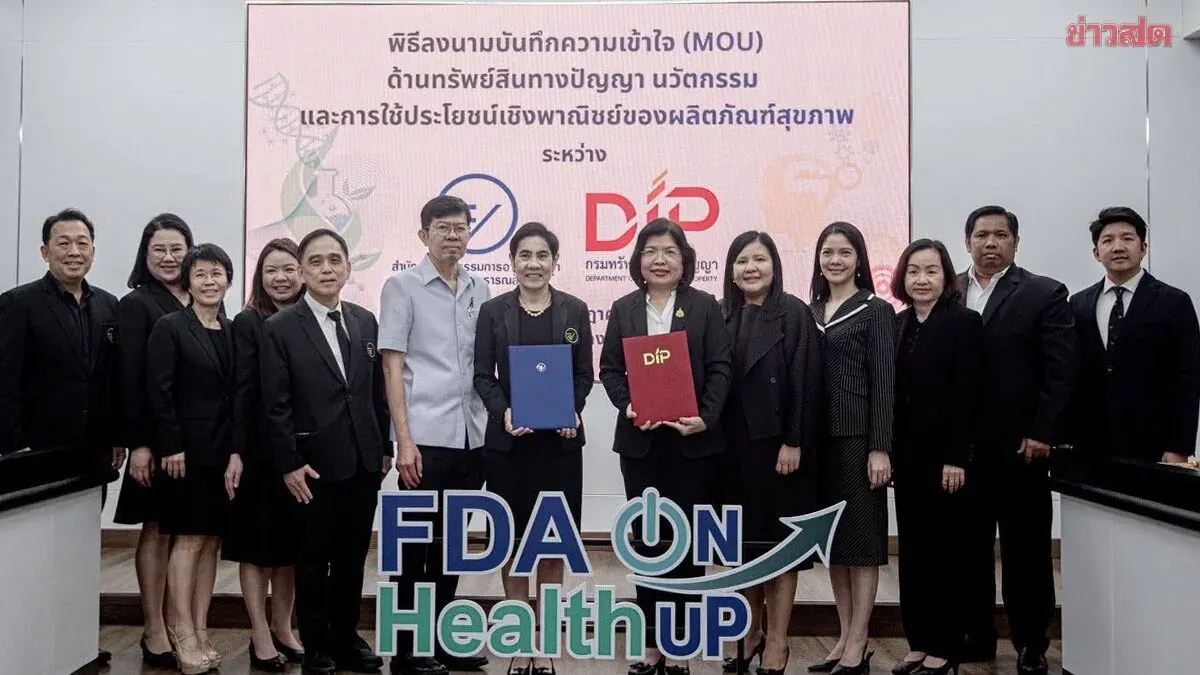
The Thai FDA and Department of Intellectual Property signed a memorandum of understanding on July 20, 2026, to strengthen cooperation on intellectual property protection, innovation, and commercialization of health products. Pharmasutical professional Supattara Bunserm, Secretary of the FDA, and Ormorn Sapwatteetum, Director of the Department of Intellectual Property, signed the agreement to elevate cooperation beyond pharmaceutical patents to comprehensive intellectual property utilization. The initiative covers knowledge promotion and business consultation, support for integrating research into IP protection systems and product registration, database coordination, personnel development, and mechanisms to prevent IP infringement while ensuring fair competition and developing the country's health product innovation ecosystem. Supattara emphasized that health product development requires innovation, effective regulatory systems, and strong IP protection to translate research into practical commercial benefits. The FDA believes that protecting consumers and promoting innovation must go hand-in-hand, as entrepreneurs developing products under standard, transparent systems respecting IP rights will produce quality, safe, and trustworthy health products while strengthening Thailand's health product industry competitiveness. Following the signing, both agencies will develop a joint action plan with clear frameworks and monitoring mechanisms to ensure concrete results, linking research, IP protection, regulation, and commercialization. Ormorn stated that this integration represents a fusion of expertise from both agencies to enhance Thai entrepreneurs' capabilities, secure appropriate IP protection for health products, promote high-value research and innovation, reduce barriers to market entry, and create tangible competitive business advantages.