Toyota's Loom-to-Auto History Explored at Japan Museum
Toyota Motor Thailand executives and journalists visited the Toyota Commemorative Museum of Industry and Technology in Japan to trace the company's origins from Sakichi Toyoda's automatic loom inventions to Kiichiro Toyoda's automotive ventures. The museum highlights key milestones, including the 1925 Type G loom that funded early car development and the challenges of building Japan's first passenger car and truck models.
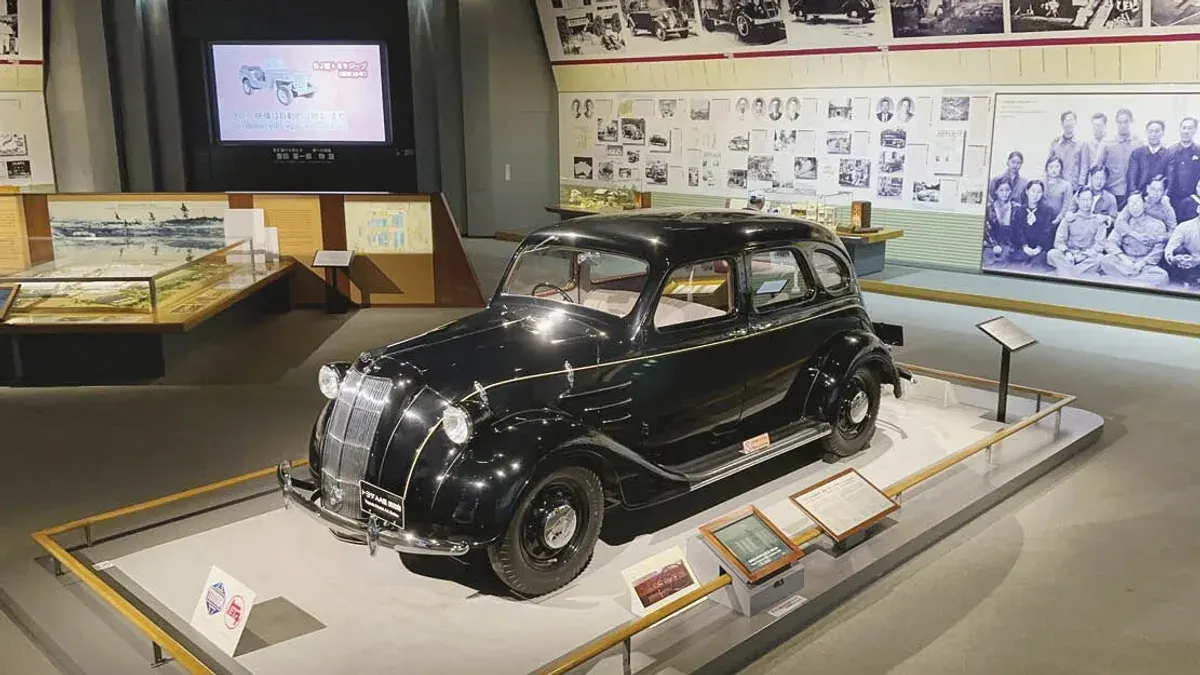
Driven by an 18-year-old Sakichi Toyoda's desire to help his mother, who struggled with a traditional handloom, he developed the Toyoda automatic loom despite many difficulties. This innovation elevated Japanese technology to rival the West and became the foundation of Toyota, today's global automotive giant. To showcase this history, Toyota Motor Thailand, led by Executive Vice President of Marketing and Public Relations Khaekhai Suchada Chirayukul, flew automotive journalists to visit the Toyota Commemorative Museum of Industry and Technology near Kuragaike Park in Toyota City, Aichi Prefecture, Japan.
Toyota's story begins with Sakichi Toyoda, father of Kiichiro Toyoda, who invented the Toyoda power loom in 1896, though it was still a non-automatic loom. Later, in 1925, he developed the Toyoda automatic loom Type G, which was hailed as Japan's first fully automatic loom capable of continuous operation and multiplying production efficiency many times over. Both loom models are still displayed in working condition today.
The fame of the Toyoda Type G automatic loom's efficiency spread so widely that a British textile company purchased the patent rights for production, generating substantial revenue that Kiichiro Toyoda used as crucial capital to venture into the automotive business.
The Radiorama exhibition presents four pivotal events during Toyota's founding, conveying Kiichiro Toyoda and his team's struggle through failures and persistent efforts via highly detailed 1/30 scale models combined with radio-drama narration, allowing visitors to experience the era's atmosphere. Radiorama blends "Radio" and "Diorama."
It starts with the disassembly of a 1933 Chevrolet on an autumn night in October 1933, because Japan then had little automotive knowledge, so they imported a US car for study. The challenge of casting the cylinder block required many trial-and-error attempts before success. Comprehensive vehicle testing ensured reliability, and problems with the Model G1 truck, the first pickup produced at the government's request for wartime use, were addressed. Due to inexperience, issues persisted during use, and Kiichiro Toyoda personally joined repairs each time to gather data for further development.
A 1:400 scale model of the Koromo Plant, Japan's first integrated automobile factory, now the Toyota Honsha Plant, realistically depicts past operations. The factory layout reflects the "Just-in-Time" production concept, showing production lines, research, and offices, highlighting the factory's pioneering scale and its key role in establishing the automotive industry.