Wait 10 Minutes After Mincing Garlic Before Cooking, Experts Say
Let minced garlic rest for about 10 minutes before cooking to preserve allicin and other beneficial health compounds, nutrition experts say.
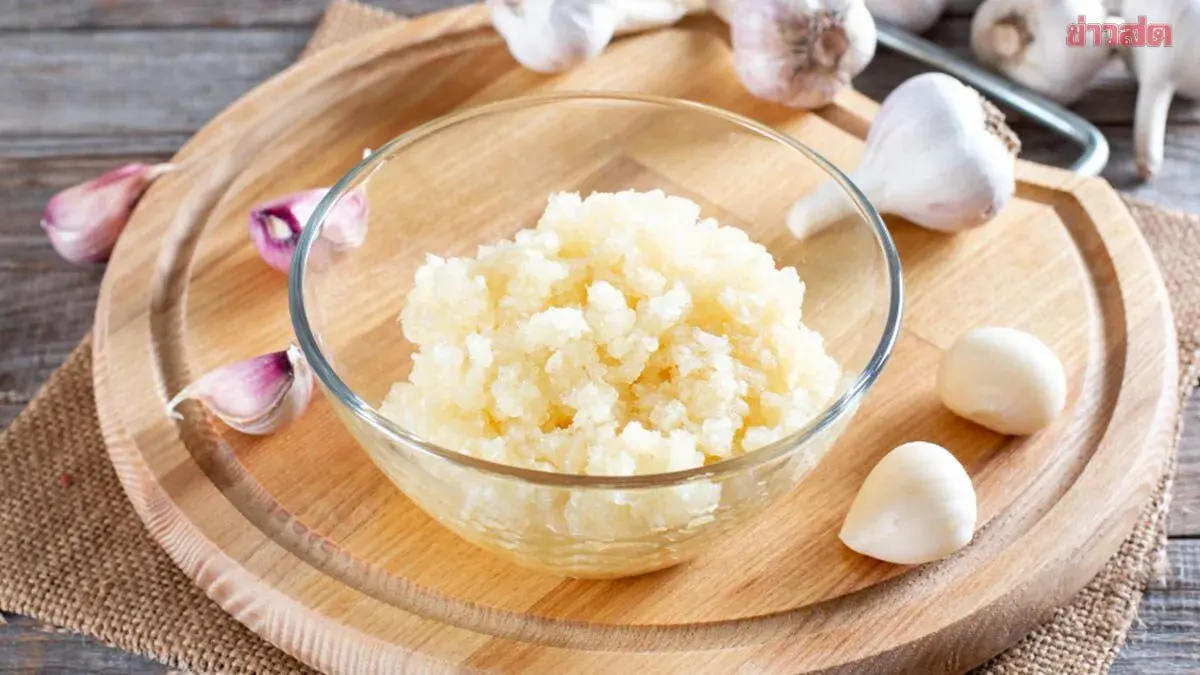
Many people crush or mince garlic and immediately add it to the wok or pan for stir-frying, but nutrition experts say letting it rest briefly before cooking can preserve more of its beneficial compounds. Dr. Wu Yingrong, a nutrition specialist, explains that fresh garlic contains a compound called alliin and an enzyme called alliinase, which normally sit in separate parts of the cell and don't react. When garlic is crushed, minced, or ground, the enzyme contacts the compound and converts it into allicin—the substance most people associate with garlic's health benefits. The conversion requires time, so garlic should rest for about 10 minutes after mincing.
Allicin doesn't form instantly after mincing; the reaction needs time to occur. Studies show that mincing or crushing garlic first, then cooking it later, better preserves allicin and bioactive sulfur compounds compared to cooking whole cloves directly. Researchers also found that letting garlic sit at room temperature for about 10 minutes improves both allicin production and its stability.
A simple kitchen technique is to mince the garlic, place it on a cutting board, and use that time to wash and chop other vegetables or prepare other ingredients. Once everything is ready, add the garlic to the pan. Resting for 5–10 minutes is an easy technique that fits into daily cooking. If garlic isn't used immediately, it can be divided into containers and frozen, though it should be used within a reasonable time.
However, cooking garlic on high heat for too long can destroy its active compounds. After mincing, avoid prolonged exposure to high heat. Laboratory studies show that allicin has potential to fight microbes, combat free radicals, and help control inflammation. Human studies suggest that eating garlic or garlic products may improve heart and blood vessel markers like blood pressure and blood fat levels, though results vary depending on the product type, amount consumed, and individual health conditions.
Experts caution against consuming large amounts of raw garlic, especially for people with sensitive digestive systems, acid reflux, or those taking blood-thinning medications. They should avoid suddenly increasing garlic intake. Dr. Wu concludes that health maintenance doesn't rely on pursuing a single nutrient, but rather on choosing cooking methods backed by scientific evidence and practicing them consistently in daily life.