Water Buffalo Dive Underwater to Graze in Flooded Thale Noi
Seasonal flooding in Thale Noi, Phatthalung, has forced native water buffalo to dive underwater to feed on submerged aquatic plants and lotus roots, a unique behavior that attracts tourists. The buffalo are part of a traditional free-range farming system in a wetland area recognized by the FAO as Thailand's first Globally Important Agricultural Heritage System. Visitors can observe the diving buffalo from the grasslands or the Chaloem Phrakiat Bridge connecting Phatthalung and Songkhla.
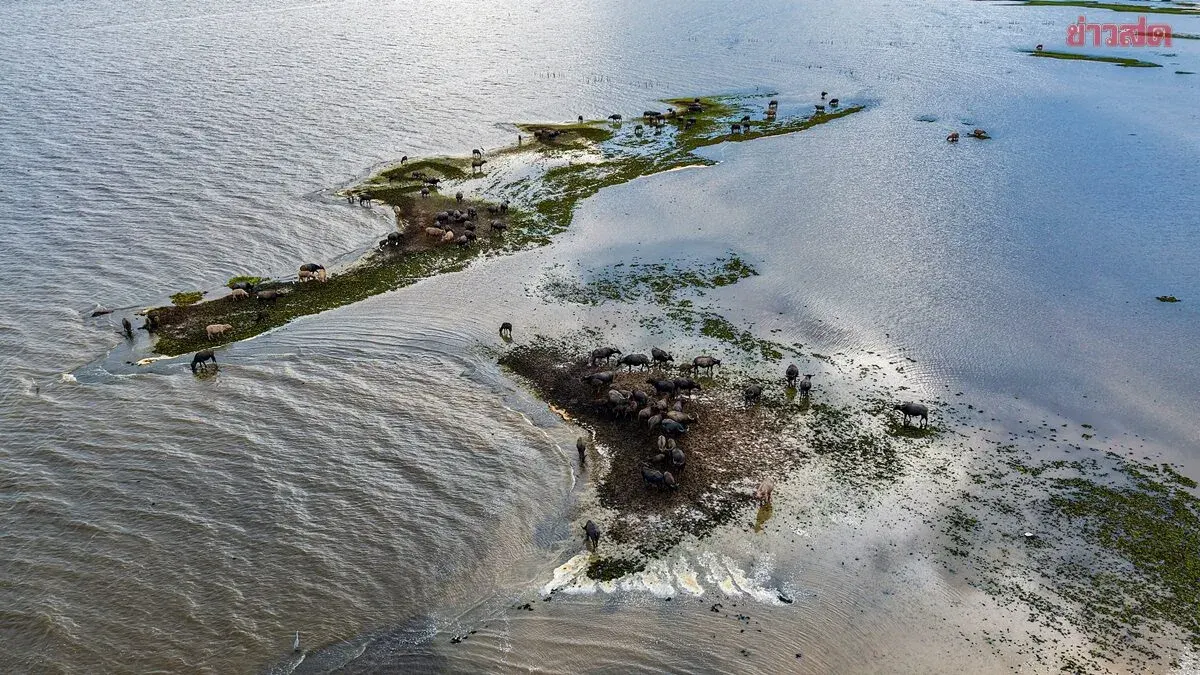
Rising floodwaters in Thale Noi, Phatthalung, have submerged the grasslands where local water buffalo graze, prompting the animals to dive underwater to eat aquatic plants and lotus roots. On November 15, 2026, reporters noted that Thale Noi water buffalo are a native breed adapted to living and feeding in the wetlands of Thale Noi, Phatthalung. The area has been registered by the Food and Agriculture Organization (FAO) as Thailand's first Globally Important Agricultural Heritage System (GIAHS). Currently, the rainy season in Phatthalung is causing water levels to rise and fill the lake, flooding the grasslands at Khlong Nang Riam where owners release their buffalo to graze. As water levels rise, owners are moving buffalo to higher ground for safety, but some herds wait for even higher water before returning to shore. This allows tourists to see the buffalo diving to eat grass and aquatic plants. During the flood season, grass and aquatic plants become submerged, and these buffalo dive adeptly to feed on them, earning the name 'water buffalo.' The free-range farming system lets buffalo live and forage naturally in Thale Noi grasslands for 8-9 months per year, returning to pens only during heavy flooding for 3-4 months, giving them semi-natural behavior. Visitors can view the buffalo herds on the expansive grasslands or from the viewpoint on the Chaloem Phrakiat 80th Anniversary Bridge (Ekachai Bridge), which connects Phatthalung and Songkhla provinces.