Buffalo Project Boosts Quality, Opens China Export Route for Farmers
A university‑led project in northern Thailand is upgrading buffalo breeding through artificial insemination centers and better farm management, enabling farmers to produce higher‑quality animals that fetch up to double the previous prices. By establishing standard holding pens and adopting GAP protocols, the initiative also facilitates exports to China via a Lao partner, reducing reliance on middle‑men traders. The effort aims to raise incomes and strengthen the rural economy in Phayao, Chiang Rai and Phrae sustainably.
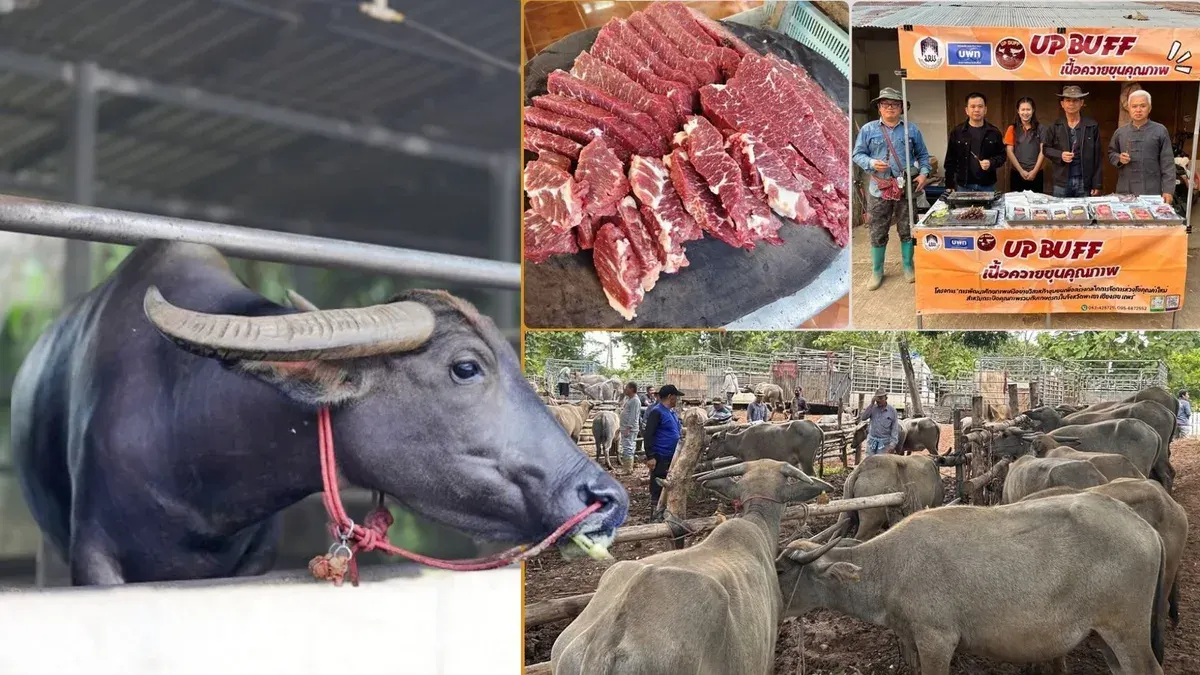
The project established buffalo semen production and distribution centers in Phayao, Chiang Rai and Phrae, importing high‑quality bull semen and offering affordable artificial‑insemination services to farmers. Small‑scale farmer Mee Wongsaad of Phet Chiang Kam Farm 2 in Chiang Kam district said the technology has produced larger, stronger calves with firmer meat, raising prices from about 15,000 baht per animal under traditional breeding to as high as 30,000 baht based on weight and quality. To tackle marketing, the initiative helped set up a standard central holding pen (GFM) and adopt GAP standards, including vaccination, parasite control, disease testing and checks for growth‑promoting substances, to meet Department of Livestock requirements for domestic and overseas sales. A memorandum of understanding was signed with a Lao SIE network to export buffalo to Chinese markets, and local farmer Prayong Kongmali noted the central pen reduces transport and quarantine costs while breaking the grip of middle‑men, giving producers fairer prices and easier access to international buyers.