Why Koh Lanta is called Little Sweden
Two Swedish schools, meatballs on the menu, and a Facebook group with more members than the island has residents. The nickname was earned, and the reason is stranger than you would guess.
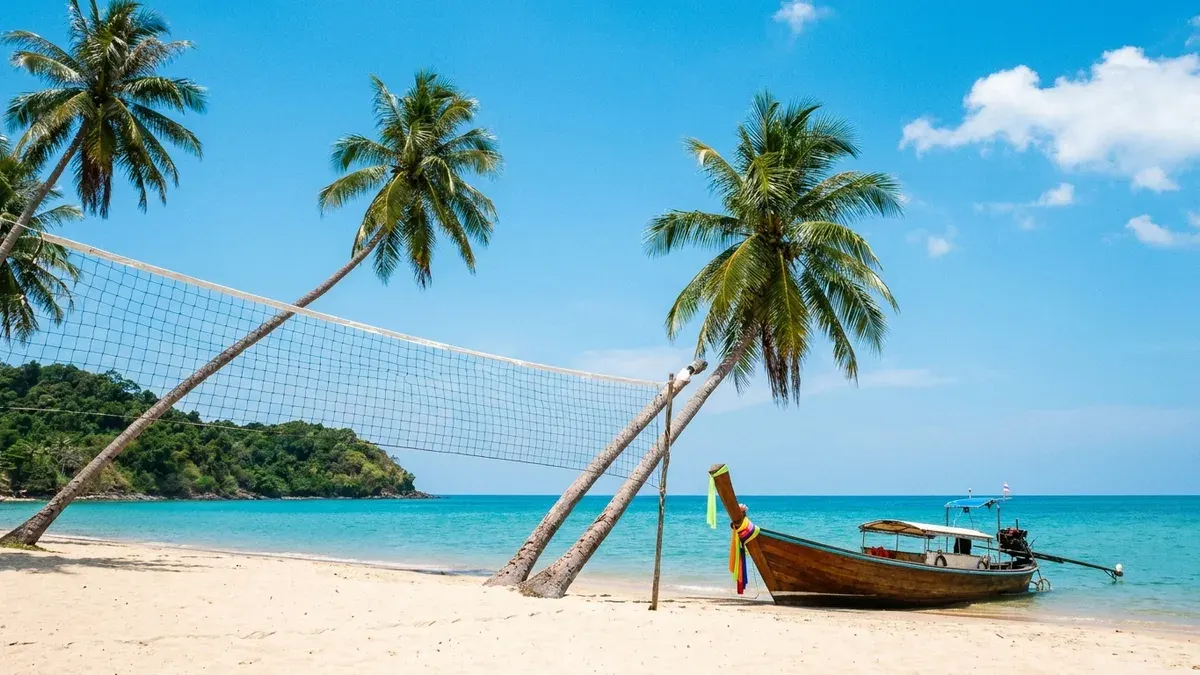
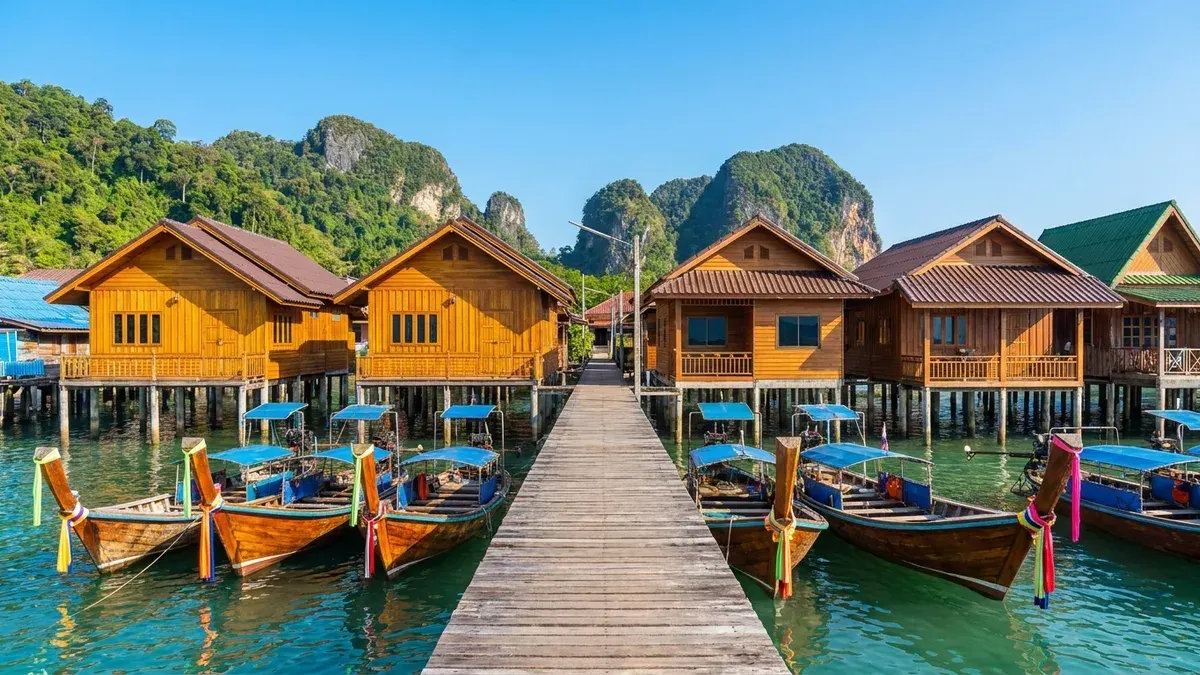
Photo: Illustration: Lanta News
Order a coffee on Klong Dao in January and there is a decent chance the family at the next table is discussing whether to go home for Christmas. Not to Bangkok. To Gothenburg.
Koh Lanta has been called Little Sweden for years, and unlike most nicknames a tourist board invents, this one was earned.
It started with a very good winter
Swedes did not arrive gradually. They arrived like a weather front. By the 2006/07 high season, one account puts the share of visitors coming from Sweden at around 90 per cent. Nine in ten. On a Thai island four hundred miles from Bangkok.
Figures since then vary wildly depending on who is counting and what they are counting, and you will see anything from 70 to 80 per cent quoted confidently. Treat those with some salt. What is not in doubt is the direction: a small island in the Andaman Sea became, for a few months a year, a Swedish suburb with better weather.
The giveaway is the schools
Plenty of places have foreign visitors. Very few have foreign school systems.
Koh Lanta has two Swedish schools. Not Swedish-friendly. Swedish, teaching the Swedish national curriculum, to Swedish children, on a Thai island.
They are separate and unconnected. Sanuk has asked us to state plainly that it has no organisational or teaching links to any other school here or elsewhere in Thailand, and that it would rather not be folded into phrases like "the schools on Koh Lanta". That is a fair request and we have kept the two apart below.
Lilla Svenska Skolan sits about 300 metres from Klong Dao beach and takes children from three to fifteen. It has been running since 2006 and has passed the Thai authorities' annual inspections every year since. Its subject specialisms tell you everything about where it is: alongside the usual curriculum, pupils can specialise in beach volleyball, padel, gymnastics, football and creative writing.
Svenska Skolan Thailand, known as Sanuk, runs preschool through year nine on the Swedish Lgr22 curriculum, and also has branches in Hua Hin and Huay Yang. Families sign up for a month or more. Most stay five or six. A growing number now do the entire nine-month school year here.
Read that again, because it is the whole story in one fact: there are Swedish families who do the full academic year on Koh Lanta. The children are not on holiday. They are at school. The school just happens to be near a beach.
It started earlier than almost anyone writes
The usual telling has the Swedes arriving in the mid-2000s. The school register says otherwise.
It began around the turn of the millennium in a rented bungalow, with a single pupil taught by her own mother. A second Swedish family arrived the following season and lessons moved to their bungalow, which the children christened Palmskolan, the Palm School. Only later, once enough families wanted in that a teacher was hired, did it get premises of its own near Southern Lanta Resort and the name Sanuk. By 2003 it had grown properly, to around two hundred pupils, and that same year Swedish teenagers began studying at secondary level through the Sofia Distans programme.
Pinning down a founding year is harder than it sounds, because it depends what you count. The school itself dates the beginning to 1999. A 2019 letter from the Swedish embassy in Bangkok, supporting its application for Swedish state recognition, says it has existed since 2004. Both are defensible: one counts the first lessons in a bungalow, the other the point where it became a formal school. We have written to ask which the school prefers.
So there was a Swedish school on this island seven years before the season everyone cites. The wave people remember was not the beginning. It was the point at which something already running became impossible to miss.
One detail says more than the numbers: the school's logo, a yellow sun, was drawn by its first ever pupil.
What the school day actually looks like
Sanuk has been assessed by Swedish authorities as a full alternative to school at home, which is the quiet reason this works at all: it is materially easier for a family to get leave from their Swedish school when the replacement is recognised.
The profile is sport and culture, and it runs past the final bell. Beach volleyball, football, padel, gymnastics, muay thai and swimming lessons are open to every child and teenager on Lanta, whether or not they attend the school. There is a standing Thai theme through the year, where pupils learn the language, food, nature and traditions of the place they are living in rather than treating it as scenery.
They have composted their own food waste for a decade. And for more than twenty years the school has run an exchange with Children of the Forest, collecting clothes and toys through the year and hosting them on the island annually, with a fundraising day to pay for the trip.
These details come from Sanuk's rector and school director, who asked us to be clear that they speak for Sanuk alone, not for anything else on the island.
You can eat your way to the same conclusion
Look properly at menus along the west coast and Sweden keeps surfacing. Toast Skagen, the prawn-and-dill-on-toast staple of every Stockholm lunch, turns up on a Thai island. So do homemade meatballs, which nobody serves for the benefit of passing Germans.
None of this is put on for tourists. It is what you cook when a large part of your regular custom spends five months a year within walking distance.
The online village
There is a Swedish-language Facebook group called Vi Älskar Koh Lanta, "We Love Koh Lanta", with a reported membership north of twenty thousand. For scale, that is comfortably more people than live in the entire Ko Lanta district.
More Swedes belong to the group about the island than there are residents on it. That is either lovely or slightly unsettling, depending on your mood.
Why here, and not somewhere else
The honest answer is that it snowballed. Early Swedish entrepreneurs opened businesses, other Swedes came because there were Swedes, and once there were schools it stopped being a holiday and started being a season. A family can leave a Swedish November, keep the children in the same curriculum, and pick up the school year in April as though nothing happened.
What is worth saying plainly is that this is one island with several communities living alongside each other. The Swedish season is real, and so is a Muslim-majority island where most people have no connection to it at all, and so are the Urak Lawoi, who got here about five centuries before the first Swede.
Little Sweden is true. It is just not the whole island, and it is only true for part of the year.
Know the origin story better than we do, or remember when the first Swedish businesses opened here? We would genuinely like to hear it.