Why Thailand's Oil Prices Track Global Markets
Thailand imports 90% of its oil and pegs fuel prices to Singapore's regional market, which tracks global supply and demand driven by OPEC policies, geopolitical tensions, and economic conditions worldwide.
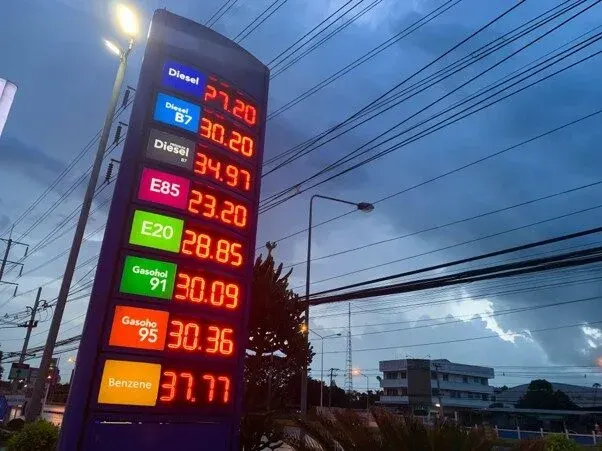
Oil prices matter to everyone because they affect daily life and the broader economy. Oil drives nearly all economic activity—from cars and buses to aircraft and industrial transport—making it a critical cost throughout the economic chain. When oil prices rise, transportation and production costs increase, pushing up prices for goods and services and raising the cost of living. Conversely, falling oil prices reduce business and transport costs, allowing the economy to move more smoothly. This means oil prices impact not just drivers but the entire economy and quality of life for all citizens.
Oil is a global commodity traded worldwide, with no single country setting its price alone. Major crude oil benchmarks include Dubai (Middle East), Brent (North Sea), and West Texas Intermediate or WTI (United States), which serve as regional price indicators. Key global oil trading markets include the New York Mercantile Exchange (NYMEX), London's Intercontinental Exchange (ICE), and Singapore's Singapore International Monetary Exchange (SIMEX)—the trading hub for refined oil in Asia. Prices in these markets reflect global supply and demand.
Many factors cause oil price swings: industrial and consumer demand, OPEC production policies, global economic crises, the rise of electric vehicles, and wars or geopolitical tensions. For example, conflict in oil-producing nations or disruptions to key shipping routes often spike prices immediately due to supply concerns, even if production hasn't actually stopped.
Thailand produces oil but not enough. Although Thailand has crude oil reserves in the Gulf of Thailand and refining capacity, output meets only about 10 percent of national demand. The remaining 90 percent must be imported, mainly from the Middle East and Asia-Pacific. For this reason, Thailand's refined fuel prices are pegged to Singapore market prices, which serve as the regional energy trading hub and standard for many Asian nations. Singapore prices reflect real market conditions, have high liquidity, and use internationally recognized pricing standards.