Unique 'Flying Garuda' Sculpture Discovered at Ang Thong Temple Hall
A rare "Flying Garuda" sculpture discovered at Sri Maha Pho Temple in Ang Thong depicts the mythical bird in an unprecedented soaring pose, unlike traditional seated or standing representations. The 60-70-year-old stucco artwork, created by
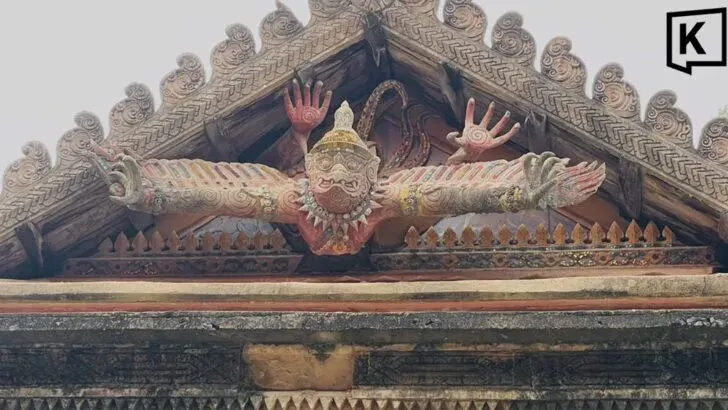
ANG THONG — 29 June 2026, A rare Garuda sculpture in a flying posture has been found at a temple hall in Ang Thong, drawing attention for its unusual design. Unlike traditional depictions of the mythical figure in seated or standing poses, this soaring Garuda is believed to be one of a kind. A temple official has revealed some of its history, but the reason behind its distinctive design remains known only to the artisan.
On Monday, reporters visited Sri Maha Pho Temple in Rong Chang subdistrict, Pa Mok district, Ang Thong province, to inspect the striking stucco sculpture, estimated to be around 60 to 70 years old. The "Flying Garuda" is positioned on the pediment of the temple's refectory and stands out from the more common seated or standing Garuda figures typically seen in Thai religious architecture.
The temple's abbot and Ecclesiastical Sub-district Head of Bang Sadet, Phra Kru Viboon Photharangkan, said the Garuda sculpture has been in place for many decades. According to historical records, it dates back to the tenure of a former abbot. While other parts of the temple have undergone renovations over the years, the refectory housing the Flying Garuda has remained unchanged.
An 87-year-old lay administrator at the temple said the refectory featuring the Flying Garuda, also referred to as the "Swooping Garuda," is likely at least 50 years old. He recalled watching the sculpture being created in his youth during the tenure of Abbot Phra Sansoen. According to him, it was crafted by an artisan named Krit, although the reason the craftsman chose to depict the Garuda in a flying posture remains unknown.
Former Fine Arts Department director-general Anek Sihamat said the area surrounding Sri Maha Pho Temple was an ancient settlement dating from the late Ayutthaya period to the early Rattanakosin era. Traces of historic religious structures remain visible today, including an ancient chedi, or stupa, behind the temple and temple bases decorated with Ayutthaya-period stucco crown motifs.
Regarding the refectory's pediment, Anek explained that royal artisans traditionally depicted Garuda figures in either seated or standing postures, making flying depictions extremely rare. He believes the Flying Garuda was the work of a local folk artisan who wanted to create a unique interpretation. As seen on the pediment, the Garuda is portrayed soaring with both feet raised while holding a naga, a mythical serpent, between its legs.
Garuda sculptures placed on temple pediments are traditionally believed to protect sacred buildings from harm, symbolise divine power and represent the official royal emblem of the Thai monarchy. The refectory also bears the inscription "Traimit Upatham."