Youth Boxing Camp Builds Dreams and Community at Mae Sot School
At a school in Mae Sot, Tak Province, a youth boxing camp trains students daily in Muay Thai and international boxing under a former national team coach. The children, from diverse backgrounds, pursue different dreams — from stadium championships to professional careers — while learning discipline, teamwork, and self-confidence. The camp serves as both a sports program and a community space for personal growth.
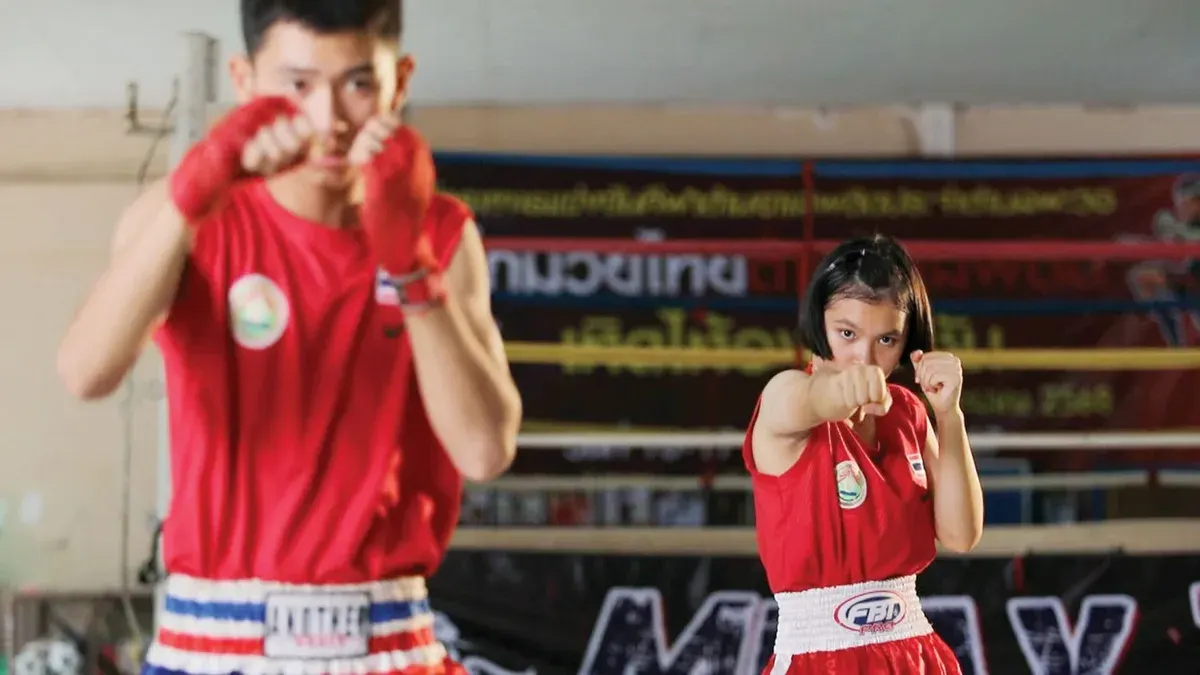
The familiar sounds of punches hitting pads, feet shuffling on the floor, and children chatting fill the "Sikhru D.W." boxing camp at Dan Mae La Mae Witthayakom School in Mae Sot, Tak Province. This small space brings together students interested in learning Muay Thai and international boxing.
Each child has different starting points and dreams. Jo wants a chance to fight at Lumpinee Stadium. Nea aims to win a Rajadamnern championship. Chart dreams of becoming a professional boxer to earn money for himself and send to his mother. Kati, the only girl in the camp, has never fought on a real stage but wants to experience it at least once.
Though their dreams differ, they share a commitment to daily training and self-improvement. "We train every day, from about 4:30 to 8:30 p.m.," Nea says of the routine, adding that even after competitions they return to training after resting. Jo emphasizes that consistent training, especially running, is crucial for competition preparation. "Running makes the body strong and gives us strength. When we fight, we don't get tired. It makes our bodies solid," Jo explains.
Under the guidance of Kru Wit — or Sub-Lieutenant Waiwit Narirak, a former Thai national amateur boxer and school alumnus — the students learn boxing fundamentals: movement, punching, defense, strength and endurance. But boxing training isn't just about skills and toughness. Along the way, the children learn adaptation, cooperation, and building relationships with peers who share their passion.
Kati, a high school student who started boxing about a year ago, recalls initially thinking she'd spar immediately but had to learn from scratch — stance, movement, and punching. "At first I felt scared. They looked so fierce. But later I got used to it because I saw them often," she says. Over time, those feelings changed. She describes camp relationships simply: "Friends in the camp are close. They look after each other. They know each other."
This reflects how the camp provides space for children to connect and learn to live together, despite different backgrounds, experiences, and life goals. For Dan Mae La Mae Witthayakom, which serves both local students and boarding students from distant areas of diverse ethnicities, offering opportunities to pursue interests goes beyond promoting sports skills — it creates activity spaces that help children discover their own abilities.
Kru Wit views boxing as a skill with many pathways. Not everyone who learns boxing must become a professional athlete, because the knowledge gained can be used for exercise, self-defense, or even teaching others in the future. "If we truly learn, boxing can be adapted in many ways — whether for competition, coaching, or being a teacher who passes on the knowledge." Like Kati, who hasn't yet competed but already has goals.