Government Clarifies US Tariffs, 2,100 Thai Items Exempted
The Thai government clarified that the 19 percent US tariff often cited is outdated, with current additional duties at 12.5 percent and 2,120 Thai products exempted. Officials emphasized that signing the ART joint statement is a step forward, not immediate market opening, and negotiations continue to protect 2.37 trillion baht in exports and 1.25 million jobs.

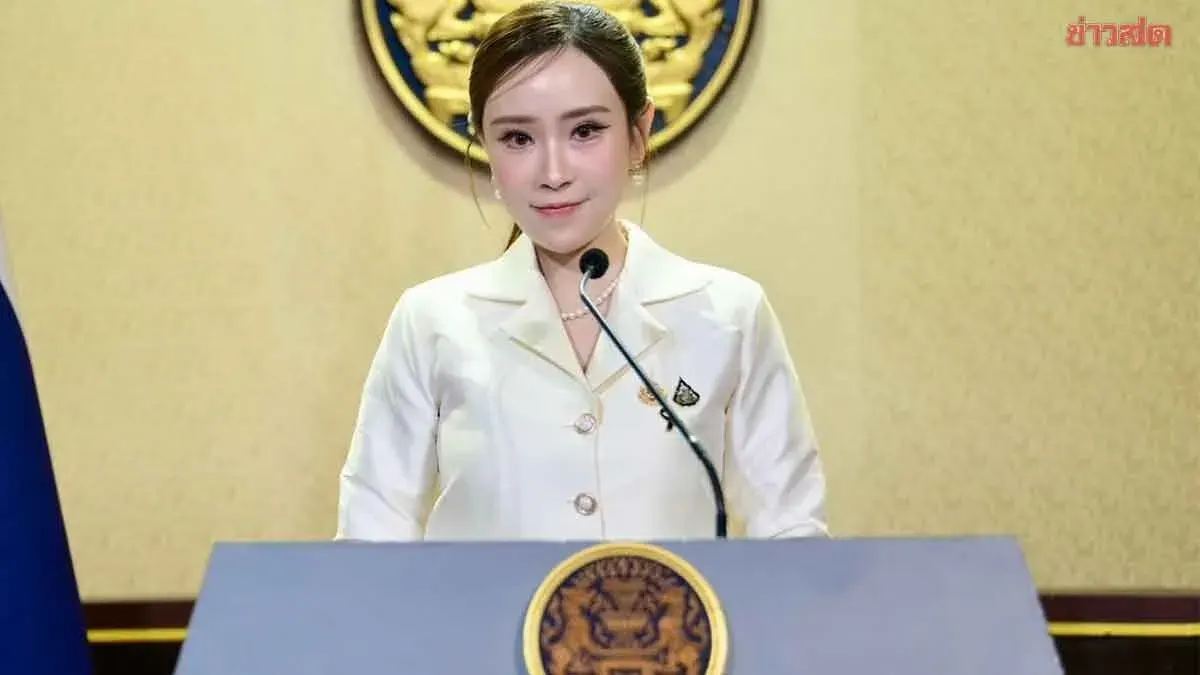
On November 18, 2026, Lalida Perisivattana, Deputy Spokesperson for the Prime Minister's Office, addressed concerns about the Agreement on Reciprocal Trade (ART) between Thailand and the United States. She said the government prioritizes protecting the country's economic interests alongside farmers, businesses, and consumers, and urged the public to assess tariff rates and market-access conditions based on the current situation.
US tariff measures have changed from the original 2025 negotiating framework, and the joint statement signing does not require Thailand to open all product markets immediately. The 19 percent figure refers to the earlier US reciprocal tariff measure, which cannot represent the current rate for all Thai goods because the United States terminated additional duties under the International Emergency Economic Powers Act (IEEPA) on February 20, 2026, following a US Supreme Court ruling, and switched to measures under other laws.
Under Section 301, which covers goods made with forced labor, the US Trade Representative (USTR) set an additional 12.5 percent duty on top of normal tariffs for Thai-origin products, effective July 24, 2026. This measure includes product-specific exemptions and conditions, meaning not all Thai goods face the same extra duty.
The Commerce Ministry said 2,120 Thai items are exempted from the additional duty, covering more than half of Thailand's export value to the US. Key examples include integrated circuits, hard disk drives, aircraft parts, natural rubber, cassava flour, pineapple, and coconut products. However, exemptions depend on specific customs codes and conditions and do not mean exemption from all types of duties.
Regarding negotiations to reduce the additional duty from 12.5 percent to 10 percent, Thailand will use ART negotiation progress as leverage to secure trade terms competitive with regional rivals. A clear distinction must be made between negotiating targets and the rates actually in force, which still await official US announcement.
On fears that Thailand must fully open its market to US goods, the government confirmed the November 17, 2026 joint statement signing only confirms progress and key understandings, not immediate enforcement of the entire agreement. Both countries must still complete domestic legal processes before signing the final agreement and bringing it into force. The roughly 99 percent market-opening figure cited in the 2025 framework referred to the scope of US tariff reductions under negotiation at that time, not a conclusion that Thailand has eliminated all tariffs or import controls on every product. Details on sensitive items, import conditions, and domestic producer protections must be based on the final agreement and its annexes.