PTT Forecasts Dubai Crude at $70-80 for 2027
PTT and the Federation of Thai Industries forecast Dubai crude oil prices of $70-80 per barrel in 2027, citing global supply growth outpacing demand. The 15th Annual Petroleum Outlook Forum emphasized Thailand's need for strategic reserves, diversified supply chains, and renewable energy development to ensure energy security amid geopolitical risks like the Strait of Hormuz. Thai refineries have already adjusted sourcing strategies following Middle East tensions to maintain domestic fuel supply.
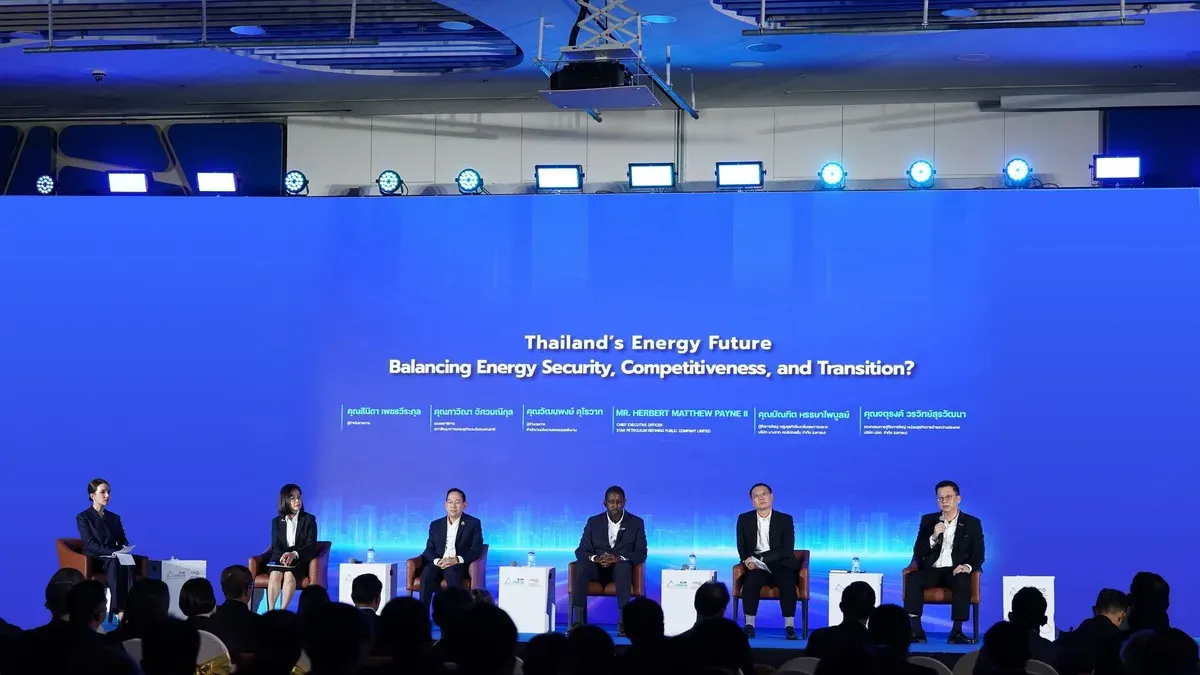
PTT Group, together with the Petroleum Industry Group of the Federation of Thai Industries (FTI), held the 15th Annual Petroleum Outlook Forum 2026 to assess global energy market trends. PTT President and CEO Kongkrapan Intarajang said Thailand must balance energy security, affordable and competitive pricing, and sustainability to manage short-term volatility and prepare long-term energy systems.
Petroleum Industry Group Chairwoman Rungnapa Chantasuk said that since the Middle East conflict escalated in late February 2026, Thai refineries have adjusted crude sourcing from multiple regions and maintained high production rates to meet domestic fuel demand, despite higher crude, freight, and insurance costs. The refining sector stands ready to support appropriate government measures to protect living costs while preserving industrial capacity and energy security. They are also advancing sustainable aviation fuel (SAF), carbon capture and storage (CCS), hydrogen fuel, and energy efficiency in production units to support the net-zero greenhouse gas target by 2050.
PTT's PRISM Experts analysts forecast 2027 Dubai crude at $70-80 per barrel, with global supply rising by 4.7 million barrels per day versus demand growth of 2.6 million barrels per day. However, geopolitical risks and shipping through the Strait of Hormuz, plus the shift to electric vehicles, alternative fuels, and renewables, must be monitored.
The analysts proposed three pathways for Thailand's energy security: maintaining adequate strategic petroleum reserves, diversifying import sources and transport routes alongside refinery flexibility, and promoting renewables with supporting infrastructure. The forum also featured global economic and energy analyses from Krungsri Research and S&P Global Energy, plus a public-private dialogue on energy security and Thailand's competitiveness during the energy transition.