PTT Plans to Boost LNG Trade to 15 Million Tons by 2035
PTT plans to triple its LNG trading volume to 15 million tons by 2035 as part of a strategy to secure Thailand's energy supply while transitioning to cleaner fuels through diversified global sourcing.

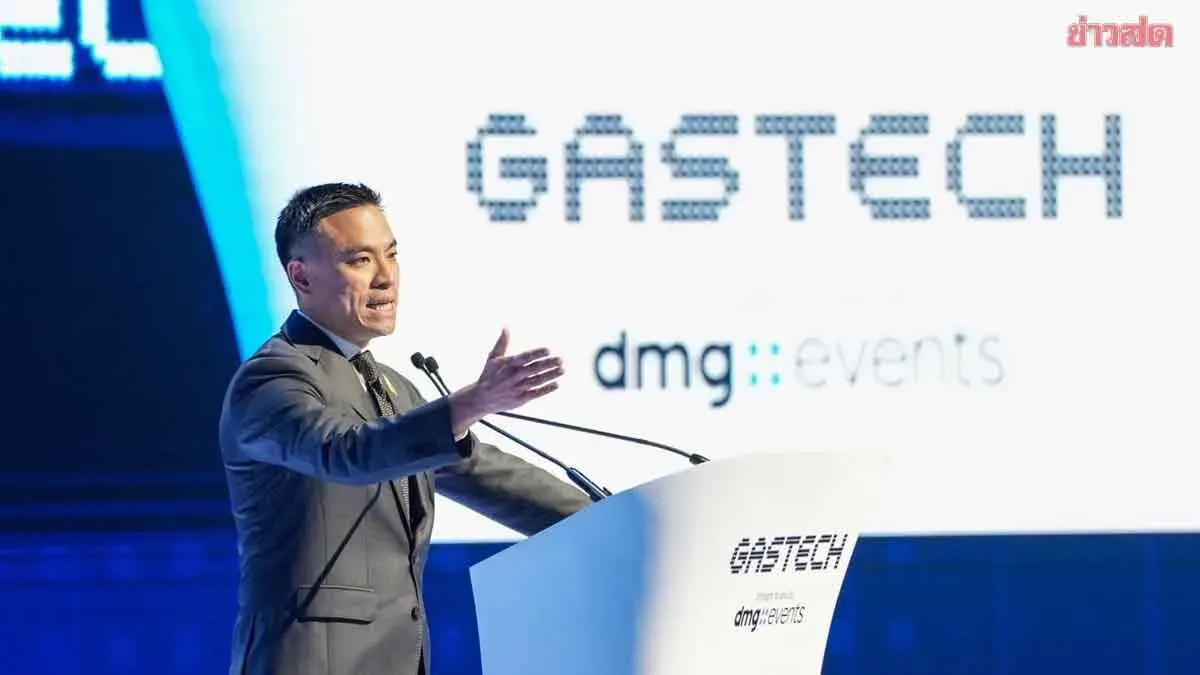
Kongkrapan Intharajang, President and CEO of PTT Public Company Limited, said at the Gastech 2026 conference that natural gas and liquefied natural gas (LNG) will play a crucial role in the global energy system over the next 20-30 years, even as the world shifts toward clean energy. Gas remains vital for balancing energy security, cost competitiveness, and sustainability.
For Thailand, natural gas is the primary fuel for electricity generation and industry, sourced roughly 50% from the Gulf of Thailand, over 10% from Myanmar, and over 30% from global LNG markets. PTT believes energy transition cannot happen overnight and sees gas as a bridge fuel while accelerating carbon reduction through Carbon Capture and Storage (CCS) technology.
PTT is pursuing an Energy Trilemma strategy—balancing security, price competitiveness, and sustainability—by seeking new gas sources in the Gulf of Thailand, neighboring countries, and promising regions worldwide. The company plans to expand its LNG trading business from the current 3-4 million tons per year to 10 million tons by 2030 and 15 million tons by 2035. Kongkrapan clarified that these targets reflect growth in PTT's global LNG trading portfolio, not just Thailand's imports, and will increase flexibility in sourcing LNG from diverse global suppliers.
PTT operates trading networks in London, Singapore, the United Arab Emirates, and Houston to spread risk and secure energy from multiple countries during crises, reducing dependence on any single source. The company has reduced crude oil imports from the Middle East from 70% to 30%, sourcing more from the United States and West Africa instead.
Regarding Middle East tensions and risks to the Strait of Hormuz, Kongkrapan confirmed that PTT has rehearsed emergency plans and invested in refinery upgrades to adjust feedstock from different regions. The company uses its trading operations to secure oil and gas from multiple routes, ensuring Thailand will not face energy shortages. As a state enterprise, PTT has a critical mission to ensure the country has adequate energy supplies, as shortages would disrupt downstream industries including refineries, petrochemicals, and manufacturing.