Gulf Development Expands Bottle Recycling Program to Eastern Region
Gulf Development expanded its bottle recycling program to seven Eastern Zone offices, collecting 1,183 kilograms of PET plastic in the first half of 2025 that will be upcycled into clothing, blankets and household goods by a local temple.
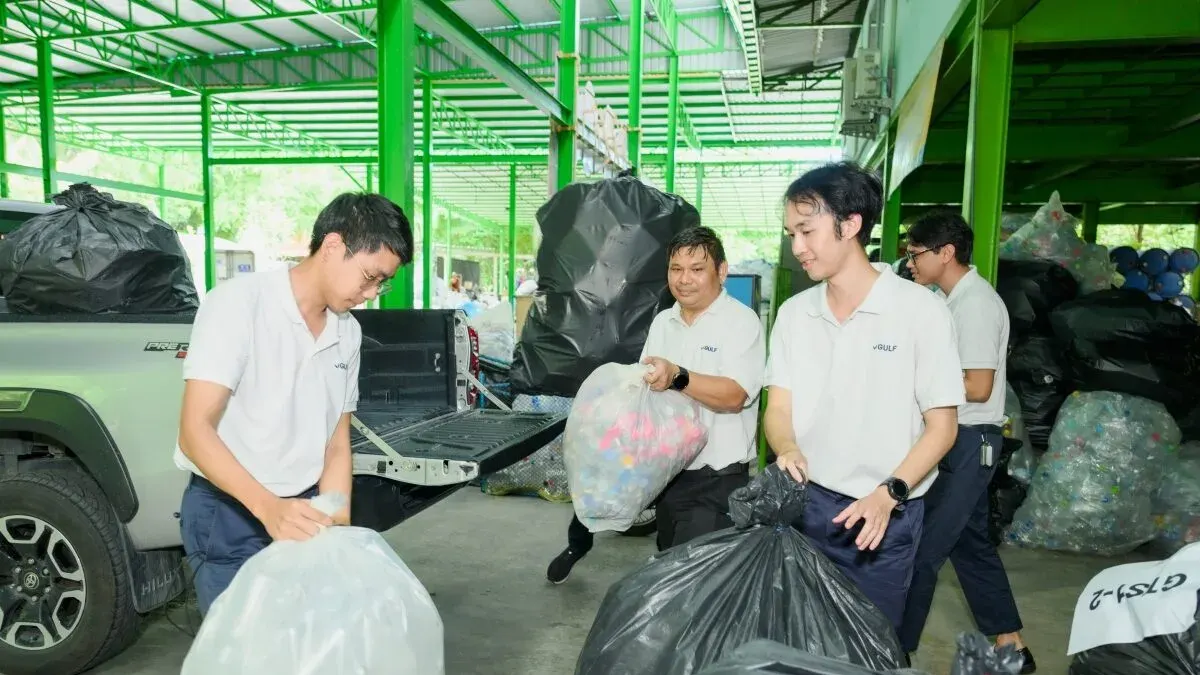
Gulf Development Public Company Limited is building a green corporate culture through the expansion of its "Please Give Us Your Bottles" programme into its second year, scaling from its Bangkok headquarters to seven offices in the Eastern Zone of the Gulf group. Employees participated in sorting PET plastic water bottles from the source, and the 1,183 kilograms of PET bottles collected between January and July 2025 were handed over to Wat Chak Daeng temple for upcycling into new products such as monastic robes, blankets, clothing, and various household items made from plastic bottle fibre, reducing greenhouse gas emissions by 2.48 tonnes of carbon dioxide equivalent.
Sitthamon Ratanawalee, GULF's Strategic Planning Director, explained that the programme encourages employees to adopt simple, sustainable environmental practices through everyday plastic bottle sorting, ensuring waste enters proper management systems and is transformed into valuable new products. This year, GULF expanded the initiative to power plants in the Eastern region, collecting 1,183 kilograms of used PET bottles. Since the programme's launch in 2024, a total of 1,637 kilograms of PET bottles have been sorted, reducing greenhouse gas emissions by 3.42 tonnes of carbon dioxide equivalent, demonstrating that fostering a culture of proper waste sorting and management within an organization can produce concrete environmental benefits.
Venerable Phra Maha Pranom Thammalankharo, abbot of Wat Chak Daeng, stated that the temple and GULF are collaborating to upcycle PET bottles into various products including clothing and blankets, with bottle caps transformed into commemorative keychains, creating benefits for society and the environment simultaneously. He noted that viewing waste as a resource for production creates value rather than disposal costs, and encouraged people to also manage "mental waste" such as anger, resentment, and attachment through mindfulness and compassion.
One participating employee expressed pride in the initiative, noting that despite being a small daily action of sorting bottles, it provides meaningful understanding of how collected PET bottles are utilized and contributes to broader environmental awareness.