Gulf Development Teaches Youth to Monitor Air and Water Quality
Gulf Development is training youth as "Air and Water Detectives" to monitor environmental conditions in their communities through hands-on observation of lichens and aquatic organisms. The program at a Saraburi school combines environmental
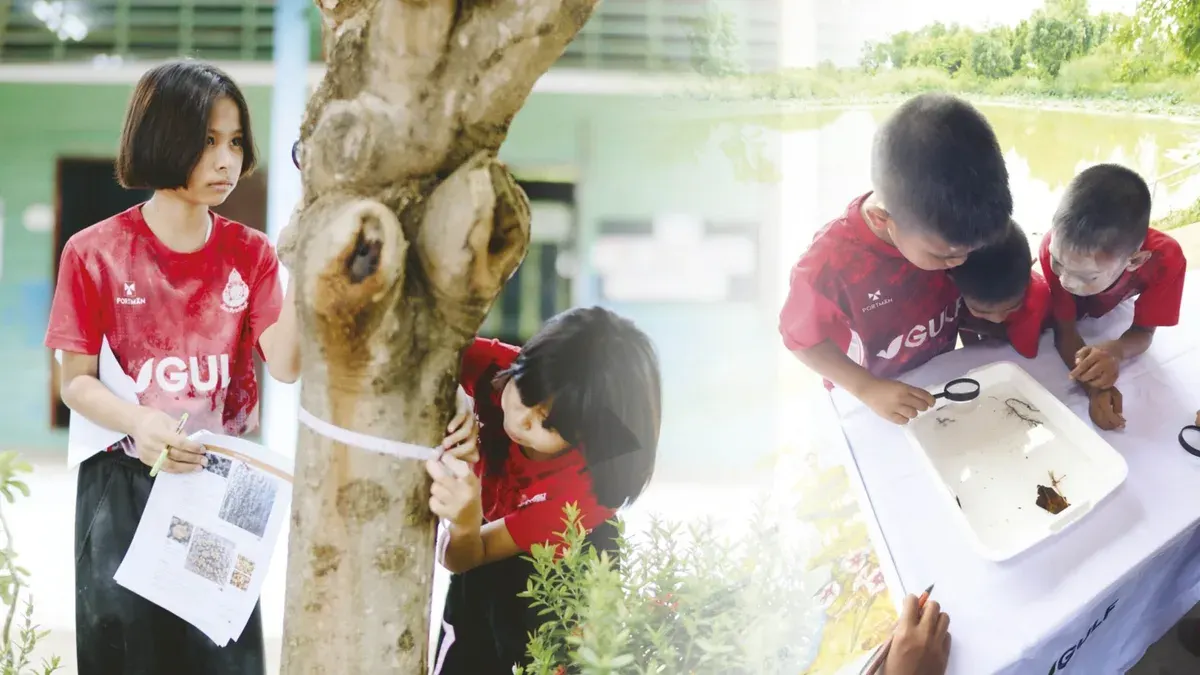
What happens when children become junior environmental detectives? Gulf Development Limited is running an activity called "Air and Water Detectives" that invites youth around power plants to survey air quality and water conditions in their communities. The program aims to promote environmental understanding and foster a lasting commitment to nature conservation. Participants receive learning materials made from upcycled plastic bottle caps under the "Our Bottles" project, reinforcing sustainable resource use and the company's vision to "Power the Future, Empower the People."
Sitamorn Ratanavaratee, director of Gulf's corporate social activities, explained that the "Air and Water Detectives" activity teaches youth through hands-on observation, questioning, and real-world practice. By discovering answers and learning independently, children understand how air and water quality affect their community's wellbeing. These direct experiences will help them grow into environmentally conscious adults with practical knowledge of nature stewardship.
In this initiative, Gulf invited students from Wat Huay Lee School in Saraburi Province to act as air detectives, analyzing air quality by studying the types, quantities, and conditions of lichens on tree bark. As water detectives, they observed freshwater invertebrates to assess water quality. Gulf also delivered learning materials crafted from plastic bottle caps that employees sorted and upcycled into practical products through the "Our Bottles" project. Additionally, power plant employees helped repair electrical equipment in school buildings and worked with the community to develop the local ecosystem by planting native trees and releasing native fish species.
Sixth-grader Piyaporn Lapkoed shared: "Our group found resilient lichen, which told us the air quality here is moderate. It made me want to care for the air by watering plants and not creating smoke at school. This activity let us see and do real work—it was fun and the older volunteers were lovely."
Classmate Manasanan Rueangsung added: "I learned that shellfish and insect larvae indicate water quality. Good water has lots of insect larvae, but polluted water has few. I want to share this knowledge with others so we can all help protect water and the environment in our community."