Thai Deputy PM Signs AI Materials Pact with Kyoto, Osaka
Thai Deputy Prime Minister Yossakun Wongsa has secured a letter of intent with Kyoto and Osaka universities to cooperate on AI‑driven materials research for the semiconductor sector. The deal, signed with Thailand’s National Research Office, will use the country as a regulatory sandbox for the Siam Silica project before expanding across Southeast Asia. It also outlines plans for joint funding, researcher exchanges, and shared databases to boost high‑tech fields such as quantum computing and biosensors.
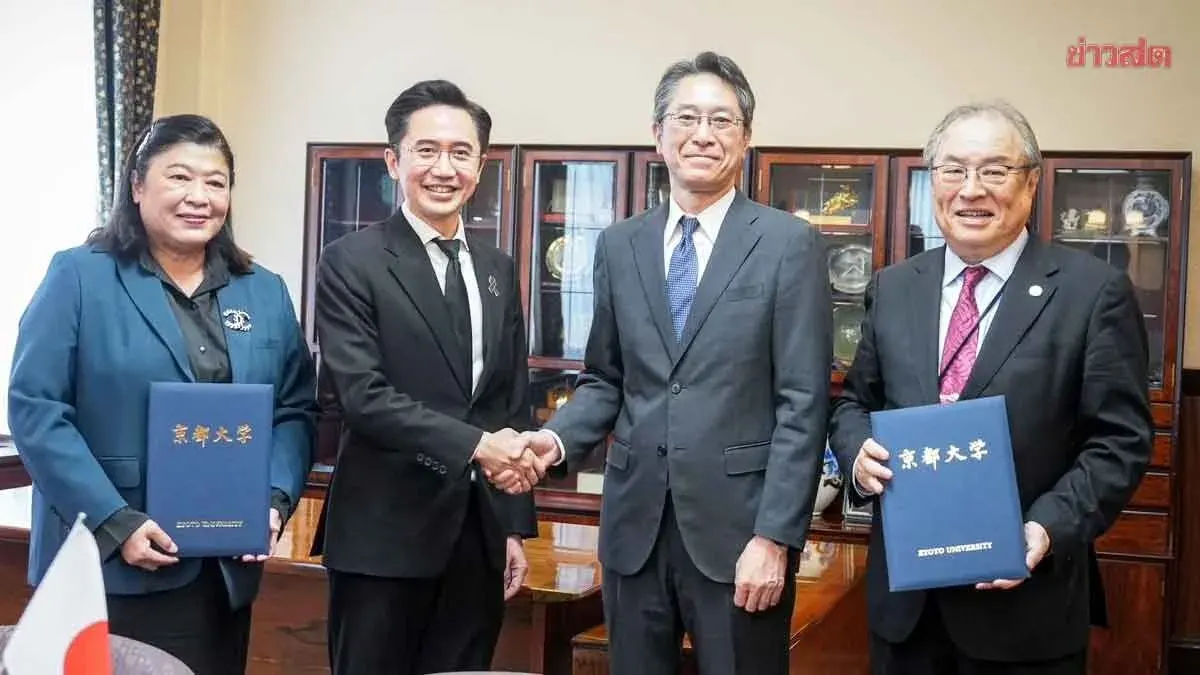
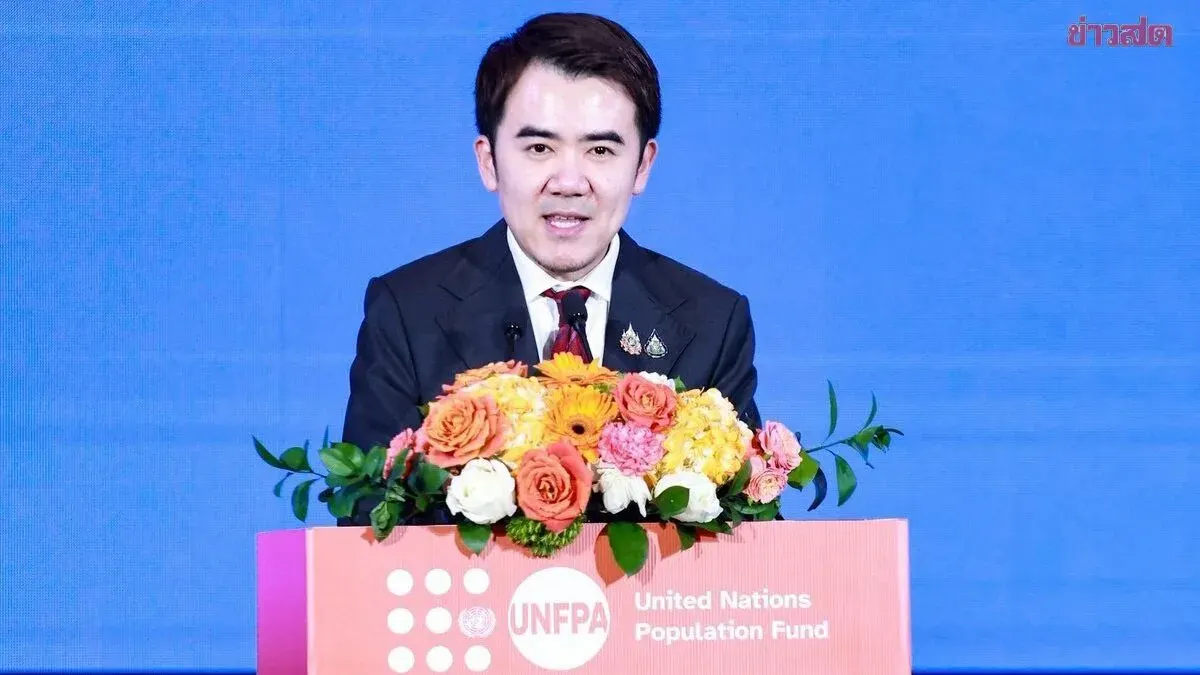
On October 5, 2026, Deputy Prime Minister Yossakun Wongsa met with the presidents of Kyoto University, Professor Yasuto Tajikawa, and Osaka University, Professor Atsushi Kumanogo, to advance high‑level research cooperation between Thailand and Japan. The core of the visit was the signing of a letter of intent (LOI) between Thailand’s National Research Office (NRO), represented by Dr. Wiparath Dieong, and Kyoto University’s vice‑president for administration, Dr. Tetsuo Sawarangi. The LOI covers joint research funding, academic and expert exchanges, and sharing of scholarly databases to build a strong network between Thai higher‑education institutions and Kyoto University.
Yossakun said Kyoto views Thailand as a key Asian research hub and plans to test new research findings in the country through a regulatory sandbox supported by the Ministry of Higher Education, Science, Research and Innovation and the Thai government. The goal is to use Thailand as a base to localize technologies before expanding commercially to other Southeast Asian nations.
Discussions with Kyoto focused on advanced semiconductor research and AI for materials science, which can shorten the time needed to discover new materials without relying solely on laboratory experiments. Thailand also proposed using its unique materials dataset to develop joint projects via federated learning, and to link Kyoto’s AI4M‑hub database with Thailand’s Siam Silica project to speed up the domestic semiconductor industry.
Regarding Osaka University, Yossakun noted the existing strong partnership with Mahidol University on tropical diseases and vaccines, and said the ministry intends to expand this network to universities across the country. Future‑technology fields such as medical AI, physical AI, IC design, biosensors, and quantum computing will be emphasized. Both sides will establish a matching fund, an online matchmaking system for Thai‑Japanese researchers, and design attractive research topics to encourage more Japanese students to study in Thailand.
Yossakun stressed that Thailand must rapidly build the necessary research infrastructure; essential tools will be procured, but if costs are prohibitive, resource‑sharing arrangements will be used to keep research moving quickly.
The AI4M‑hub is a joint research centre under Kyoto University’s Institute for Advanced Research (KUIAS), launched in 2026, building on a previous Kyoto‑Singapore project and focusing on AI‑designed energy materials.
Osaka University has produced two Nobel laureates: physicist Hideki Yukawa (1949) and physiologist/medical scholar Shimon Sakaguchi (2025), and hosts additional research centres.