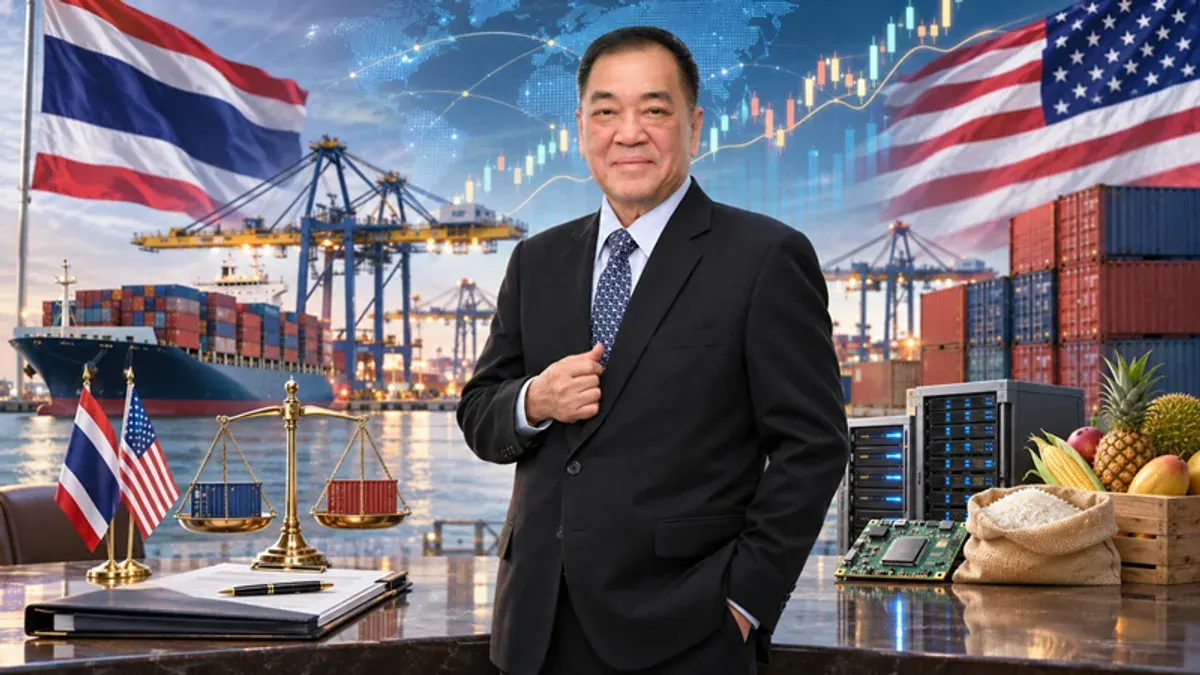
Thailand Risks 25% US Tariff in Excess Capacity Probe
The US Trade Representative's Section 301 investigation into structural overcapacity has placed Thailand among 14 economies facing potential retaliatory tariffs, with a proposed maximum of 18% that could rise to 25%. Thailand's position is weaker than ASEAN neighbors who have finalized trade agreements, leaving it vulnerable to higher duties unless it offers significant market-opening concessions in ongoing negotiations.

Concerns are rising over a potential final US tariff of 25% on Thai goods. Rangsit University economics lecturer Atth Pisalwanich outlines five reasons for structural overcapacity that led to the US Trade Representative's Section 301 investigation. On November 25, 2026, the USTR published findings covering 14 economies, including Thailand, concluding that certain industrial policies create unreasonable burdens on US trade. The USTR proposed retaliatory tariffs, with Thailand facing a maximum of 18% — though rates vary by economy and remain in the comment period. The USTR cites five grounds: state-backed industrial policies promoting excess capacity, financial measures suppressing domestic consumption, market access barriers, insufficient labor protections, and country-specific subsidies.
Compared with ASEAN peers under the Section 301 overcapacity allegations as of November 25, 2026, Thailand faces a 'high tariff rate' because: (1) ASEAN members that have already signed the ART — Malaysia, Indonesia, Cambodia — face the same proposed 18% but have finalized agreements, locking in that rate including forced-labor import tariffs. (2) Non-ART signatories Singapore and Vietnam show declining rates: Singapore would drop to 10%, Vietnam to 20% (from 35%) if talks succeed, while Thailand's outcome is uncertain and could rise to 25% as negotiations lag. (3) The new US tariff proposal will make Thailand's negotiations harder, especially lowering tariffs to match ASEAN peers, because the US already targets a 25% rate. To keep the combined rate at 18%, Thailand must offer major concessions — such as opening its market further, increasing imports from the US, or easing investment rules in telecoms, digital economy, and labor/environmental standards. Atth warns Thailand risks negotiation failure due to six vulnerability factors.