Transport Ministry Unveils 5 Fixes for Suvarnabhumi Cargo Backlog
The Transport Ministry has unveiled five measures to clear a growing cargo backlog at Suvarnabhumi Airport after a meeting identified dense-cargo screening bottlenecks, warehouse congestion, and staff shortages as the main causes. Immediate steps include deploying K9 explosive-detection dogs, adding 115 workers and 30 forklifts, opening domestic and value-added warehouse space, and pressing freight forwarders to collect cleared goods within November. A working group will review progress every 15 days while long-term warehouse expansion proceeds.
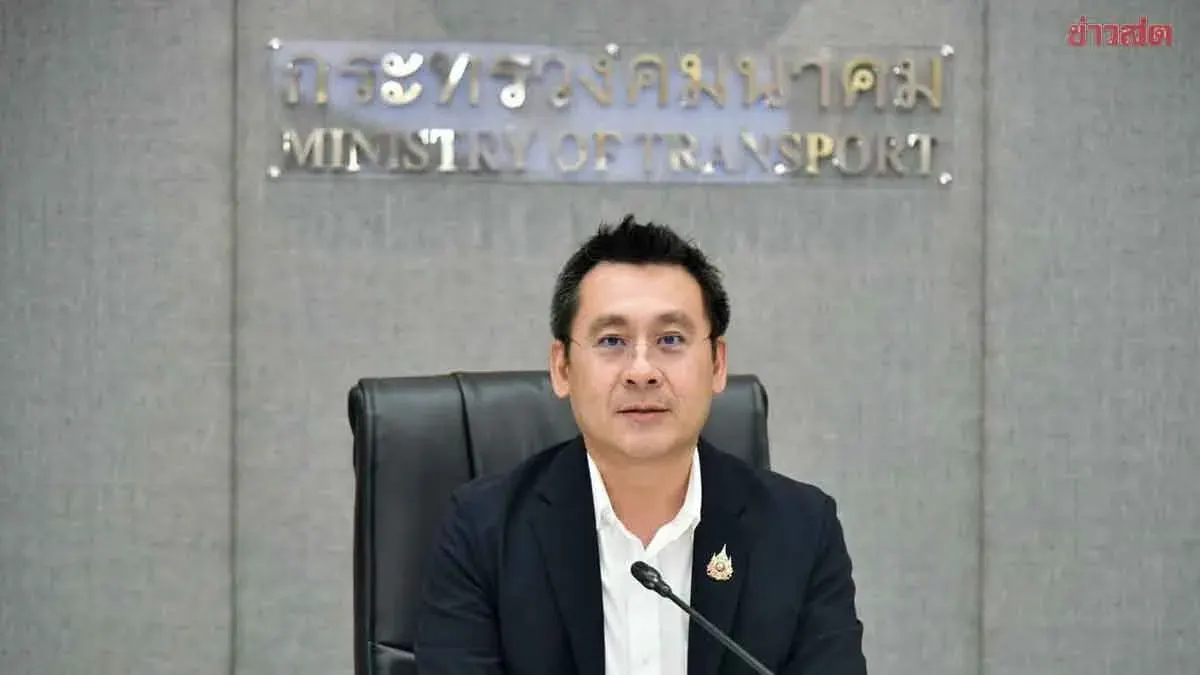
The Ministry of Transport held a meeting to track and resolve the cargo backlog at Suvarnabhumi Airport, focusing on adding personnel, deploying K9 units, expanding warehouse space, establishing a working group, and reviewing results every 15 days. Permanent Secretary of the Ministry of Transport Piyaphong Jirawatthanakul chaired the meeting on solutions for warehouse services at Suvarnabhumi Airport, attended by Jirarot Sukkharat, Director of the Transport Policy and Planning Office; Pawina Charoenthitipong, Executive Director of Airports of Thailand (AOT); representatives from the Civil Aviation Authority of Thailand (CAAT), Thai Airways International (THAI), Bangkok Flight Services (BFS), AOT Ground Services (AOTGA), the Thai Chamber of Commerce, and other related agencies on November 12, 2026, at the Ministry of Transport conference room.
Piyaphong stated that Deputy Prime Minister and Transport Minister Phumtham Wechayachai had ordered monitoring of progress on resolving warehouse service issues at Suvarnabhumi Airport. The meeting discussed with relevant agencies to address delays and accumulated cargo backlogs affecting both the country's export and import sectors.
Three main causes were identified: 1) For exports, X-ray screening of dense cargo cannot produce clear readings, requiring Explosive Trace Detection (ETD) or Explosive Detection Dogs (EDD) to check for explosives, causing delays in inspection; 2) For imports, limited warehouse space creates congestion, making it impossible to locate cargo positions, with goods accumulating; 3) Insufficient personnel and equipment, as resources must be shared between inbound and outbound operations.
The meeting discussed both urgent and long-term measures across five approaches: 1. Boost dense cargo screening capacity using K9 explosive detection dogs as an urgent measure, currently coordinating with the Border Patrol Police Bureau and the Army Veterinary Department to request K9 units to support operations.
2. Increase manpower and equipment: As an urgent measure, THAI and BFS are adding operational staff and providing sufficient forklifts. THAI has already added 115 personnel and 30 forklifts. Additionally, THAI and BFS are to procure additional cargo handling equipment such as Unit Load Devices (ULD) and dollies to accelerate clearance of backlogged cargo.
3. Expedite cargo removal from warehouses: As an urgent measure, the Chamber of Commerce is urged to push Freight Forwarders and Shipping Agents to promptly collect customs-cleared goods from warehouses within November 2026. AOT, CAAT, THAI, and BFS are to consider progressive increases in storage fees for overdue cargo to incentivize operators to collect goods faster.
4. Expand warehouse space to handle transport volumes: Under the urgent plan, THAI opened domestic warehouse space for inbound cargo starting November 9, 2026, while BFS opened extended areas. Both are also seeking permission to use Value Added Area 2 (VAA2) by December 2026. For the long term, accelerate the AO warehouse construction project.