Thai Health Foundation Proposes Five Strategies for Sustainable Aging Society
Thailand's elderly population has reached 21.4%, with over 12.2 million seniors suffering from chronic diseases like diabetes and hypertension. The Thai Health Promotion Foundation and National Health Foundation held a seminar proposing five policy strategies for a sustainable aging society, emphasizing prevention from younger ages, health-promoting environments, and addressing social frailty affecting nearly half of hospitalized elderly.
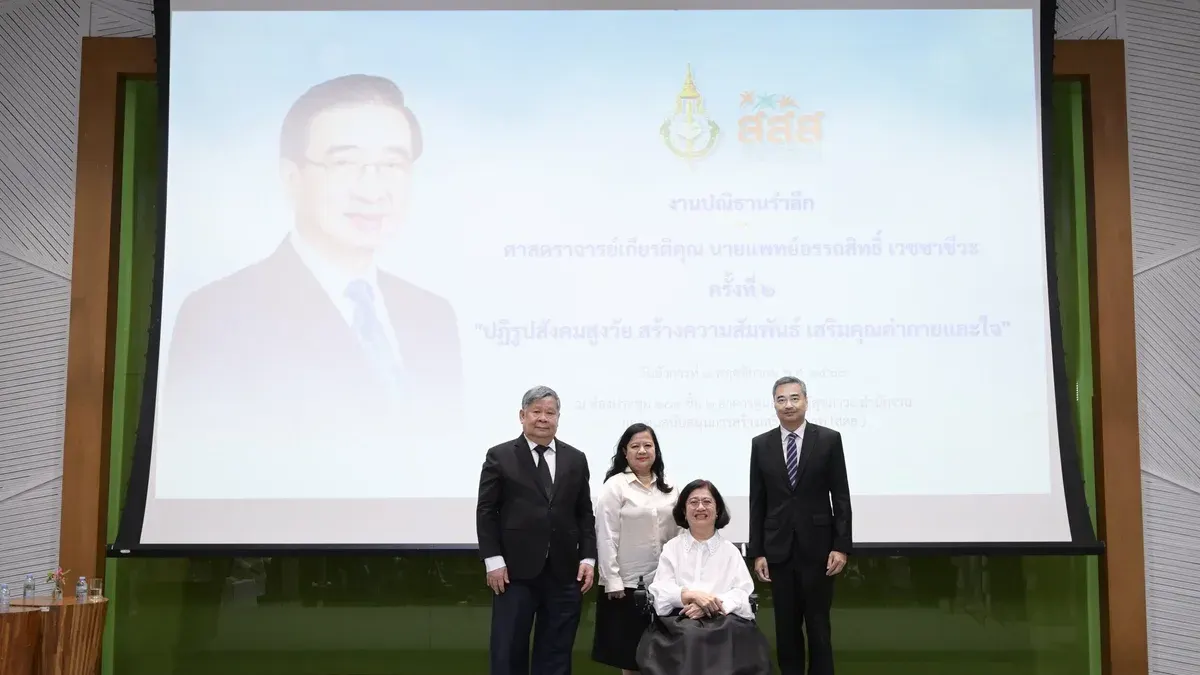
Thailand is transitioning into a super-aged society, with the elderly proportion rising to 21.4% in 2025. Over 12.2 million seniors suffer from chronic non-communicable diseases — diabetes, hypertension, and high cholesterol — accounting for 87% of illnesses in this age group. This underscores the urgent need to reform the health system and implement comprehensive public policies covering disease prevention, health-promoting environments, and quality-of-life enhancement across all life stages.
To address this, the Thai Health Promotion Foundation (ThaiHealth) partnered with the National Health Foundation to host the second memorial ceremony for Professor Emeritus Dr. Arthit Vechachiwa on November 3, 2026. The event featured a panel titled "Reforming the Aging Society: Building Relationships, Enhancing Physical and Mental Value," celebrating Dr. Arthit's contributions to Thai public health while facilitating knowledge exchange and policy proposals for a quality, sustainable aging society. Medical, public health, and social policy experts shared perspectives on driving Thailand's aging society forward.
Associate Professor Dr. Roengreudee Patthanawanich, Department of Community Medicine, Ramathibodi Hospital, Mahidol University, noted that the 5th National Health Examination Survey reflects Thailand's demographic shift over 30 years — the elderly share grew from 8.1% in 1995 to 21.4% in 2025, confirming the country's entry into a complete aged society and progression toward super-aged status. Simultaneously, over 12.2 million elderly suffer from diabetes, hypertension, and high cholesterol, representing 87% of elderly morbidity.
She emphasized that aging society strategies must not focus solely on treating and caring for dependent seniors but must prioritize health promotion for all age groups, especially adolescents and working-age adults when chronic disease risk factors — obesity, alcohol use, and smoking — begin accumulating. Good health and low risk factors before old age form the crucial foundation for a quality aging society in the future.
"Health promotion for an aging society must start in pre-elderly years, not wait until illness strikes to change behavior. Coordinated measures are needed: driving public policy, adjusting environments to support health, strengthening community capacity, and developing health services focused on promotion before disease onset," Dr. Roengreudee stated.
Professor Dr. Wierasak Muangpaisan, Department of Preventive and Social Medicine, Division of Geriatric Medicine, Director of the Siriraj Center of Excellence for Geriatric Medicine, Siriraj Hospital, Mahidol University, explained that healthy aging means more than longevity — it requires functional ability across five domains: meeting basic needs, learning and decision-making, mobility, building relationships, and contributing to society. This depends on both individual capacity and supportive environments, alongside screening for social frailty — social isolation, loneliness, and lack of resources or support — found in 18.8% of community elderly and up to 47.3% of hospitalized patients, highlighting the need to develop care systems linking seniors to community support.