Agriculture Ministry Orders Urgent Review of Kok River Contamination
The Pheu Thai Party announced the Agriculture Ministry has monitored toxic contamination in Chiang Rai's Kok River since 2025, with arsenic recently found at 25 times the safe level. The minister ordered urgent action to assess food-chain impacts, separate contaminated zones from safe areas, and prevent unsafe produce from reaching markets to protect farmers from blanket trade bans.

Pheu Thai Party Deputy Spokesperson Pariphat Thongpaknam, MP for Sukhothai, held a press conference at 3:05 p.m. on November 17, 2026, at Pheu Thai Party headquarters to update progress on resolving toxic and heavy metal contamination in the Kok River and related water sources in Chiang Rai. She said the issue is a top priority for both the party and the Ministry of Agriculture and Cooperatives. The problem affects not only river water quality but also agricultural land, crop yields, aquatic life, and daily food safety.
On November 6, the Pollution Control Department screened water quality in the Kok River in Mae Sai District, Chiang Rai, and found arsenic at 25 times the standard level, a worrying situation requiring urgent impact assessment. Pariphat emphasized the ministry has continuously monitored the situation since 2025. The Land Development Department has tested 427 soil samples and 213 water samples. The Department of Agriculture tested 135 agricultural product samples, with 78% meeting standards, though some showed heavy metals above limits, requiring close monitoring. The Rice Department continuously checks rice in the area; inorganic arsenic in tested rice samples has not exceeded standards.
The Department of Livestock Development tested 45 chicken and pork samples and found no arsenic above standards. However, the Department of Fisheries detected heavy metals above standards in some aquatic animal samples from the Kok and Mekong Rivers, requiring further urgent investigation. It cannot yet be concluded that all aquatic animals in the area are contaminated.
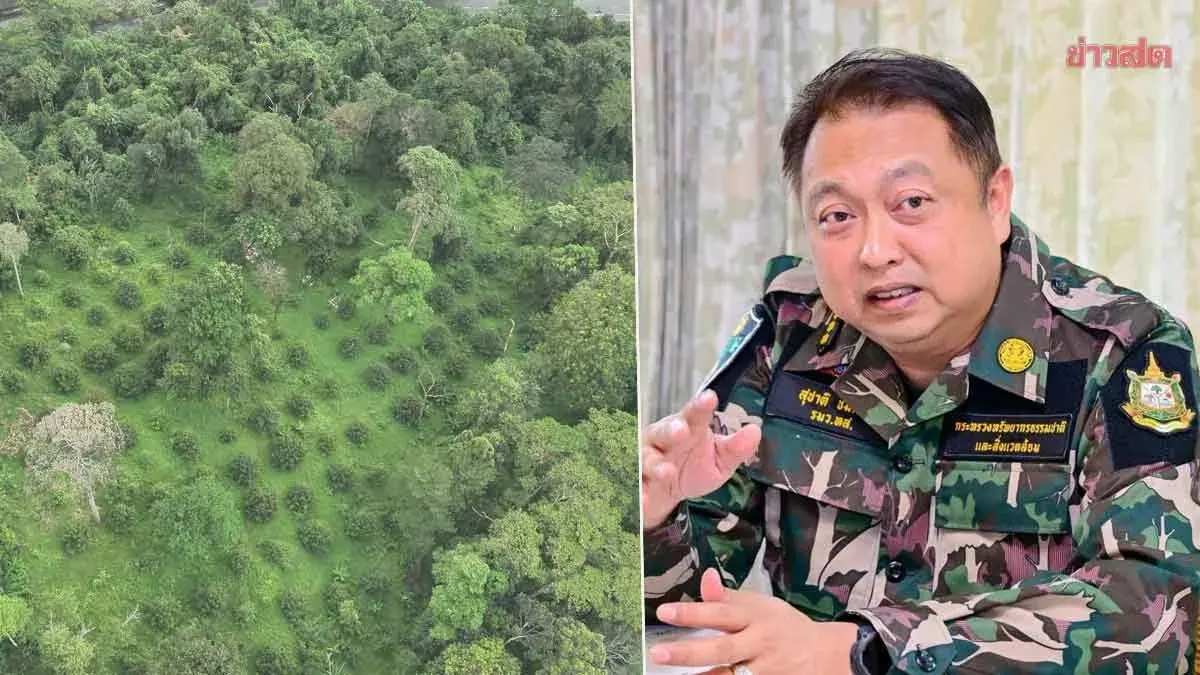
On November 10, Agriculture Minister Suriya Jungrungreangkit ordered the Rice Department, Fisheries Department, and Livestock Department to urgently assess contamination impacts on the food chain and report results quickly. At the latest monitoring meeting on November 17, the ministry coordinated data from all relevant agencies to align inspections on three key points: First, urgently identify contaminated areas and affected crops for targeted remediation. Second, ensure food safety, especially rice, vegetables, and aquatic animals; if contaminated produce exceeds standards, prevent it from entering markets and reaching consumers. Third, protect farmers, as some Chiang Rai rice is already being rejected by buyers despite no conclusion that all produce is problematic. The critical step is clearly separating risk areas from problem-free areas so farmers province-wide are not harmed by public concern.
Pariphat added the ministry is proceeding continuously; on November 23, the Department of...