Students Nationwide Perform Ancient Buddhist Chant at Grand Palace
Students from 36 schools across Thailand performed the ancient Oh Ei Viharn Rai Buddhist chant at the Temple of the Emerald Buddha in Bangkok's Grand Palace from October 25-27. The three-day ceremony, organized by the Department of Religious Affairs, preserves a tradition dating back to the Ayutthaya period that was registered as national intangible cultural heritage in 2015. The chant trains pronunciation skills while embedding moral principles for daily life.
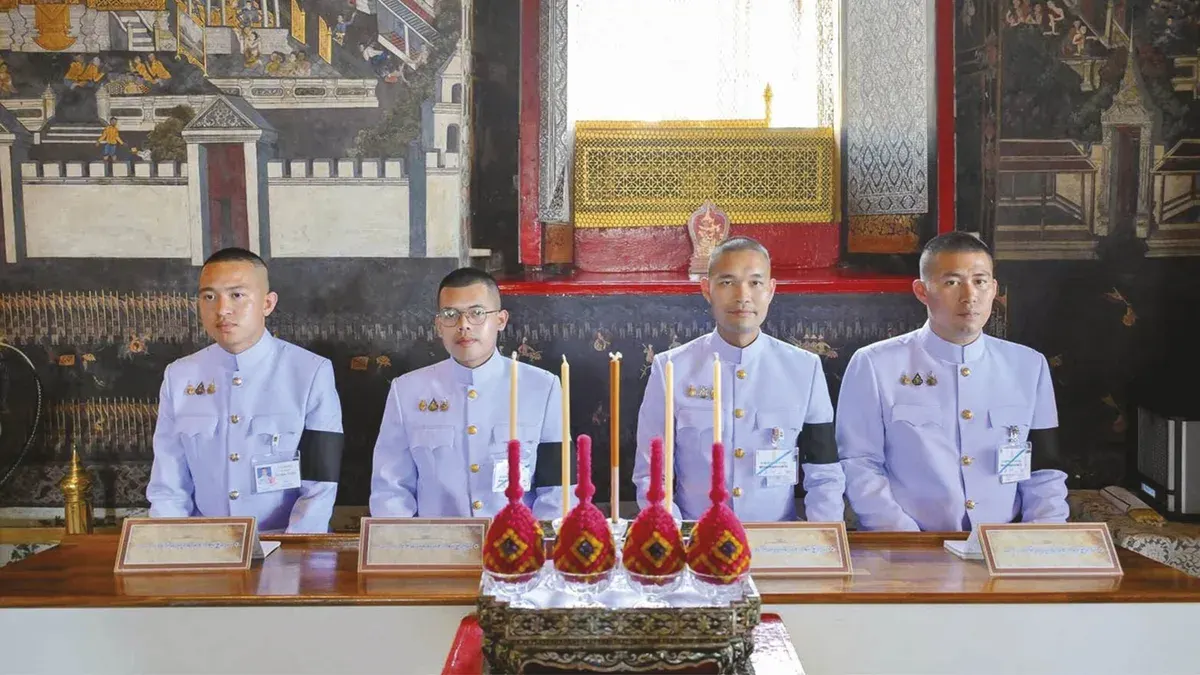
The Ministry of Culture's Department of Religious Affairs recognizes the importance of the Oh Ei Viharn Rai chanting, a recitation performed on major Buddhist holidays during the Lent period. His Majesty the King and Her Majesty the Queen preside over the religious ceremonies, a long-standing Thai cultural tradition worthy of preservation for future generations. For the 2026 Buddhist Lent festival, the department organized chanting sessions from October 25-27, featuring students from selected educational institutions. Twelve schools participated daily in two sessions, morning (9:00-11:00) and afternoon (1:00-16:00), chanting at the twelve pavilions surrounding the ordination hall at Wat Phra Sri Rattana Satsadaram in the Grand Palace.
This year, 36 educational institutions from across the country participated in the Oh Ei Viharn Rai chanting from October 25-27 at Wat Phra Sri Rattana Satsadaram in the Grand Palace.
On October 25, participants included Thangthong Jitrphanichakarn Institute of Technology, Dibuk Pangnga Witthayalai School, Phanom Dong Rak Witthaya School, Srinakharinwirot University Faculty of Education, Ban Khao Lang Community School, Wat Intharam School, Cheuapleung Witthaya School, Wat Nong Khaem Secondary School, Sarakham Phitthayakhom School, Nang Rong School, Khon Kaen University Faculty of Education, and Kalayanawat School.
On October 26, participants included Santirath Witthayalai School, Rajini Burana School, Nawamintharachinuthit Satri Witthaya Phutthamonthon School, Thung Yao Phadung Sit School, Krathiam Witthaya School, Wat Intharawihan School, Phanom Sarakham "Phanom Adul Witthaya" School, Sirindhorn Raj Witthayalai School, Khukhan School, Rajavinit Bang Kapi Pan Kham School, Ubon Ratchathani Rajkanya Raj Witthayalai Nakhon Ratchasima, and Amporn Paisan School.
On October 27, participants included Wat Huai Chorakhe Witthayakhom School, Wat Nimmanradi School, Bang Khlaem Witthaya Ramkhamhaeng School, Kachapuek Anusorn School, Thipangkorn Witthaya Phatthan (Wat Bot) School under Royal Patronage, Ban Kha Witthaya School, Wat Phai Tan School, Satri Sethabut Bamphen School, Phanasorn Witthaya School, Stuk School, Ban Ko Witthaya School, and Rattanakosin Somphot Baworn Niwet Salaya School under Supreme Patriarch Patronage.
The Oh Ei Viharn Rai chant has been practiced and passed down continuously since the Ayutthaya period through the Rattanakosin era. It follows the Phra Chai Suriya verse format, drawn from the Mulabot Bhabakich text, the primary textbook for ancient Thai children. It trains pronunciation and prosody skills while embedding moral principles applicable to daily life. Promoting youth and public participation in this chant preserves a valuable tradition at risk of fading from Thai society, maintaining it as cultural heritage reflecting Thai identity and pride. It also instills in youth the importance of Thai traditions and encourages constructive use of leisure time, leading to sustainable self, family, society, and national development.
Jesada Chiwawichawalkul, Director-General of the Department of Religious Affairs, revealed that the Oh Ei Viharn Rai chant was registered as national intangible cultural heritage in 2015. The chant originally...