Parks Department Clamps Down on Paid Monk Forest Treks
Thailand's Department of National Parks is cracking down on commercialized monk tudong (forest wandering) treks across the Western Forest Complex after finding operators charging 2,000-3,000 baht per person and poachers infiltrating groups. About 1,000 monks enter these protected areas annually, but rangers only intercept 30% due to evasive routes. A wild gaur killed a monk in Huai Kha Khaeng in 2023, highlighting the dangers. The department is now coordinating with the National Office of Buddhism and temples to enforce clear entry rules and prohibitions.
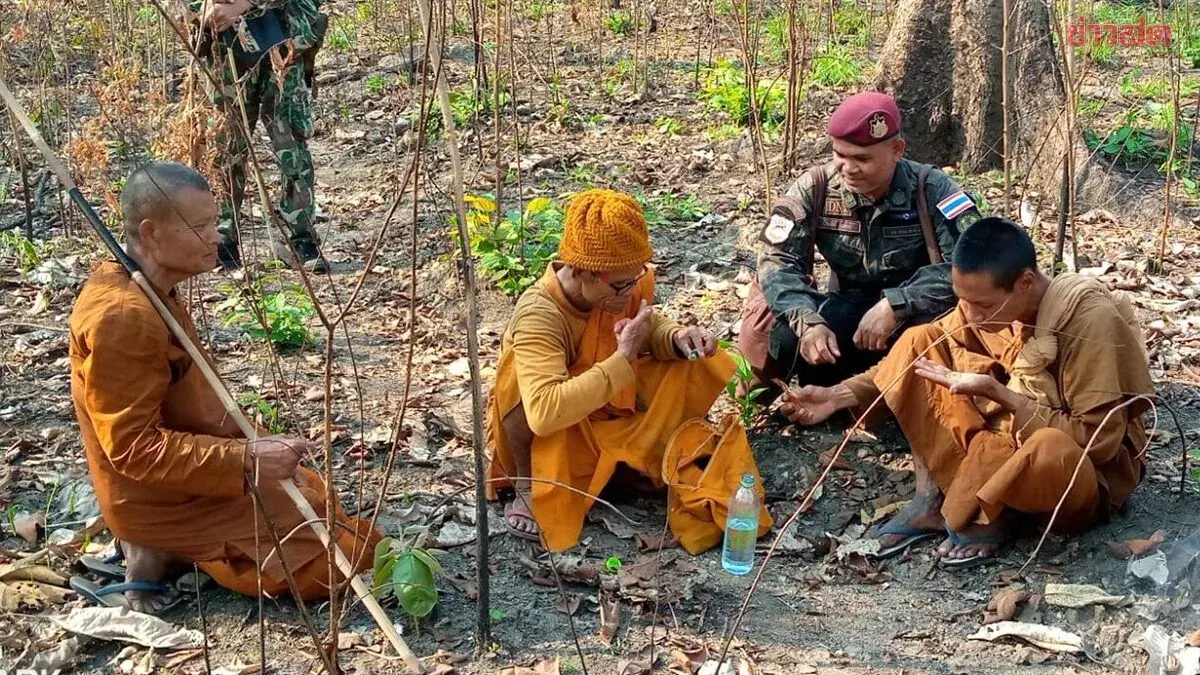
The Department of National Parks is tightening controls on monks undertaking tudong (forest wandering) in the Western Forest Complex after discovering operations resembling paid package tours charging 2,000-3,000 baht per person. Officials fear poachers are infiltrating the groups, endangering both clergy and wildlife. A 2023 incident saw a wild gaur kill a monk in Huai Kha Khaeng, and roughly 1,000 monks enter deep forest areas annually following routes popularized by revered forest masters.
17 November 2026 – Panachak Poothibandit, Director of the Protected Areas Administration Office 14, Department of National Parks, Wildlife and Plant Conservation, gave an interview regarding public invitations for monks to walk tudong through multiple protected forest areas from Kanchanaburi to Tak, covering over 200 kilometres. The disclosed route preliminary covers Huai Kha Khaeng Wildlife Sanctuary, Thung Yai Naresuan Wildlife Sanctuary, and Umphang Wildlife Sanctuary, with a schedule from 10 January to 10 February 2027.
Panachak said the current tudong pattern is starting to resemble organized tours, with followers mixed half laypeople, half monks, and fees of 2,000-3,000 baht per head collected. Authorities have also caught individuals posing as lay attendants who were actually poachers, found carrying wildlife carcasses, such as a case arrested in Nakhon Sawan. Illegal acts will be prosecuted strictly; ordinary monks will be escorted out of the area.
Panachak said tudong in protected areas is a recurring problem. Each year about 1,000 monks are found walking this way, but officers detect only 30% because groups use routes avoiding checkpoints and rangers; when pushed from one spot they appear at another.
The Western Forest route starts in Thung Yai Naresuan Wildlife Sanctuary, trekking on foot along Huai streams over 200 km to reach Umphang Wildlife Sanctuary in Tak. The Northern Forest route connects Mae Hong Son to Chiang Mai, walking deep forest from Mae Sariang district, Mae Hong Son, aiming to penetrate forest areas in Chiang Mai.
Panachak added that the Northeastern and border routes skirt the Phu Phan range in Sakon Nakhon, continue to Phu Langka National Park, penetrate Phu Wua Wildlife Sanctuary and Hin Sam Wan in Bueng Kan, with some groups trekking across the border into the Khao Khwai mountain area in Laos.
"I see this as disciples wanting to follow the footsteps of elder masters like Luang Pu Man and Luang Pu Fan, who went into deep forest for ascetic practice and liberation. But times have changed. These restricted areas are not tourist sites; they are deep forests teeming with dangerous wildlife — wild elephants, gaurs, bears, and tigers — which have already killed a monk in Huai Kha Khaeng when a gaur gored him in 2023," Panachak said.
Meanwhile, Chayaporn Amradit, Director of Protected Areas Administration Office 12, held a meeting to set clear guidelines for area entry and permission procedures. They will prepare a letter to coordinate with the National Office of Buddhism (NOB) and discuss with starting-point temples such as Wat Tha Kradan in Kanchanaburi and other involved temples, to circulate the Mahatherasamakhom resolutions and prohibitions clearly, and send a coordination letter to the Department of National Parks on 20 November.
For next steps, the Department of National Parks will coordinate with the Sangha from origin, midway, and destination points, emphasizing that monks who intend to walk...